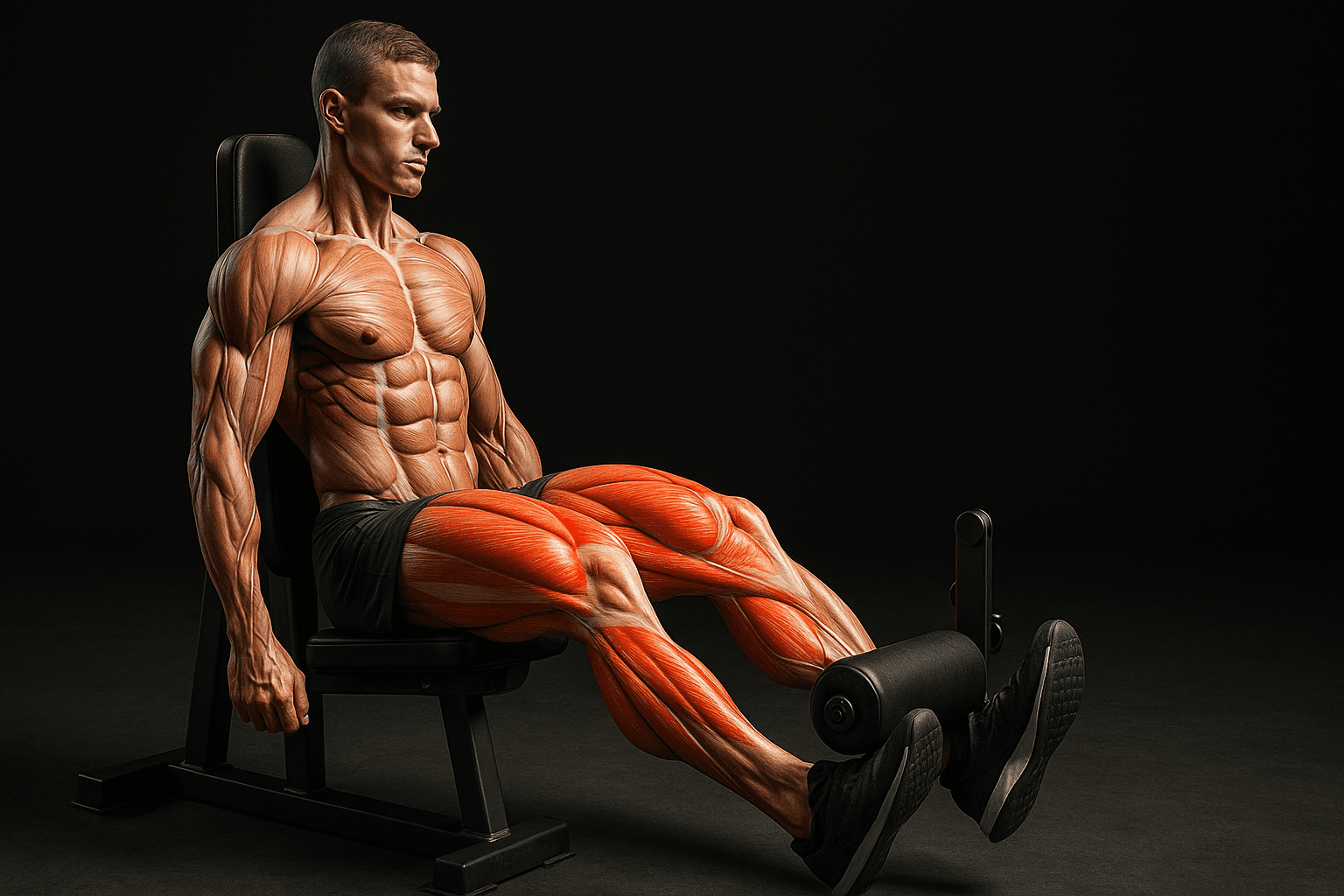
Bulgarian Split Squat: Proper Form, Step by Step
Step-by-step guide to Bulgarian split squat proper form: setup, execution cues, breathing, tempo, common mistakes and fixes. Safety-first, practical coaching.
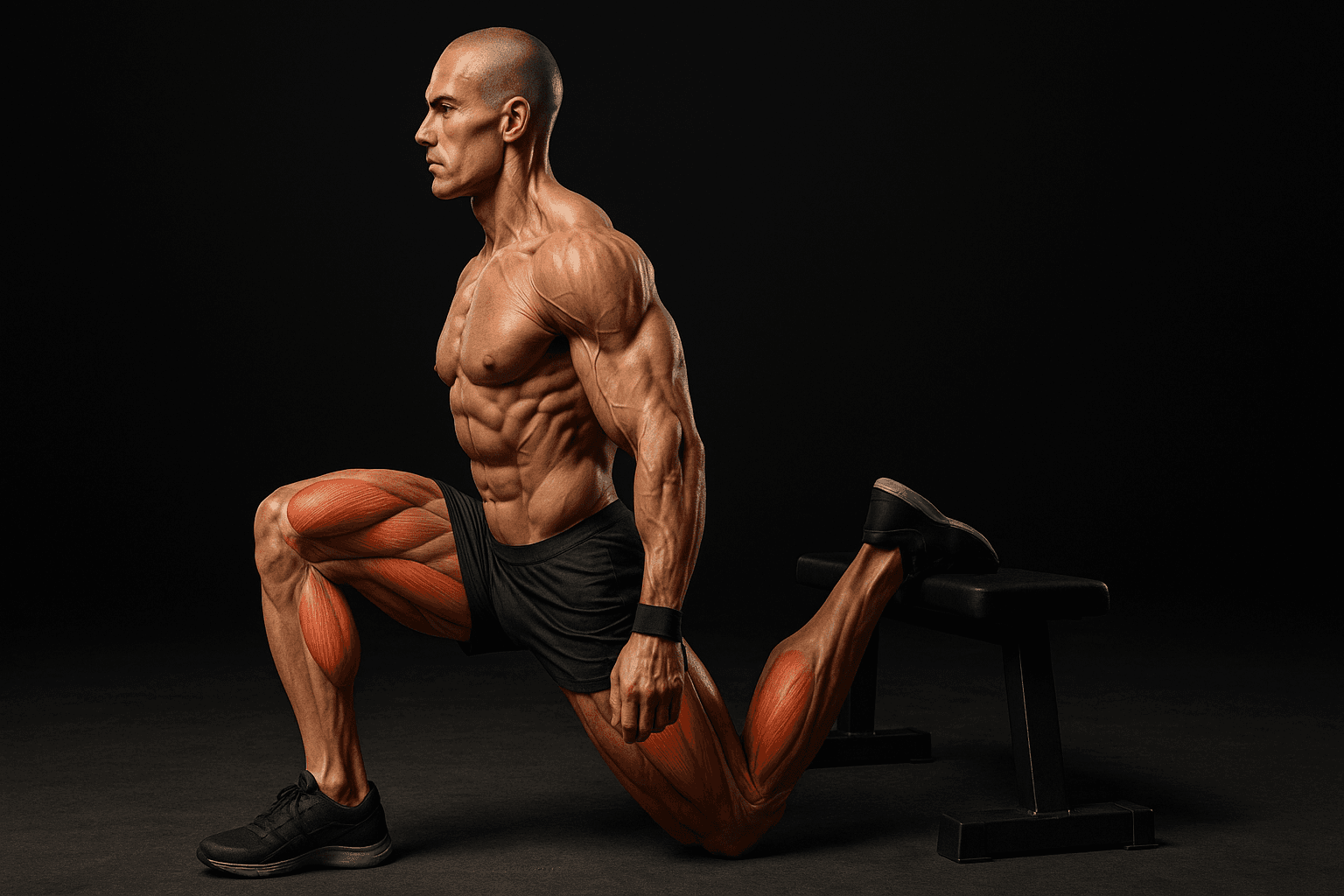
Photo by RepBro.
The proper form for a Bulgarian split squat is a controlled single-leg squat with your rear foot elevated, front knee tracking over the ankle, torso upright or slightly leaning forward from the hips, and most of the drive coming through the front heel. Set up so you can reach about thigh-parallel on the front leg with a 1–3 cm gap between the rear knee and the floor, inhale as you descend, exhale as you push up, and stop if you feel sharp pain.
What is the Bulgarian split squat and why does form matter?
The Bulgarian split squat, also called the rear-foot-elevated split squat, is a unilateral leg exercise that targets the quads, glutes, and stabilizers. Because it loads one leg at a time, small changes in setup change where you feel the work — and where you risk strain. Proper form distributes load safely through the front leg, limits excessive compression at the knee, and reduces unwanted hip or low-back compensation.
How to set up: step-by-step
- Equipment: use a bench, box, or stable chair about 40–50 cm (16–20 in) high. A lower surface is often easier when learning. Hold dumbbells at your sides, a kettlebell goblet, or no weight to start.
- Foot placement: stand about 50–70 cm (20–28 in) in front of the bench and place the top of your rear foot on the bench. Exact distance depends on your leg length — you should be able to lower until your front thigh is roughly parallel to the floor.
- Stance width: hips should be roughly hip-width square to the bench. Keep feet pointing forward or slightly out, not dramatically rotated.
- Balance and posture: stand tall, pack your ribs down, and brace your core as if expecting a light punch to the stomach.
- Gaze: pick a fixed point at eye level to help balance.
Execution: descent and ascent cues
- Descend (eccentric): inhale and take 2–3 seconds to lower. Bend the front knee and hip while keeping the torso upright or with a slight hip hinge. Aim for the front thigh to reach approximately parallel with the floor; the rear knee should end about 1–3 cm from the floor. Keep weight on the midfoot to heel.
- Bottom position: pause for 0–1 second. Maintain a stacked alignment: hip over knee over ankle as much as mobility allows.
- Ascent (concentric): exhale and drive through the front heel, extending the front hip and knee to return to the start. Avoid pushing off the rear foot.
- Reps: perform equal reps per leg. Use controlled tempo: common templates below.
Breathing and tempo
- Breathing: inhale during the descent while bracing the core, exhale on the ascent as you produce force. For heavier sets use a braced inhale and a forceful exhale as you pass the sticking point.
- Tempo examples:
- Hypertrophy: 3 seconds down, 1-second pause, 1 second up (3-1-1) for 8–12 reps.
- Strength: 3 seconds down, no pause, 1 second up (3-0-1) for 4–6 reps.
- Stability/mobility: 4 seconds down, 2-second pause, 1 second up (4-2-1) for 8–12 reps.
How to load and progress
- Start bodyweight until balance and depth feel consistent, usually 2–3 sessions. Then add dumbbells, kettlebells, or a rear-foot-supported barbell position.
- Use sets of 3–5 for strength, 3–4 for hypertrophy per leg. Aim for gradual load increases once you can hit prescribed reps with good form.
- Track progress to ensure balance between legs; if you use an app to record sets and weight, consider RepBro for easy tracking and progression: https://apps.apple.com/us/app/gym-workout-coach-repbro/id6763749305
Common mistakes and fixes
- Mistake: front foot too close to the bench, causing the rear leg to handle more load and the front knee to track too far forward. Fix: step the front foot 5–10 cm (2–4 in) further forward until the front thigh can reach parallel without the knee pushing excessively over the toes.
- Mistake: torso collapsing forward or rounding low back. Fix: pack the ribs, hinge from the hips slightly, and keep a neutral spine. Use lighter load until you can maintain posture.
- Mistake: knee caving inward. Fix: focus on pushing the front knee slightly outward and cue squeeze the glute of the working leg. Reduce weight if needed.
- Mistake: driving through the rear foot or using rear leg to bounce. Fix: keep most weight on the front heel; think about pressing the front foot into the floor.
- Mistake: using a bench that is too high. Fix: lower the elevation so the rear knee can come within 1–3 cm of the floor for fuller range of motion.
Progressions and regressions
- Regression: hold onto a stable support, use no weight, or perform split squats with rear foot on the floor.
- Progression: add dumbbells, hold a loaded barbell across your shoulders, or slow the eccentric. To increase challenge to balance, perform a deficit on the front foot or do pauses in the bottom.
Safety note
Stop immediately if you feel sharp or unusual pain in a joint. This guide does not diagnose conditions. If pain persists, consult a qualified healthcare or strength professional before continuing.
Short FAQ
Q: How deep should I go? A: Aim for front thigh roughly parallel to the floor with the rear knee 1–3 cm from the floor. Slightly deeper is fine if you maintain control and no sharp pain.
Q: Is it better than lunges? A: Bulgarian split squats increase single-leg load and stability more than many bilateral variations, but which is better depends on your goals and limitations. For a quick comparison of similar exercises see RepBro vs resources: https://www.repbro.app/vs
Q: How often should I train them? A: 1–3 times per week per leg depending on volume and recovery. Start with 2 sessions to build tolerance.
One-sentence takeaway: Master the setup and consistent, controlled reps — front foot distance, core brace, and driving through the front heel are the three concrete cues that make Bulgarian split squats safe and effective.
Frequently asked questions
- How far should my front foot be from the bench?
- Start with the front foot 50–70 cm (20–28 in) from the bench so your front knee tracks over the ankle at the bottom. Adjust 5–10 cm at a time to find a position where you can reach roughly thigh-parallel with a 1–3 cm gap between the rear knee and the floor.
- Can Bulgarian split squats hurt my knee?
- A properly performed Bulgarian split squat normally causes no sharp knee pain. Stop immediately if you feel sharp or unusual pain, and consult a healthcare or strength professional. Discomfort from effort or muscle fatigue is normal; joint pain is not.
- What tempo and reps should I use?
- For hypertrophy, use a 3-1-1 tempo, 8–12 reps per leg. For strength, use 3-0-1 with heavier weights for 4–6 reps. For stability or mobility, use 4-2-1 slower reps for 8–12 reps focusing on control.