Barbell Curl Alternatives at Home (Minimal Equipment)
Practical at-home substitutes for the barbell curl using dumbbells, bands, and bodyweight. What each option preserves, what it loses, and when to head back to the gym.
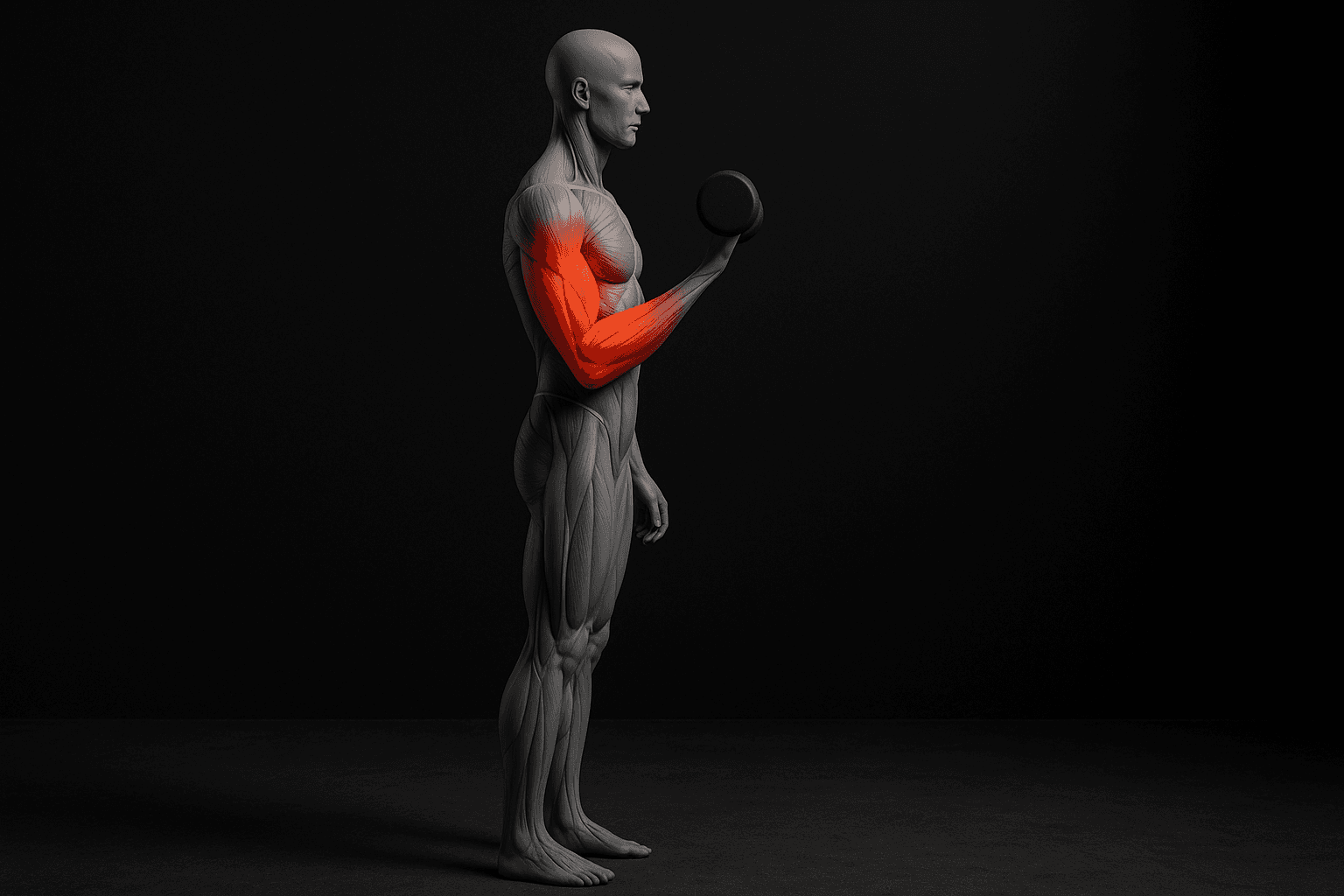
Photo by RepBro.
If you can only train at home, five practical barbell-curl substitutes are: two-dumbbell standing curl, single-arm dumbbell curl, hammer curl, resistance-band curl, and underhand chin/pull variations. Each preserves elbow flexion and progressive overload potential to varying degrees; some trade isolation, loading increments, or stability for accessibility.
What are simple at-home substitutes for the barbell curl?
Here are five minimal-equipment options, what they keep from a barbell curl, what they lose, and when each is an adequate swap.
1) Two-dumbbell standing curl
- Equipment: two dumbbells.
- What it preserves: bilateral elbow flexion pattern, similar tempo, and the ability to add load for progressive overload.
- What it loses: exact bar path and the small stability benefits of a fixed bar. Slight asymmetries can compensate individually.
- When it’s adequate: for general hypertrophy and strength progression through novice to intermediate phases. Use microplates or progress in reps/sets when small weight jumps are limited.
2) Single-arm dumbbell curl (including concentration or preacher-style on a bench)
- Equipment: one dumbbell and optionally a bench or chair.
- What it preserves: isolation of elbow flexors, easier to eliminate momentum, and correct unilateral imbalances.
- What it loses: bilateral loading symmetry and slightly lower maximal load compared with heavy barbell work.
- When it’s adequate: excellent for addressing left–right differences and developing peak contraction. Keep using until you need heavier absolute loading.
3) Hammer curl
- Equipment: dumbbells.
- What it preserves: high mechanical tension on the brachialis and brachioradialis while still working the biceps; often allows heavier weight because of neutral grip.
- What it loses: maximal supination-driven biceps peak contraction compared with a strict supinated curl.
- When it’s adequate: great when forearm strength or elbow health limits supinated curls, or to increase overall arm thickness.
4) Resistance-band curls (both-arm or single-arm)
- Equipment: loop or tube bands anchored under feet or to a low point.
- What it preserves: long-duration tension through range of motion and easy incremental progression by using thicker bands or changing length.
- What it loses: absolute top-end load and precise, linear loading. The resistance curve differs (more tension near lockout) compared with free weights.
- When it’s adequate: ideal for home setups, travel, or when you want high time-under-tension. Pair bands with dumbbells across a week for variety.
5) Underhand chin-ups or inverted rows with supinated grip (bodyweight)
- Equipment: pull-up bar, bar across sturdy table, or suspension straps.
- What it preserves: heavy mechanical tension and functional carryover to pulling strength; recruits biceps under substantial load if bodyweight is challenging.
- What it loses: isolation — other back muscles share the load — and less precise control of elbow flexion-only loading.
- When it’s adequate: excellent if you can do multiple sets with high effort and want to increase strength alongside biceps size; less useful as a pure isolation movement for peak contraction.
How do these options compare at a glance?
| Movement | Equipment | Preserves | Loses | Suitable until... |
|---|---|---|---|---|
| Two-dumbbell curl | Dumbbells | Bilateral elbow flexion, progressive overload | Exact bar stability | Intermediate hypertrophy/strength goals |
| Single-arm DB curl | One dumbbell, bench optional | Isolation, corrects imbalances | Maximal absolute load | Until you need heavy bilateral loading |
| Hammer curl | Dumbbells | Heavier loads, brachialis focus | Biceps supination emphasis | Long-term arm-thickness work |
| Band curl | Bands | Constant tension, easy progression | Max absolute load, different curve | Travel/home training; supplement with weights |
| Underhand chin/rows | Bar/straps | High tension, strength carryover | Isolation | When bodyweight provides sufficient resistance |
How should I program these at home to get similar results to barbell curls?
Apply the same training principles you’d use with a barbell curl: progressive overload, adequate weekly volume, and recovery. Research-consensus guidance for hypertrophy points to accumulating meaningful weekly sets per muscle and training 2–3 times per week. For biceps, distribute volume across sessions, use 6–20 reps per set depending on load, and vary tempo and angle (e.g., incline vs. standing) across weeks.
Progression strategies at home:
- Add reps or sets when the prescribed reps become manageable.
- Move to heavier dumbbells or thicker bands.
- Slow eccentric tempo or include paused reps to increase time under tension.
- Use unilateral work to reveal and remove imbalances that limit bilateral progress.
When is it time to go back to a gym for barbell curls?
You should consider gym barbell curls when:
- You’ve outgrown the maximum weights available at home and smaller incremental increases are necessary for steady progress.
- You’re training for maximal absolute elbow-flexion strength (heavy single- or double-digit rep maxes) and need plates beyond what’s practical at home.
- You specifically want the barbell feel for competition or personal preference.
If your goal is hypertrophy and general arm strength, well-structured home programs using the above alternatives can be sufficient through novice and many intermediate stages.
What about safety and technique?
Stop any set for sharp or unusual pain; mild muscle soreness is normal but sharp joint pain is not. Keep elbows relatively locked to the body, avoid excessive swing, and prioritize controlled eccentrics. If you have previous shoulder, elbow, or wrist injuries, consult a qualified professional before increasing load. This article does not diagnose conditions or guarantee injury prevention.
What apps or tools help track progress at home?
Track sets, reps, and load so you can apply progressive overload. Simple logs, spreadsheets, or training apps help maintain consistent progression. (Example app mention: RepBro.)
Limitations — what this guide and apps cannot do
No app or article can see your form or detect subtle movement flaws in real time. They cannot replace hands-on assessment from a qualified coach or clinician for persistent pain or rehab needs. Also, a plan only works if you follow it consistently: adherence, recovery (sleep/nutrition), and progressive overload determine results more than the choice of a specific curl variation.
Safety reminder: Never push through sharp pain. If you experience persistent joint pain, numbness, or functional loss, seek evaluation from a healthcare professional.
If you need a simple two-week home plan that uses these alternatives and matches your available equipment, say how many sessions per week and what gear you have and I’ll draft one.
Frequently asked questions
- Can I build big biceps without a barbell?
- Yes. You can build significant biceps size with dumbbells, bands, and bodyweight by applying progressive overload and sufficient weekly volume. Progress may slow if you cannot increase load beyond intermediate levels; then heavier gym equipment becomes useful.
- How often should I train biceps at home?
- Train biceps 2–3 times per week, spreading total weekly sets across sessions. Aim to accumulate appropriate weekly volume for your goal and adjust intensity and recovery. Monitor fatigue and reduce load or volume during signs of persistent soreness or performance drop.
- Are bands as effective as dumbbells for curls?
- Bands can be very effective because they provide constant tension and easy progression by changing band thickness or slack. They differ in resistance curve compared with free weights; using both bands and dumbbells covers a broader stimulus range.