
Workout Tracker vs Personal Trainer: The Real Cost Breakdown for 2026
Workout trackers cost $60-120/year while personal trainers run $1,200-4,800 annually. Here's when each option delivers better value for your fitness goals.
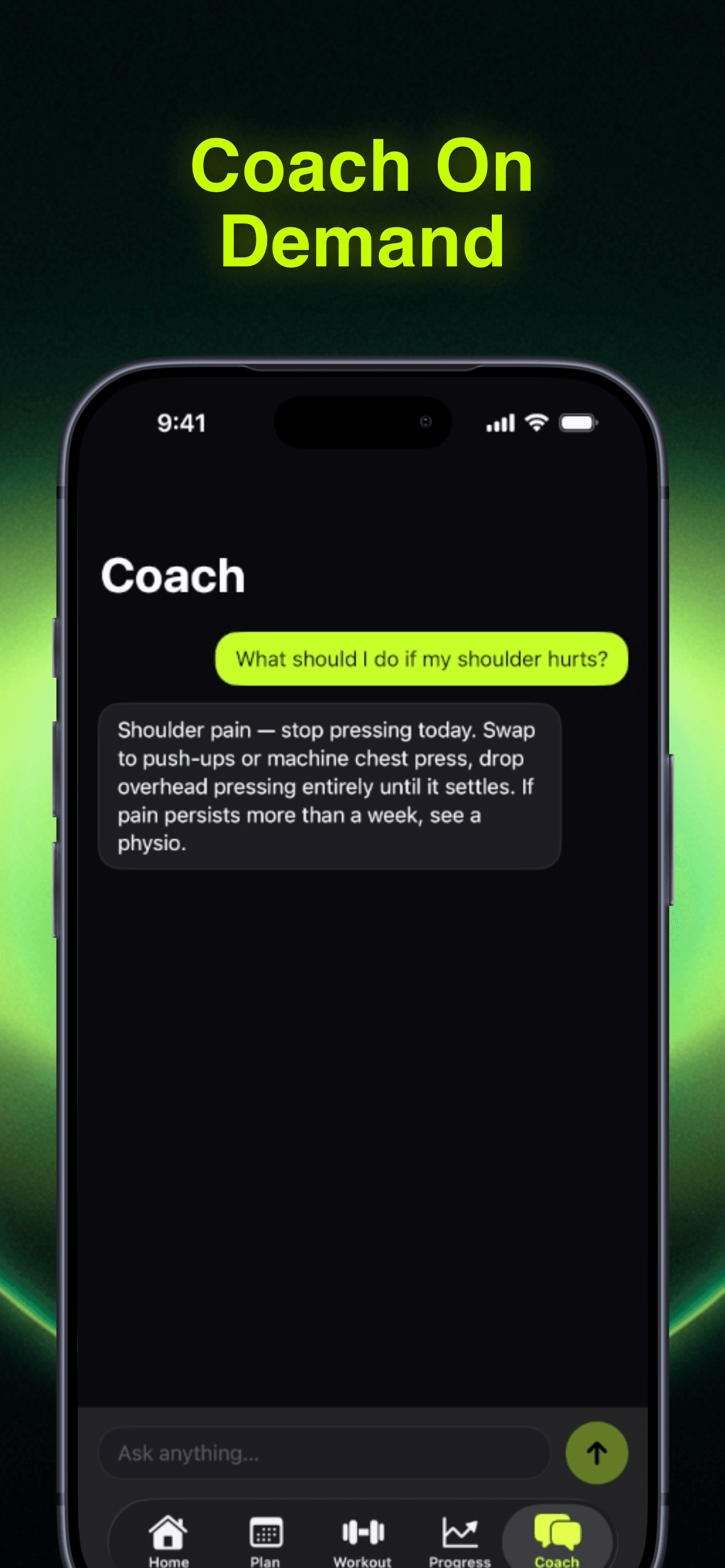
Photo by RepBro.
You're staring at your gym membership renewal and wondering: should I add a personal trainer or stick with a workout tracker app? The answer depends on your budget, goals, and how you actually train.
The quick math: workout trackers cost $60-120 per year, while personal trainers run $1,200-4,800 annually. But raw numbers don't tell the whole story. The real question is which option delivers better results per dollar spent.
I've run the numbers on both sides. Here's what each approach actually costs and when you should pick one over the other.
Personal Trainer Cost Breakdown
Personal trainers charge between $25-100 per hour, with most falling in the $40-60 range. Location matters hugely here.
Typical hourly rates by market:
- Small towns: $25-40/hour
- Mid-size cities: $35-55/hour
- Major metros: $50-80/hour
- Premium locations (Manhattan, Beverly Hills): $80-150/hour
Most trainers recommend 2-3 sessions per week for serious progress. At $50/hour twice weekly, you're looking at $5,200 annually. Add in the inevitable session packages, initial assessments, and program design fees, and many clients spend $6,000-8,000 per year.
Hidden trainer costs:
- Initial consultation: $75-150
- Program design: $100-300
- Cancellation fees: $25-50 per missed session
- Package deals that lock you in for months
- Gym membership on top of trainer fees
The math gets brutal fast. A mid-range trainer at $60/hour, twice weekly, costs $6,240 per year before any extras.
Workout Tracker App Costs
Fitness apps operate on subscription models, typically running $5-15 monthly or $40-120 annually.
Popular app pricing (annual plans):
- Basic trackers: $30-60/year
- AI-powered coaches: $60-120/year
- Premium platforms with live classes: $100-200/year
RepBro sits at $59.99/year, which works out to $5/month for personalized programming and AI coaching. Compare that to a single trainer session.
Most apps offer free trials (7-14 days) and let you cancel anytime. No contracts, no cancellation fees, no awkward conversations about missing sessions.
When Personal Trainers Win
Trainers excel in specific situations where human oversight matters most.
You need a trainer if:
- You're recovering from injury and need movement screening
- You have zero lifting experience and need hands-on form correction
- You struggle with motivation and need external accountability
- You're training for sport-specific skills (Olympic lifts, powerlifting meets)
- You have complex medical conditions requiring exercise modification
Good trainers spot form breakdowns you'd never catch on video. They adjust loads mid-session based on how you're moving that day. They provide real-time feedback that no app can match.
The best trainers also teach you to eventually train alone. If your trainer keeps you dependent after 6 months, find a new one.
When Workout Trackers Win
Apps dominate in consistency, programming quality, and cost efficiency for most lifters.
Choose an app if:
- You have 6+ months of lifting experience
- You train consistently without external pressure
- You want evidence-based programming without the premium price
- You prefer training on your own schedule
- You're comfortable filming yourself for form checks
Modern AI coaches like RepBro bridge the gap between basic tracking and personal training. You get customized programs, exercise swaps for injuries or equipment limitations, and coaching answers mid-workout. All for less than the cost of one trainer session.
The programming often surpasses what you'd get from a mediocre trainer. Apps use algorithms based on thousands of lifters' data, not just one person's experience and biases.
The Real Cost Per Result
Here's where it gets interesting. Cost per pound of muscle gained or strength increase tells a different story than raw subscription fees.
A $60/year app that keeps you training consistently for 12 months delivers better results than a $6,000 trainer you see inconsistently for 6 months. Consistency beats perfection every time.
Factors that matter more than hourly rates:
- How often you actually show up
- Whether the programming matches your goals
- If you can maintain the habit long-term
- How quickly you learn to train independently
I've seen lifters make incredible progress with basic apps and terrible progress with expensive trainers. The common thread among successful lifters isn't what they spend—it's that they train consistently with progressive overload.
The Hybrid Approach
Smart lifters often combine both options strategically.
Start with a trainer for 4-8 sessions to learn movement patterns and basic programming principles. Then transition to an app for day-to-day training. Use occasional trainer check-ins (monthly or quarterly) for form reviews and program adjustments.
This approach costs $500-1,000 upfront plus $60-120/year for the app. You get human expertise when you need it most while maintaining cost-effective consistency.
Making Your Decision
Your choice depends on three factors: experience level, budget, and training style preferences.
Choose a personal trainer if you're new to lifting, have injury concerns, or struggle with self-motivation. Budget $3,000-6,000 annually and plan to transition to independent training within 12 months.
Choose a workout tracker if you have basic lifting experience, train consistently on your own, and want evidence-based programming at a fraction of the cost. Budget $60-120 annually.
Choose the hybrid approach if you want the best of both worlds and can afford $800-1,200 in year one, then $60-120 annually after that.
The bottom line: most experienced lifters get better results from consistent app-guided training than sporadic sessions with even the best trainers. Apps win on cost, consistency, and convenience. Trainers win on personalization, safety, and skill development.
Pick the option you'll actually use consistently. A $60 app that keeps you training beats a $6,000 trainer you see twice a month.
Frequently asked questions
- How much does a personal trainer cost per month?
- Personal trainers typically cost $200-800 per month depending on session frequency and location. At $50/hour for twice-weekly sessions, expect around $400 monthly, or $4,800 annually.
- Are workout apps really cheaper than personal trainers?
- Yes, significantly. Workout apps cost $60-120 annually while personal trainers run $3,000-6,000+ per year. Apps are 95% cheaper but require more self-discipline and basic lifting knowledge.
- Can a workout app replace a personal trainer?
- For experienced lifters, yes. Apps provide programming, exercise swaps, and coaching guidance. However, beginners or those with injuries benefit more from hands-on trainer supervision and real-time form correction.
- What's the best budget option for fitness coaching?
- Start with 4-8 trainer sessions to learn basics ($200-500), then switch to an AI-powered workout app ($60-120/year). This hybrid approach costs under $1,000 first year, then $60-120 annually.
- How do I know if I need a personal trainer or just an app?
- Choose a trainer if you're new to lifting, have injuries, or need external motivation. Choose an app if you have 6+ months experience, train consistently alone, and want cost-effective programming.