
What an AI Workout Plan Actually Does Behind the Scenes
An AI workout plan analyzes your goals, equipment, and performance data to generate personalized programming that adapts in real-time based on your logged sets, RPE, and progress patterns.
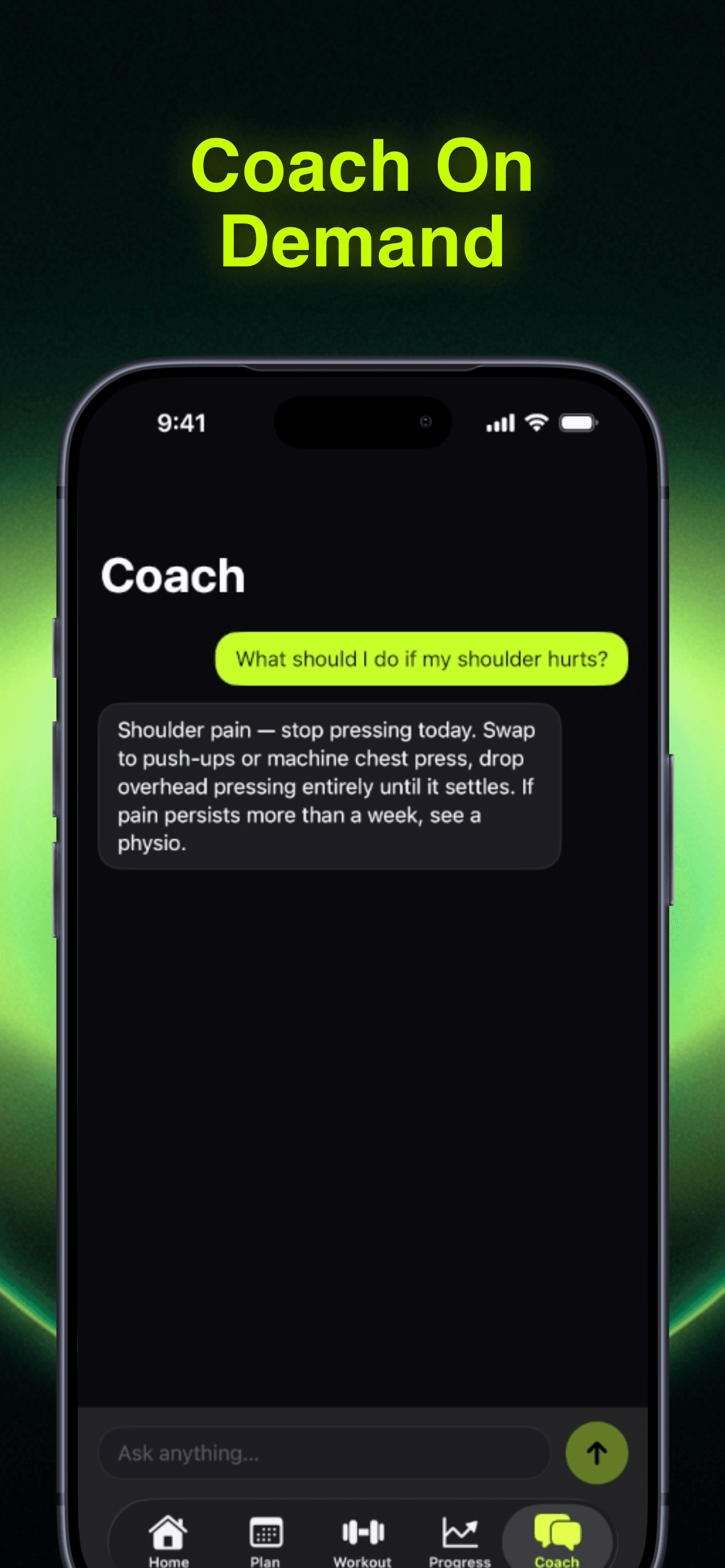
Photo by RepBro.
You've probably seen the ads. AI workout plans that "adapt to you" and "learn from your progress." But what does an AI workout plan actually do that a static PDF or cookie-cutter template doesn't?
An AI workout plan analyzes your individual constraints (goals, equipment, schedule, experience level) to generate personalized programming, then continuously adapts based on your logged performance data, RPE feedback, and progress patterns. Unlike static plans, it makes real-time decisions about exercise selection, volume, intensity, and progression based on how you're actually responding to training.
The difference isn't just marketing fluff. It's the gap between following someone else's plan and having a plan built specifically for your situation that evolves as you do.
How AI Generates Your Initial Program
Most people think AI workout plans just shuffle exercises randomly. The reality is more systematic.
A proper AI system starts by analyzing your training variables:
- Goals: Hypertrophy, strength, endurance, or sport-specific performance
- Equipment access: Full gym, home setup, resistance bands, bodyweight only
- Experience level: Beginner, intermediate, or advanced training age
- Schedule constraints: Days per week, session length, preferred split
- Physical limitations: Injuries, mobility issues, exercise preferences
The AI then applies established programming principles to create your baseline plan. It's not inventing new exercise science. It's applying proven methods like progressive overload, specificity, and recovery management to your specific situation.
For example, if you're a beginner with home dumbbells training 3 days per week for hypertrophy, the AI might generate a full-body split emphasizing compound movements with 3-4 sets of 8-12 reps. If you're an intermediate lifter with gym access training 5 days per week for strength, you might get an upper/lower split with periodized rep ranges and accessory work.
Real-Time Adaptation Based on Performance Data
Here's where AI workout plans separate from static templates: they respond to your actual training data.
Every time you log a set, the AI processes multiple data points:
- Load progression: Are you hitting the prescribed reps at the target weight?
- RPE feedback: How hard did each set feel on a 1-10 scale?
- Volume tolerance: Are you recovering between sessions?
- Consistency patterns: Which exercises do you consistently perform well vs. struggle with?
The AI uses this information to make micro-adjustments. If you're consistently hitting 12 reps when the program calls for 10, it might increase the weight. If your RPE is consistently 9-10 when it should be 7-8, it might reduce volume or suggest longer rest periods.
This creates a feedback loop that static plans can't match. Your program evolves based on how you're actually responding to training, not just following a predetermined progression scheme.
Smart Exercise Selection and Substitutions
One of the most practical advantages of AI workout plans is intelligent exercise swapping.
Traditional programs lock you into specific exercises. Miss a day? Skip that muscle group. Gym doesn't have the equipment? Tough luck. Shoulder acting up? Figure it out yourself.
AI systems can make real-time substitutions while preserving the training stimulus:
- Equipment-based swaps: No barbell? Switch to dumbbell or machine variations
- Injury accommodations: Shoulder issue? Replace overhead pressing with horizontal pressing
- Preference adjustments: Hate Bulgarian split squats? Get goblet squats or step-ups instead
- Recovery management: Feeling beat up? Get lower-intensity variations of the same movement patterns
The key is that these swaps aren't random. The AI maintains the intended muscle groups, movement patterns, and training stimulus while adapting to your constraints.
Progressive Overload That Actually Responds to You
Progressive overload is the foundation of muscle growth and strength gains. But most static programs apply it mechanically: add 5 pounds every week, increase reps in a predetermined pattern, or follow rigid percentage schemes.
AI workout plans can implement more nuanced progression strategies:
Load-based progression: If you're consistently hitting rep targets with good form (RPE 7-8), increase weight. If you're grinding out reps at RPE 9-10, maintain current load and focus on technique.
Volume progression: Add sets or exercises when you're recovering well and performance is stable. Reduce volume when fatigue is accumulating faster than adaptation.
Intensity progression: Periodize rep ranges based on your response. If you're progressing well in the 8-12 range, continue. If progress stalls, shift to 6-8 reps with heavier loads or 12-15 reps with lighter loads.
Frequency adjustments: Increase training frequency for lagging muscle groups or movements you recover from quickly. Reduce frequency for areas that need more recovery time.
This creates progression that matches your individual recovery capacity and response patterns, not a one-size-fits-all timeline.
What AI Can't (And Shouldn't) Replace
AI workout plans excel at systematic programming and data-driven adjustments. But they have limitations.
Form coaching: AI can't watch your squat depth or bench press bar path. You still need to learn proper technique through video analysis, coaching, or careful self-assessment.
Injury diagnosis: AI can suggest exercise modifications based on reported discomfort, but it can't diagnose injuries or provide medical advice. Persistent pain requires professional evaluation.
Motivation and accountability: AI can send reminders and track streaks, but it can't provide the human connection and emotional support that keeps many people consistent.
Complex periodization: While AI can implement basic periodization, advanced athletes might need more sophisticated programming that accounts for competition schedules, sport-specific demands, and complex training phases.
The sweet spot for AI workout plans is the intermediate lifter who understands basic technique but wants smarter programming than static templates provide.
Making the Most of AI-Generated Programming
To get maximum value from an AI workout plan, you need to feed it quality data.
Log everything consistently: Sets, reps, weight, and RPE for every exercise. The more data you provide, the better the AI can adapt your program.
Be honest with RPE ratings: Don't ego-lift your RPE scores. If a set felt like an 8, log it as an 8. Accurate feedback drives better programming decisions.
Report issues promptly: Experiencing pain, unusual fatigue, or equipment problems? Update your profile or report issues so the AI can make appropriate adjustments.
Trust the process initially: Give the AI 4-6 weeks to establish baseline patterns before making major manual overrides. Early adjustments might seem conservative, but they're building toward sustainable long-term progress.
The goal isn't to outsource all training decisions to AI. It's to leverage AI's ability to process data and apply programming principles consistently while you focus on execution and technique.
An AI workout plan that actually adapts to your performance data beats following someone else's static program every time. The question isn't whether AI can replace human coaches entirely—it's whether it can provide better programming than the generic templates most people follow by default.
Ready to see how personalized AI programming compares to your current routine? RepBro generates adaptive workout plans based on your goals, equipment, and logged performance data.
Frequently asked questions
- How does an AI workout plan differ from a regular workout plan?
- An AI workout plan adapts in real-time based on your logged performance data, RPE feedback, and progress patterns, while regular plans follow a fixed progression regardless of how you're actually responding to training.
- What data does AI need to create an effective workout plan?
- AI needs your goals, equipment access, experience level, schedule constraints, and ongoing performance data including sets, reps, weights, and RPE ratings for each exercise.
- Can AI workout plans replace human personal trainers?
- AI excels at systematic programming and data-driven adjustments but cannot provide form coaching, injury diagnosis, or the human motivation and accountability that many people need.
- How long does it take for an AI workout plan to adapt to my needs?
- Most AI systems need 4-6 weeks of consistent data logging to establish your baseline patterns and response to training before making significant adaptations.
- What happens if I miss workouts or can't do certain exercises?
- AI workout plans can make real-time exercise substitutions and adjust programming based on missed sessions while preserving the intended training stimulus and muscle group targets.