Juggernaut AI vs JEFIT — plan quality, logging speed, progression, price (and where RepBro fits)
A practical, evidence-aware comparison of Juggernaut AI and JEFIT on plans, logging speed, progression, price models, plus where RepBro suits lifters who want AI plans plus accountability.

Photo by RepBro.
Juggernaut AI emphasizes AI-driven, periodized strength plans and in-app coaching; JEFIT is stronger as a fast, flexible tracker and exercise library with templates. If you want AI plans plus motivational accountability, an app offering AI plan generation plus coach-like prompts may better match your needs.
What kind of workout plans does each app produce?
Juggernaut AI: built around generating individualized, periodized strength and performance plans using AI. It aims to set intensities and progressions tailored to your inputs and recent performance, producing a multi-week structure rather than only single-session templates.
JEFIT: primarily a workout tracker and program library. It provides many pre-made routines and lets users and coaches build and share templates. Plans are usually manual or template-based; automatic, AI-driven reprogramming is not its core claim.
Evidence-aware note: good programming follows progressive overload, appropriate weekly volume, and planned recovery/deloads. Apps that produce periodized multi-week plans make applying these concepts easier, but no app replaces sound coaching judgment.
Which app is faster and easier to use for logging sets in the gym?
JEFIT: known for a quick logging workflow, large exercise library, and simple set/rep entry screens. That makes it convenient when you need to move quickly between stations.
Juggernaut AI: logging is supported and integrated with the plan, but the experience is more coaching- and plan-focused. That can be helpful for following a structured progression, though it may not feel as minimal as a dedicated fast-logger.
Practical tip: if logging speed is your top priority, test both in a real session. Offline logging and voice entry (where available) materially change convenience.
How do they handle progression and program adjustments?
Juggernaut AI: uses AI to suggest progressions and adjustments based on inputs like recent lifts, perceived RPE, and stated goals. That aligns with contemporary approaches that encourage autoregulation and periodic review.
JEFIT: progression is typically manual; you can follow progressive templates or alter loads/sets yourself. Some community-created programs include autoregulatory cues, but automated adjustment based on your recent performance is not the app's principal feature.
Sports-science context: consistent progressive overload, adequate recovery, and monitoring (rates of perceived exertion, set performance) are well-supported methods to drive strength and hypertrophy. Apps that help you track and adjust make it easier to apply these principles, but execution and consistency matter more than the app's adjustment algorithm.
How do the price models compare?
Both apps use freemium/subscription approaches. JEFIT has a basic free tier with in-app purchase/subscription options for premium features. Juggernaut AI is offered as a subscription product for its AI-planning and coaching features. Avoid assuming specific price points — check each vendor for current plans and trials.
What other features and integrations matter?
- Exercise library and video: JEFIT has an extensive exercise database and community-shared routines. Juggernaut AI focuses on exercises relevant to its programming approach.
- Community and coaching: JEFIT includes community components and shared programs. Juggernaut AI centers on algorithmic coaching and plan rationale.
- Integrations: both provide mobile experiences; available platform support and third-party integrations change over time, so verify current compatibility before committing.
Quick comparison table
| Feature | Juggernaut AI | JEFIT |
|---|---|---|
| Plan generation | AI-driven, periodized, adaptive | Template/manual/custom programs |
| Logging speed | Good, plan-focused workflow | Fast, minimal logging screens |
| Progression | Automated suggestions based on inputs | Manual progression via templates |
| Price model | Subscription for AI features | Freemium + subscription for premium features |
| Exercise library | Focused on program needs | Large searchable database |
| Community/tools | Coaching rationale, AI coach chat (where offered) | Community programs, leaderboards |
Where does an app like RepBro fit if I want AI plans plus accountability?
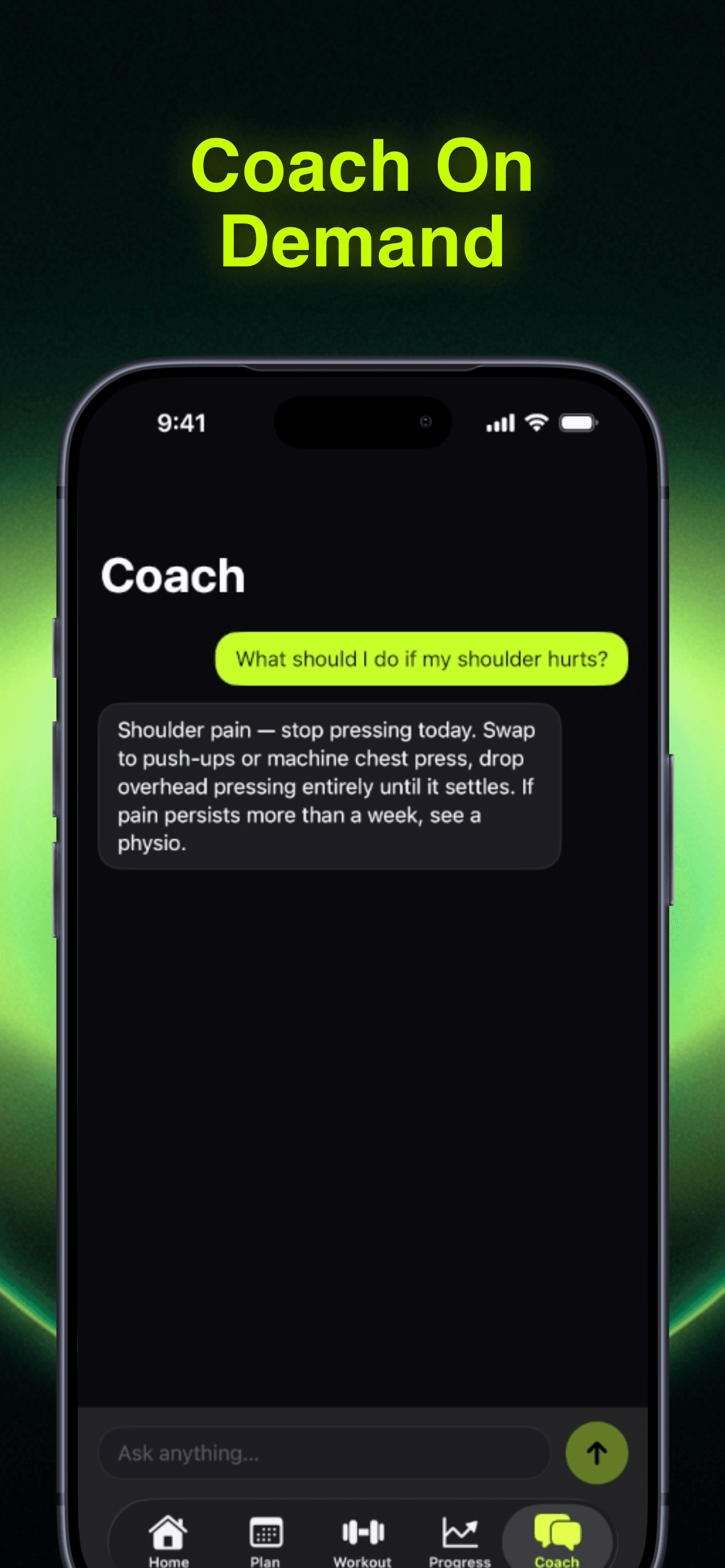
If your priority is AI-generated plans combined with motivational accountability (short coach-style prompts, persona "hype calls," and an in-app chat), an app that explicitly pairs planning with those features may suit you better. RepBro offers AI-generated personalized workout plans (editable, a custom plan builder), an AI coach chat, motivational "hype calls" from coach personas, strength and cardio logging with Apple Watch import, offline-first logging, voice logging, ChatGPT plan import (repbro.app/import), and an AI "Future Me" transformation preview. It is iOS-only today and runs on a subscription with a free trial.
This combination can help with adherence: the plan gives structure while motivational touches and conversational coaching increase the likelihood you follow the plan. That said, app features should match the behavior you need (reminders, check-ins, or social accountability).
What can't any app or AI coach do for you?
- Apps cannot reliably see or correct your lift form. Video review by a qualified coach or in-person supervision is necessary for technical faults and injury risk.
- Apps do not replace medical or physical-therapy care. If you have chronic pain, a recent injury, or a rehabilitation need, consult a qualified professional.
- No algorithm guarantees results. A well-designed plan requires consistent execution, progressive overload, and recovery; consistency typically matters more than the choice of app.
Short safety note
Stop training on sharp or unusual pain. This article does not diagnose injuries or prescribe rehab. For complex pain or persistent issues, consult a medical or qualified movement professional.
Final, practical takeaway
Choose Juggernaut AI if you want AI-first, periodized strength plans and automated adjustment. Choose JEFIT if you want a fast, flexible logger with a broad exercise library and community templates. If you want AI plans plus coach-like accountability (hype calls and conversational prompts), consider an app that bundles both features, such as the one linked above, and trial it to confirm the workflow matches how you train.
Frequently asked questions
- Which app creates the more personalized plan: Juggernaut AI or JEFIT?
- Juggernaut AI focuses on AI-driven, adaptive plan generation and typically produces more personalized, periodized plans. JEFIT is primarily a tracker and library with templates and user-made programs; personalization is more manual unless you import or build a custom routine.
- Which app is faster to log sets and reps in the gym?
- JEFIT emphasizes quick logging with a large exercise library and straightforward set-entry screens, making it fast for routine tracking. Juggernaut AI centers on plan generation and coaching — logging is supported but the workflow can feel more coach-first than speed-first.
- If I want AI plans plus accountability, should I pick an app or a coaching feature?
- If you want AI-generated plans plus human-style accountability, choose an app that pairs adaptive programming with coach-like prompts or motivational features. Some apps add AI chat and motivational audio; others focus on tracking. Consider whether you need reminders, check-ins, or social accountability when choosing.