Future vs Ladder (and Where RepBro Fits)
An evidence-aware comparison of Future and Ladder on plans, logging speed, progression, and pricing. Includes where RepBro fits for AI plans plus accountability.

Photo by RepBro.
Future and Ladder both center human coaching and accountability rather than being pure logbooks; the key differences are how coaching is delivered, how tightly plans integrate with logging, and the emphasis on nutrition or habit coaching. Which works for you depends on time, budget, and whether you want human coaching or AI-generated plans.
What are the core differences in coaching model and plans?
Future and Ladder are both built around human coaching and accountability. In general terms:
- Future pairs you with a dedicated coach who provides personalized programming and accountability. Communication and coach oversight are core parts of the product.
- Ladder positions itself around coach-led programs that often include training and nutrition support, with an emphasis on measurable outcomes.
Neither approach is inherently superior from a training-science perspective: successful programs follow well-established principles (progressive overload, sufficient weekly volume, appropriate frequency, and planned recovery). The practical difference is human time and attention: if you prefer a one-on-one relationship and frequent personalized tweaks, a dedicated coach model can be worth the premium.
How fast and simple is logging workouts on each platform?
Logging speed is a concrete, user-facing difference that matters when you want to move between sets quickly.
- Future and Ladder both integrate logging with coach context, which can add a couple of taps compared with minimalist trackers because entries are often tied to a coach's plan and feedback loop.
- If raw logging speed is your priority, look for features such as single-tap set completion, quick rest timers, voice input, and watch integration. These are the real time-savers during a session.
Practical tip: try the free trial or demo and complete a superset-style workout to see how many taps per set you need. That will reveal which interface interrupts your flow less.
How do they handle progression, periodization, and coach feedback?
Both brands focus on individualized progression via coaches rather than generic linear programs. Evidence-based coaching follows these widely accepted principles:
- Progressive overload: systematically increasing stress via load, reps, or volume.
- Adequate weekly volume and frequency appropriate to the trainee’s experience and goals.
- Planned recovery blocks or deloads to manage fatigue and avoid stagnation.
Where differences appear is in how prescriptive the coach is and how frequently programs are adjusted. With human coaches you generally get subjective adjustments (based on logs, messages, and check-ins); the quality depends on the coach's experience and the cadence of interaction.
How do the price models generally compare?
Avoiding specific prices, the general patterns are:
- Apps that assign a dedicated human coach and frequent one-on-one feedback tend to use higher-priced subscription tiers because labor is the main cost driver.
- Apps offering templated programs with optional coach check-ins tend to be less expensive.
When evaluating value, compare what the subscription includes: how personalized is the plan, how often will the coach review and change your program, are nutrition or habit coaching included, and is there a trial period or money-back guarantee?
Quick comparison table (what matters most)
| Feature | Future (general) | Ladder (general) | Logging & plan priorities |
|---|---|---|---|
| Coaching model | Dedicated human coach and accountability | Coach-led programs with training + nutrition emphasis | Human coaching vs program-focused differences matter more than brand |
| Plan customization | High (coach-tailored) | High (programs with coach support) | Quality depends on coach time and responsiveness |
| Logging speed | Streamlined but integrated with coach context | Streamlined with nutrition tracking emphasis | Test in-app flow to judge tap-count per set |
| Progression approach | Individualized coach adjustments | Coach-driven periodization | Both follow progressive overload principles |
| Price model | Subscription with coach labor premium | Subscription, often tiered by service level | Higher personalization usually costs more |
Where does RepBro fit if I want AI plans and accountability?
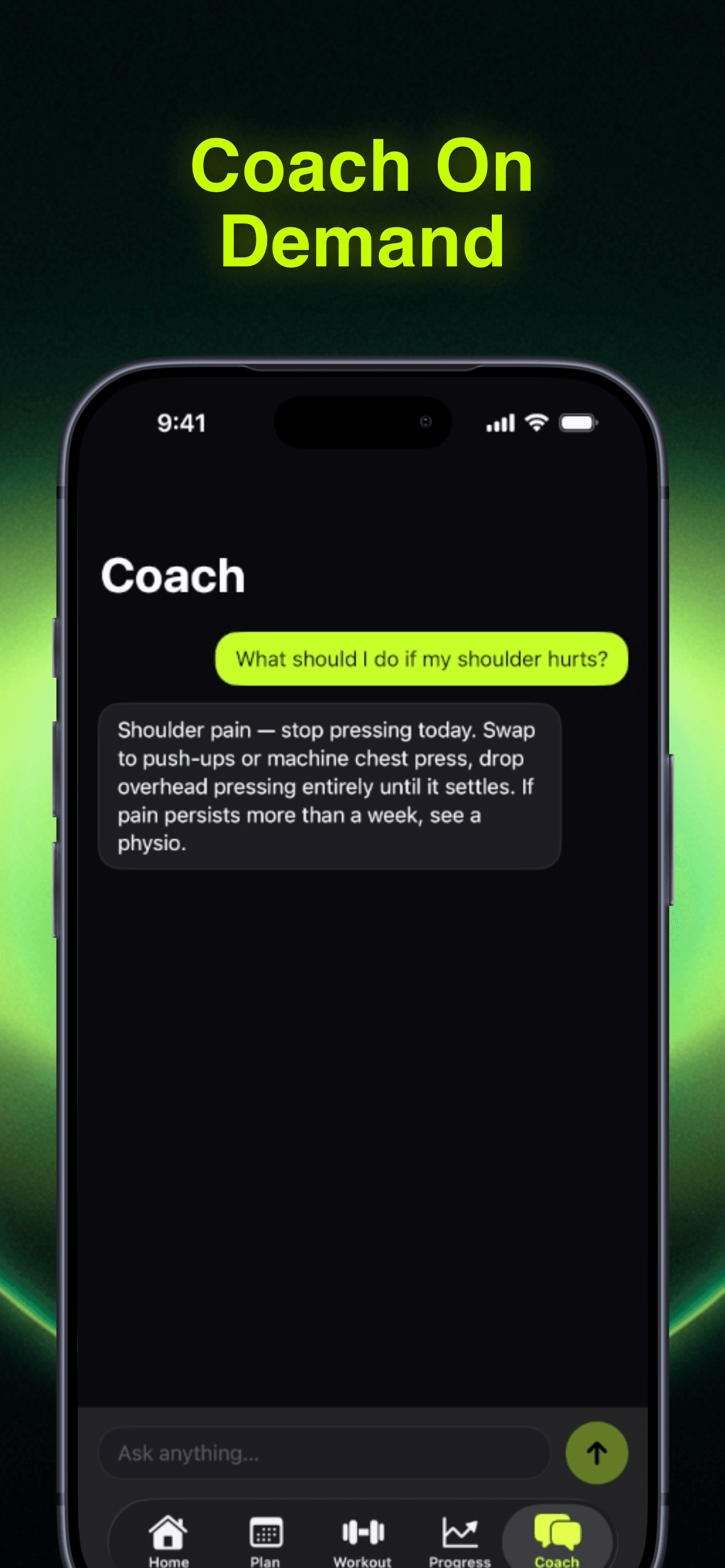
If you want AI-generated personalized plans you can edit, plus coach-like motivational features rather than only human coaching, RepBro occupies a different niche. RepBro offers AI-generated plans (editable with a custom plan builder), an AI coach chat, and motivational "hype calls" from coach personas. It supports strength and cardio logging with Apple Watch import, offline-first and voice-based logging, and allows importing ChatGPT plans via repbro.app/import. iOS only today; subscription with a free trial is available.
That makes RepBro a hybrid option if you want fast, editable AI plans combined with lightweight accountability and motivational tools rather than pure human coaching.
What should you test before committing?
- Logging flow: complete a full session and time how many taps/inputs per set. Do you lose momentum? Does the app support voice or watch input?
- Coach interaction: how often does the coach (human or AI) actually change your plan? Are changes evidence-based and explained?
- Trial period: use free trials to stress-test customer service, refund policy, and real coach responsiveness.
Safety note
Stop exercise immediately if you feel sharp or unusual pain. Apps can guide programming but cannot see or correct your form in real time. For new or persistent injuries, consult a qualified medical or rehabilitation professional before continuing.
Limitations: what apps and AI coaching cannot do
- No app can reliably see and correct your exercise technique the way a qualified in-person coach can. Video review helps but is not a substitute for hands-on coaching when form or injury risk is high.
- Apps cannot diagnose medical conditions or prescribe rehabilitation—only a clinician can do that.
- A program is only as effective as your consistency and recovery. Even the most advanced app cannot replace adherence, sleep, nutrition, and progressive effort.
Concede real strengths: both Future and Ladder offer meaningful human coaching and accountability; their differences are in communication style and included services. If you prefer AI-first plans with editable control and motivational features, consider options like RepBro (https://apps.apple.com/us/app/gym-workout-coach-repbro/id6763749305) to bridge plan automation with accountability tools.
References and further reading: review literature summaries on progressive overload, weekly training volume, and recovery strategies from reputable strength and conditioning sources and position statements to match your goals and experience level.
Frequently asked questions
- Which app is faster for logging workouts — Future or Ladder?
- Both apps prioritize coach interaction over raw data entry, but logging speed depends on interface design and shortcuts. Future and Ladder provide streamlined logging tied to coach feedback; neither replaces the fastest dedicated tracker. If speed is critical, look for features like one-tap sets, voice input, or watch integration.
- Do these apps provide real progression and periodization?
- Yes: both use coach-led progression principles rather than random workouts. Good coaching emphasizes progressive overload, tracked volume, and planned recovery. The exact periodization models vary by coach—ask how volume, intensity, and deloads are managed in any program before subscribing.
- Is one app more affordable than the other?
- Pricing models typically center on subscriptions and levels of coach involvement. Apps that pair you with a dedicated human coach generally cost more than self-guided plan apps. Compare cancellation terms, trial periods, and what's included (customization, nutrition, direct coach time) to judge value.