Treadmill Incline Walking: The Underrated Cardio Everyone Skips
Treadmill incline walking burns 50-70% more calories than flat walking while being easier on joints than running. Use 6-15% incline at 3-4 mph for optimal fat loss and conditioning.
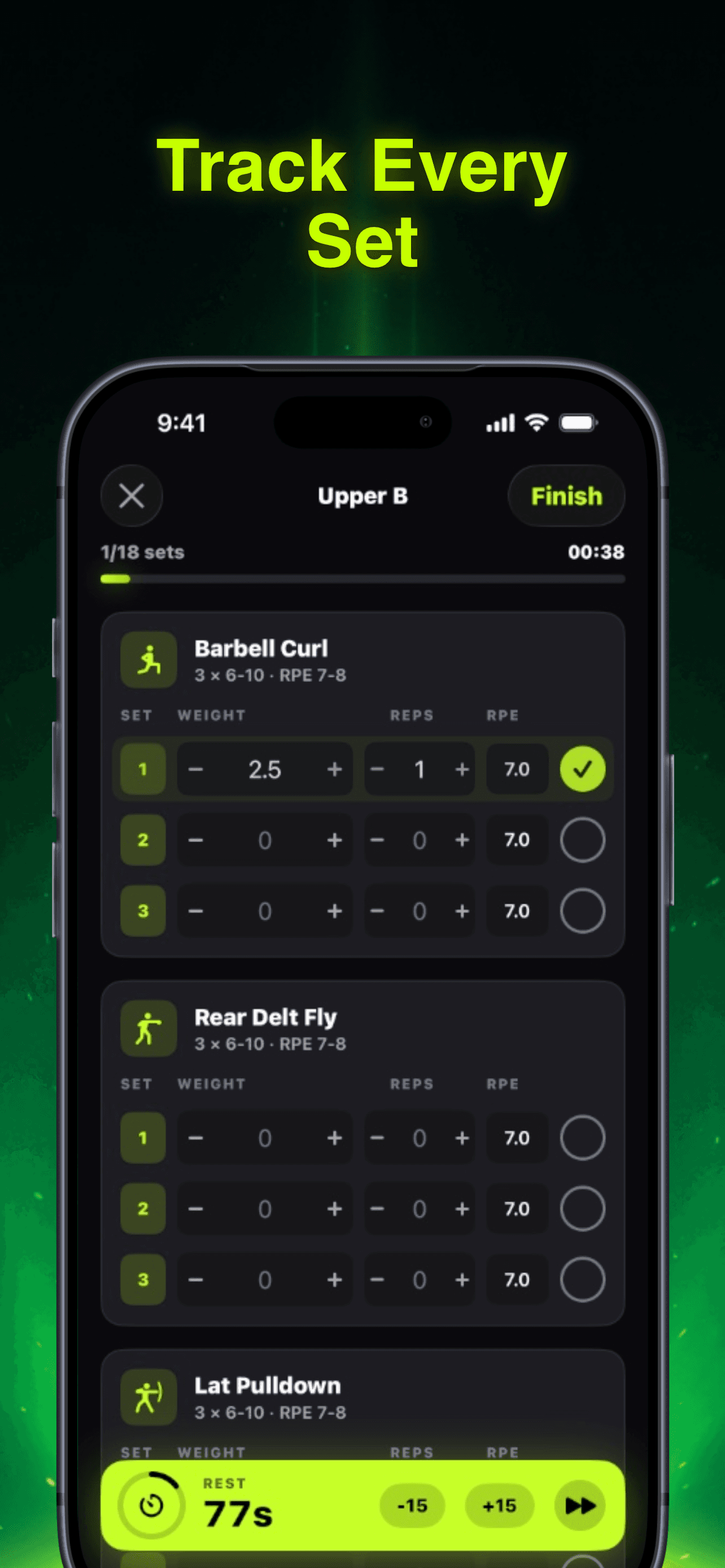
Photo by RepBro.
Walk into any commercial gym and you'll see the same scene: packed treadmills with people either jogging at moderate speeds or walking on flat surfaces while scrolling their phones. Meanwhile, the most effective cardio method sits unused—treadmill incline walking at meaningful grades.
Treadmill incline walking burns 50-70% more calories than flat walking while putting significantly less stress on your joints than running. At a 10% incline and 3.5 mph, you'll hit the same metabolic demand as a 6-7 mph jog, but your knees, ankles, and hips will thank you later. This makes incline walking the perfect cardio choice for lifters who want to preserve their joints for heavy squats and deadlifts.
Why Incline Walking Beats Most Cardio Options
The magic happens when you elevate that treadmill deck. Walking uphill forces your body to work against gravity, dramatically increasing energy expenditure without requiring the impact forces of running.
A 180-pound person walking at 4 mph on a 10% incline burns approximately 480 calories per hour. Compare that to 320 calories for flat walking at the same speed—a 50% increase just from changing the angle.
Your posterior chain gets hammered too. Incline walking heavily engages your glutes, hamstrings, and calves in a way that flat cardio simply can't match. This makes it excellent supplementary work for lifters who spend most of their time in the sagittal plane with squats, deadlifts, and presses.
The joint-sparing aspect can't be overstated. Running generates impact forces of 2-3 times your body weight with each foot strike. Incline walking? You're looking at forces barely above normal walking levels, even at steep grades.
The Optimal Incline Walking Protocol
Here's the sweet spot for fat loss and conditioning: 6-15% incline at 3.0-4.2 mph. This range keeps you in the aerobic zone while maximizing calorie burn.
Start conservative if you're new to incline work:
- Week 1-2: 6% incline, 3.2 mph, 20-25 minutes
- Week 3-4: 8% incline, 3.5 mph, 25-30 minutes
- Week 5+: 10-12% incline, 3.8-4.0 mph, 30-45 minutes
Advanced trainees can push to 15% incline, but most people will find 10-12% plenty challenging when sustained for 30+ minutes.
Speed matters less than consistency. Find a pace where you can breathe through your nose for the first 10 minutes, then naturally progress to mouth breathing as the session continues. You should be able to hold a conversation, but it shouldn't be effortless.
Incline Walking vs Running: The Joint Health Reality
Running advocates love to dismiss walking as "too easy," but the numbers tell a different story. A 150-pound person running at 6 mph burns about 680 calories per hour. That same person walking at 4 mph on a 12% incline burns roughly 540 calories—only 20% less while eliminating the repetitive impact stress.
For lifters prioritizing strength and muscle gain, this trade-off makes perfect sense. Your knees don't care whether those 540 calories came from running or walking. They do care about absorbing thousands of impact forces that could compromise your next squat session.
The recovery benefits extend beyond joint preservation. Incline walking sits comfortably in Zone 2 heart rate territory—roughly 60-70% of your max heart rate. This intensity promotes fat oxidation, improves mitochondrial density, and enhances recovery between lifting sessions.
Programming Incline Walking Around Your Lifts
The beauty of incline walking lies in its flexibility. Unlike high-intensity cardio that demands careful scheduling around heavy training days, you can slot incline walks almost anywhere in your program.
Post-workout: 15-20 minutes after lifting helps with lactate clearance and blood flow to worked muscles. Keep the incline moderate (6-8%) to avoid competing with your strength work.
Off days: Longer 30-45 minute sessions at higher inclines (10-15%) work well for active recovery and additional calorie expenditure.
Morning fasted: If fat loss is the priority, morning incline walks in a fasted state can enhance fat oxidation. Stick to moderate inclines (8-10%) to avoid excessive stress on an empty stomach.
Never let incline walking compromise your lifting performance. If you're dragging into your squat session because yesterday's 45-minute hill walk fried your legs, you've missed the point entirely.
Common Incline Walking Mistakes
Most people either go too steep too soon or treat it like a casual stroll. A 20% incline at 2 mph isn't superior to 10% at 4 mph—you're just making it unnecessarily difficult while reducing the cardiovascular benefit.
Holding onto the handrails defeats the purpose. Your body weight should drive the metabolic demand, not the treadmill motor. If you need the rails for balance at your current settings, reduce either the incline or speed until you can walk naturally.
The other extreme involves turning every session into a suffer-fest. Incline walking should feel challenging but sustainable. If you're gasping for air at minute 10, you've gone too aggressive with your settings.
The Tracking Advantage
This is where having a proper workout log becomes crucial. Unlike running, where pace and distance provide clear metrics, incline walking success comes from consistency across multiple variables: incline percentage, speed, duration, and perceived effort.
I track each session noting the exact incline, speed, total time, and how I felt during the final 10 minutes. This data helps me progress systematically rather than randomly adjusting settings based on daily motivation levels.
The goal isn't to max out the incline as quickly as possible. It's to find sustainable settings that you can maintain and gradually improve over weeks and months. Small increases—bumping from 10% to 11% incline or adding 0.1 mph—compound into significant fitness improvements.
Ready to ditch the joint-pounding cardio and try something that actually complements your lifting? Your next gym session is the perfect time to test a 20-minute incline walk at 8% grade and 3.5 mph. Your knees will appreciate the break from running, and your conditioning will improve just the same.
Frequently asked questions
- What's the best treadmill incline percentage for fat loss?
- 10-12% incline at 3.5-4.0 mph provides optimal fat burning while remaining sustainable for 30+ minutes. This burns 50-70% more calories than flat walking with minimal joint stress.
- How long should I do incline walking for weight loss?
- Start with 20-25 minutes and progress to 30-45 minutes. Consistency matters more than duration—three 25-minute sessions per week beats one 60-minute session that leaves you too tired to repeat.
- Is incline walking better than running for lifters?
- For lifters prioritizing strength and muscle gain, incline walking provides 80% of running's calorie burn with significantly less joint stress and faster recovery between lifting sessions.
- What speed should I use for incline walking?
- 3.0-4.2 mph works best for most people. Focus on maintaining consistent form rather than maximizing speed. You should be able to hold a conversation for the first 10 minutes.
- Can I do incline walking every day?
- Yes, incline walking is low-impact enough for daily use. However, vary the intensity—alternate between moderate 20-minute sessions and longer 40+ minute sessions to avoid overuse and maintain progression.