How Many Sets Per Muscle Per Week for Hypertrophy? (2026 Guide)
Most lifters need 10-20 sets per muscle per week for hypertrophy. Beginners grow with 10-12 sets; intermediates need 15-20. Track volume, autoregulate, and progress when recovery allows.
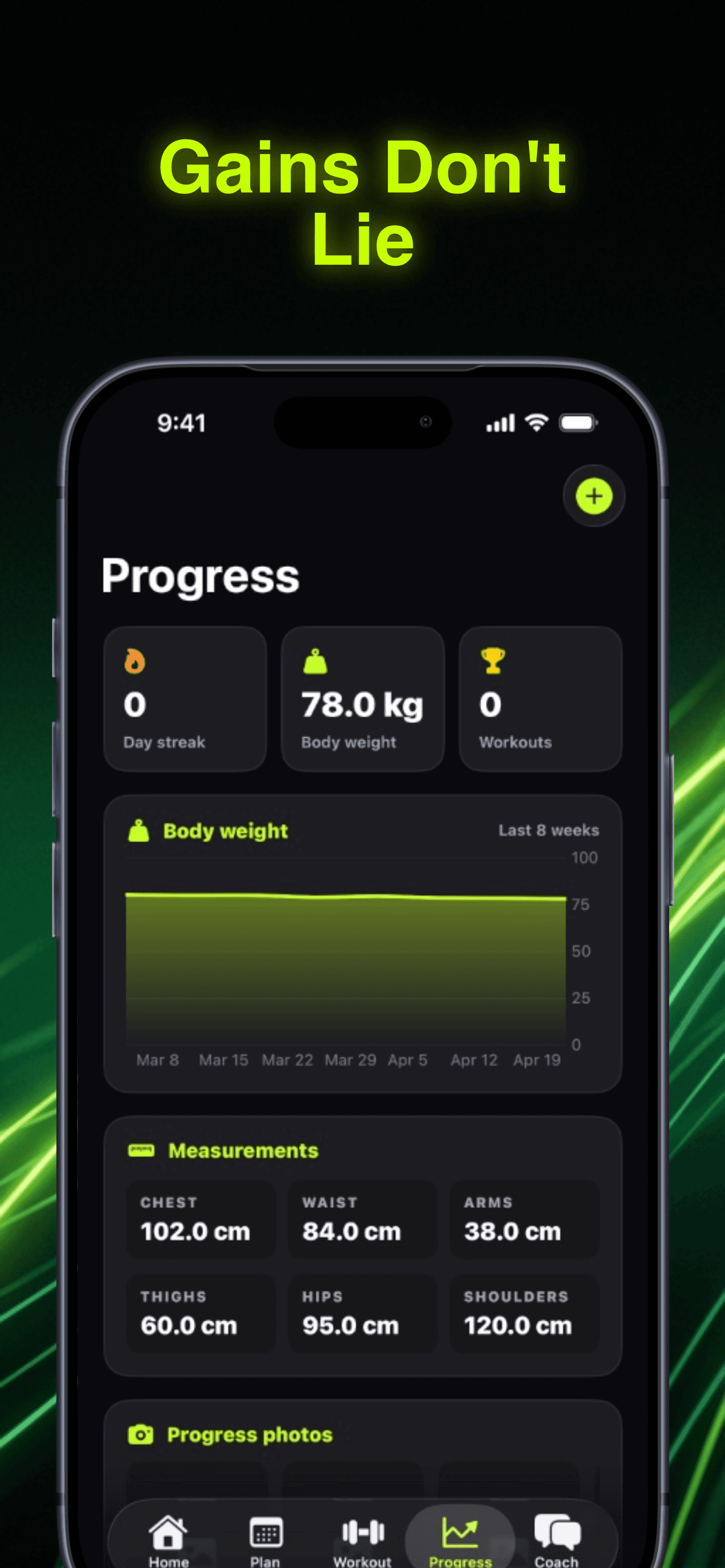
Photo by RepBro.
You're adding sets every week, chasing the pump, and wondering if more is always better. It's not. There's a dose-response curve for training volume, and most lifters sit well below—or way above—the zone that actually drives growth.
Most lifters need 10-20 working sets per muscle per week to maximize hypertrophy. Beginners grow with 10-12 sets. Intermediates respond best to 15-20 sets. Advanced lifters may push 20-25 sets for lagging muscles, but only if recovery supports it. Below 10 sets, you're leaving gains on the table. Above 25, you're likely accumulating fatigue faster than you're building muscle.
The range exists because your training age, genetics, recovery capacity, and nutrition all modulate how much volume you can productively use. A 19-year-old college lifter sleeping nine hours a night can handle more than a 35-year-old with two kids and a stressful job. The goal isn't to hit an arbitrary number—it's to find your minimum effective volume (MEV), push toward your maximum recoverable volume (MRV), and stay there as long as progress continues.
What counts as a "set"?
A working set is any set taken within 0-4 reps of failure (roughly 6-10 RPE). Warm-ups don't count. Neither do sets you phone in at RPE 5. If you're doing 3 sets of bench press at RPE 8, 4 sets of incline dumbbell press at RPE 7, and 3 sets of cable flies at RPE 9, that's 10 sets for chest that week.
Count sets per muscle group, not per exercise. Your rear delts get hit by face pulls, but also by rows. Your biceps work during chin-ups and direct curls. When in doubt, count the set if the target muscle is working hard enough to be a limiting factor.
The volume landmarks: MEV, MAV, and MRV
Dr. Mike Israetel's volume landmark framework gives you three reference points:
- MEV (Minimum Effective Volume): the least amount of volume that stimulates growth. For most muscles, that's 8-10 sets per week.
- MAV (Maximum Adaptive Volume): the sweet spot where you grow fastest without excessive fatigue. Typically 12-18 sets per week.
- MRV (Maximum Recoverable Volume): the ceiling. Push past this and performance drops, sleep suffers, or joints ache. Often 20-25+ sets per week, highly individual.
Your job is to start near MEV, add sets over a training block (progressive overload via volume), and back off when you approach MRV. Then deload, let supercompensation happen, and repeat.
How many sets per muscle group?
Here's a practical starting point based on training experience and muscle size:
Beginners (0-2 years of consistent training):
- Large muscles (chest, back, quads, hamstrings): 10-12 sets/week
- Medium muscles (delts, triceps, biceps): 8-10 sets/week
- Small muscles (rear delts, calves, abs): 6-8 sets/week
Intermediates (2-5 years):
- Large muscles: 15-18 sets/week
- Medium muscles: 12-15 sets/week
- Small muscles: 8-12 sets/week
Advanced (5+ years):
- Large muscles: 18-22 sets/week
- Medium muscles: 15-18 sets/week
- Small muscles: 10-14 sets/week
These are starting points, not commandments. A lagging muscle might need an extra 4-6 sets. A muscle that grows easily might thrive on the lower end. Track your volume, track your performance, and adjust.
How to progress volume across a training block
Don't start a mesocycle at MRV. You'll have nowhere to go. Instead, start at MEV and add 1-2 sets per muscle per week. Here's what a four-week accumulation block might look like for chest:
- Week 1: 12 sets
- Week 2: 14 sets
- Week 3: 16 sets
- Week 4: 18 sets
- Deload week: 6-8 sets
If performance stalls or you feel beat up in week 3, that's your MRV signal. Back off, deload, and start the next block at MEV again. This is autoregulation—you're letting your body tell you when to push and when to back off.
Frequency matters as much as total volume
Twelve sets for chest sounds simple until you decide whether to do all 12 on Monday or split them across three sessions. Research consistently shows that spreading volume across 2-3 sessions per muscle per week beats cramming it into one. Muscle protein synthesis stays elevated for 24-48 hours after a session, so hitting a muscle every 48-72 hours keeps the growth signal high.
If you're doing 15 sets for quads per week, try:
- 5 sets Monday (squats)
- 5 sets Wednesday (leg press)
- 5 sets Friday (lunges or hack squats)
This beats doing 15 sets of legs on Monday and limping through the rest of the week.
When more sets stop working
You'll know you've crossed MRV when:
- Performance drops week to week (weights or reps decrease)
- Sleep quality tanks or resting heart rate climbs
- Joints ache even after warm-ups
- Motivation craters and you start skipping sessions
More volume is only useful if you can recover from it. If you're eating in a deficit, sleeping six hours a night, or training seven days a week, your MRV will be lower than someone with better recovery conditions. Respect that.
The one-week test
Not sure if you're doing enough volume? Run this experiment. For the next four weeks, add 2 sets per week to a lagging muscle group. Track performance on the main lifts for that muscle. If strength or reps climb, you were under-dosed. If performance stalls or drops, you've found your ceiling. Deload, then settle into the volume that was working.
I ran this with a client who swore his arms wouldn't grow. He was doing 8 sets per week for biceps and triceps. We pushed to 12 sets in week one, 14 in week two, 16 in week three. His chin-up reps jumped, his arm circumference went up 0.4 inches, and he finally broke through. He was simply under-volumized.
Track your volume or guess forever
The difference between lifters who dial in their volume and those who spin their wheels is simple: the first group writes it down. You need to know how many sets you did last week to know whether you're progressing this week.
RepBro automatically tracks your weekly volume per muscle group and surfaces it in your progress dashboard. You log your sets, and the app calculates whether you're trending up, flat, or regressing. No spreadsheet, no mental math. You see your quad volume for the week, compare it to last week, and decide whether to add a set or hold steady. That's how you autoregulate without guessing.
If you're still using pen and paper or trying to remember your volume from last Tuesday, you're programming blind. Start tracking today.
Frequently asked questions
- How many sets per week do I need to build muscle?
- Most lifters need 10-20 working sets per muscle per week for hypertrophy. Beginners grow with 10-12 sets, intermediates with 15-20 sets, and advanced lifters may use 20-25 sets for specific muscles. Start at the lower end and add volume as long as performance improves.
- What is MEV and MRV in training?
- MEV (Minimum Effective Volume) is the least volume needed to stimulate growth, typically 8-10 sets per muscle per week. MRV (Maximum Recoverable Volume) is the most volume you can handle before performance drops, often 20-25+ sets per week. Train between these landmarks.
- Should I count warm-up sets toward weekly volume?
- No. Only count working sets taken within 0-4 reps of failure (RPE 6-10). Warm-up sets and easy sets at RPE 5 or below don't provide enough stimulus to drive hypertrophy and shouldn't be included in your weekly set count.
- How often should I train each muscle per week?
- Train each muscle 2-3 times per week for best results. Muscle protein synthesis peaks 24-48 hours after training, so spreading your weekly volume across multiple sessions keeps the growth signal elevated and improves recovery between sessions.
- How do I know if I'm doing too many sets?
- Signs you've exceeded your MRV include: strength or reps dropping week to week, poor sleep or elevated resting heart rate, persistent joint pain, and low motivation. If you see these, reduce volume by 20-30% and take a deload week.