Building Muscle With Dumbbells Only: A Complete Approach
Practical, evidence-aware guide to building muscle using only dumbbells: exercises, weekly volume, progression, sample programs, and safety tips.
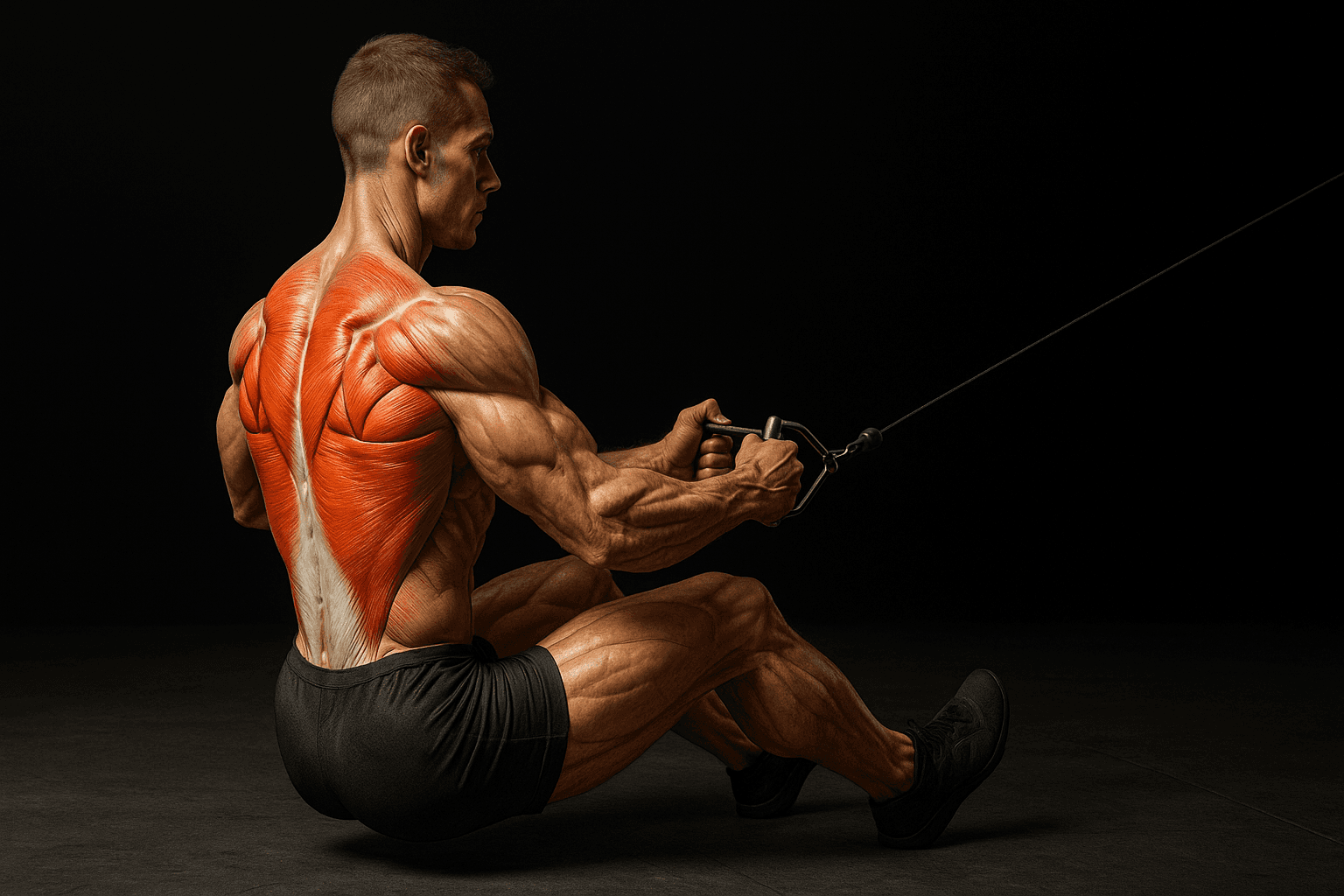
Photo by RepBro.
Can you build muscle training with dumbbells only? Yes—if you follow a structured program that provides progressive overload, adequate weekly volume (10–20 sets per muscle), and enough intensity. Dumbbells can cover all major movement patterns (squat, hinge, push, pull, carry) and, with the right programming, produce the same hypertrophy stimulus as barbells.
What makes dumbbell-only training effective (and its main limits)?
- Strengths: unilateral overload (single-leg/single-arm), better joint-friendly mechanics, easier to progress in small increments via reps or tempo, lots of variation to avoid plateaus.
- Limits: absolute top-end load is capped (so very low-rep maximal strength is harder), some lifts (heavy bilateral squat variants) are less convenient. You can work around most limits with volume and intensity techniques.
How much volume, intensity, and frequency? (Concrete numbers)
- Weekly sets per muscle: 10–20 hard sets. Beginners: 10–12; intermediate: 12–18; advanced: 16–20.
- Reps: 6–12 for primary compound work; 8–20 for accessory and when load is limited. Use 12–20 reps for time-under-tension and metabolic stress when distance from max load is large.
- Sets per exercise: 3–5.
- Sessions per week: 3 full-body, or 4 days (upper/lower) depending on recovery and schedule.
- Rest between sets: 60–120s for compound work; 30–60s for accessories or metabolic blocks.
- Progression: Add reps first (target 8–12 range), then increase load if available, then add extra set. Aim for weekly progression: +1–3 reps per set or +1 set per muscle every 1–3 weeks.
Exercise selection: cover the five movement patterns
- Squat pattern: goblet squat, dumbbell front squat (pair of DBs), Bulgarian split squat.
- Hinge pattern: Romanian deadlift (single-leg RDL to increase load per leg), dumbbell sumo deadlift.
- Horizontal push: floor dumbbell press, dumbbell bench press (if you have a bench), neutral-grip press.
- Vertical push: seated/standing dumbbell overhead press, single-arm push press.
- Pull: single-arm dumbbell row, chest-supported row (on an incline bench), rear-delt fly.
- Carry/anti-extension: farmer carry, suitcase carry, plank variations.
- Arms and calves: dumbbell curls, overhead/triceps extensions, seated calf raises (single-leg if light weights).
Include unilateral work to double the relative load per limb; if you have light dumbbells, use slower eccentrics (3–4s) and paused reps.
Sample 4-week hypertrophy block (3 days/week, full-body)
Weeks: 1–4. Use sets/reps as listed. Choose loads that make the last 1–2 reps hard.
Day A
- Goblet squat: 4 sets x 8–12
- Single-arm dumbbell row: 4 x 8–12 each side
- Floor dumbbell press: 3 x 8–12
- Single-leg RDL: 3 x 8–10 each side
- Farmer carry: 2 x 40–60 seconds
Day B
- Bulgarian split squat: 4 x 8–10 each leg
- Seated/standing DB overhead press: 4 x 6–10
- Chest-supported incline T/Y/I or reverse fly: 3 x 12–15
- Dumbbell pullover or single-arm dumbbell row: 3 x 10–12
- Triceps overhead extension: 3 x 10–15
Day C
- Dumbbell front squats or split squat: 4 x 6–10
- Romanian deadlift (double DB): 4 x 8–12
- Single-arm floor press: 3 x 8–12 each side
- One-arm row + pause at top: 3 x 8–12
- Hammer curls: 3 x 10–15
Weekly target: 12–18 sets for quads, 12–16 for back, 8–12 for chest, 8–12 for shoulders, accessory arms 6–10. Adjust to hit the 10–20 sets per muscle/week range.
Progression and tracking (practical rules)
- Log every set: load, reps, RPE (if possible). If you hit the top of rep range on all sets for two sessions in a row, increase load next session or add one set.
- If weights are limited: increase reps by 2–4 per set, add an extra set per week, or slow down the eccentric (3–5s) to increase time under tension.
- Deload every 4–8 weeks: reduce volume by 30–50% for one week if progress stalls or fatigue accumulates.
Intensity techniques that work with dumbbells
- Slow eccentrics (3–5s) increase mechanical tension.
- Paused reps at weakest points improve control and strength.
- Drop sets and rest-pause can add volume when weight is limited.
- Supersets (push/pull or agonist/antagonist) save time and increase metabolic stress.
Safety note for exercises
Stop and reassess if you feel sharp or unusual pain. Use conservative loads for unilateral and overhead work until you confirm safe mechanics. If you have an injury or chronic pain, consult a qualified health or strength professional before starting a new program.
Equipment and program tools
Ideal: adjustable dumbbells up to a challenging load for your squats/hinges and a bench. If you track workouts, use tools like RepBro to log sets, auto-import plans, and follow progression—see import options at https://www.repbro.app/import or compare training tools at https://www.repbro.app/vs.
Short troubleshooting
- Not growing? Increase weekly sets by 10–20% or add a 4th weekly session. Ensure protein intake ~1.6–2.2 g/kg/day and progressive overload.
- Recovery issues? Lower session intensity, reduce volume by 20%, and add a rest day.
- Plateauing with light dumbbells? Use unilateral moves, slow eccentrics, paused reps, and higher reps (12–30) to boost stimulus.
One-sentence takeaway: Dumbbells-only training builds meaningful muscle when you program 10–20 hard sets per muscle per week, prioritize progressive overload, and use unilateral and tempo strategies to overcome load limits.
Frequently asked questions
- Can you get as strong with dumbbells as with a barbell?
- Yes—you can build substantial strength with dumbbells, especially for unilateral and functional strength. Barbells excel at maximal strength with very heavy loads; if your goal is near-maximal lifts (e.g., a very heavy squat or deadlift), a barbell is more efficient. For muscle size and general strength, properly programmed dumbbell training (progressive overload, 10–20 sets per muscle/week) is fully effective.
- How often should I train with only dumbbells?
- Train each muscle 2–3 times per week. Structure this as 3 full-body sessions, or a 4-day upper/lower split. Target 10–20 hard sets per muscle per week, split across sessions (e.g., 3–5 sets per exercise). Rest 48–72 hours before repeating the same muscles if sessions are intense.
- What if my dumbbells aren't heavy enough?
- Use strategies to increase challenge: slow eccentric (3–4s), paused reps, higher reps (12–30), unilateral variations, shorter rest, tempo dropsets, and increasing set volume. If none of those work, prioritize compound movements and consider investing in heavier dumbbells or adjustable sets.