How to Test Your 1-Rep Max Safely
Direct, evidence-aware guide to testing a 1RM safely: step-by-step warm-up, attempt limits, rest, alternatives, spotting and limits of apps. Practical, coach-style advice.
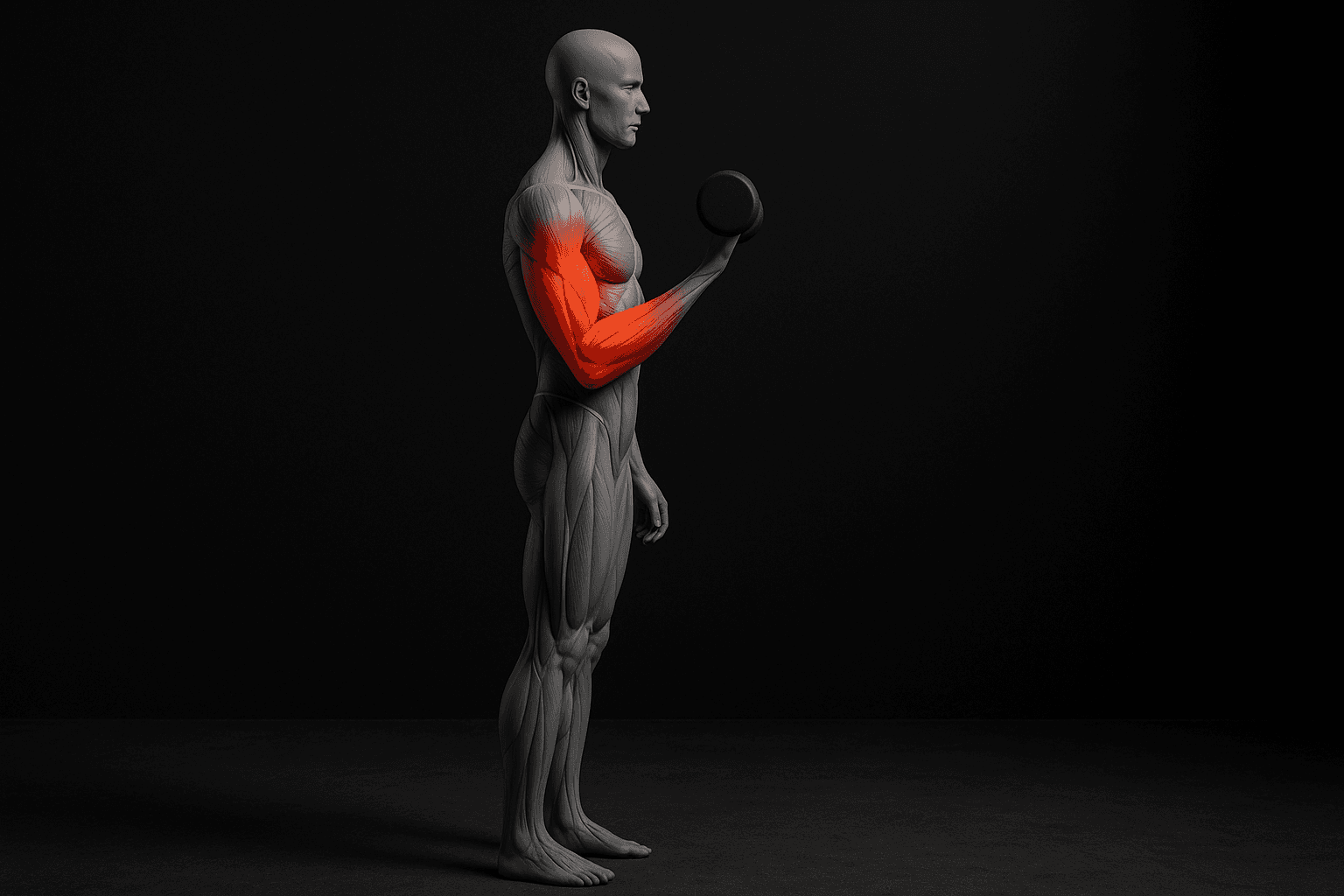
Photo by RepBro.
To test a 1RM safely, follow a progressive warm-up, use conservative opening attempts, limit yourself to 2–4 maximal singles, rest 3–5 minutes between top attempts, and always prioritize clean technique and appropriate spotting or safety bars.
Why test at all?
Testing a true one-rep max (1RM) is useful for setting training loads, tracking maximal strength, and programming percentages. But it is a high-stress procedure: the goal is to obtain a reliable number with minimal injury risk and fatigue.
How do I structure a safe 1RM test session?
-
Choose the right day: rest or light cardio the day before, avoid heavy leg or upper-body work 48 hours prior. Don’t test when ill, overly fatigued, or in pain.
-
Warm up progressively: general mobility and 5–10 minutes easy aerobic work, then specific sets for the lift. Example progression (barbell squat or bench): empty bar x8–10, 40% of predicted working weight x5, 60% x3, 75% x2, 85% x1, 92–95% x1, then attempt. Use conservative increases — if you don’t have a predicted number, use multiple submax lifts (see alternatives).
-
Opening attempt: pick a weight you are confident you can lift with good technique. Missing an early attempt increases fatigue and risk.
-
Attempt limits: plan for 2–4 maximal singles total. If you reach a true maximal lift early, avoid many additional maximal attempts that can increase injury risk and neural fatigue.
-
Rest: take 3–5 minutes between heavy singles. Shorter rests reduce peak strength output; longer rests are rarely needed for typical lifters.
-
Record conditions: note warm-up, barbell, sleeves, belts, shoes and whether a spotter was used — small changes affect results.
How many heavy attempts are safe and useful?
Limit maximal attempts to about 2–4 singles after warm-up. Each maximal effort is neurologically and metabolically costly, and accuracy of later attempts drops as fatigue accumulates. If you fail a maximal attempt, reduce the weight slightly and re-attempt only once or twice; avoid repeatedly chasing a missed lift.
How long should I rest between attempts and why?
Rest 3–5 minutes between near-maximal singles to restore neural drive and ATP-PC energy systems. Shorter rests (60–90 seconds) are OK for submaximal warm-ups, but reduce peak force for true max attempts.
What are safe spotting and equipment practices?
- Use a competent spotter for bench press and heavy squats, or set safety pins in a power rack at the correct height. For deadlifts, use clips and consider low-risk setups (hex bar, lighter load, or no maximal attempts if alone).
- Wear a belt for maximal attempts only if you normally train with one; it changes intra-abdominal pressure and can affect lift mechanics.
- Use collars on the bar and appropriate footwear.
- Stop immediately on sharp pain; don’t try to work through it.
Safety note: This article does not diagnose conditions. Consult a qualified professional if you have a history of injury or are unsure about technique.
What are alternatives to a direct 1RM test?
Direct 1RM testing is accurate but demanding. Alternatives reduce risk while giving usable programming numbers:
-
Predicted 1RM from a 3RM or 5RM: perform a clean 3- or 5-rep max and use a reputable formula or chart to estimate 1RM. This is less fatiguing and commonly used by coaches.
-
RPE/RIR-based estimates: use Rate of Perceived Exertion or Reps-In-Reserve to infer how close a set was to failure and map that to an estimated 1RM.
-
Velocity-based methods: if you have a linear position transducer or app that measures bar speed, you can estimate 1RM from velocity. Requires equipment and validation.
Comparison table: direct 1RM vs estimated 1RM vs RPE/velocity
| Method | Accuracy for single lift | Physiological stress | Equipment & skill needed | Recommended for |
|---|---|---|---|---|
| Direct 1RM test | Highest if well executed | High | Spotter or rack, disciplined protocol | Testing for competition or confirming peak strength |
| 3–5RM estimate | Very good | Moderate | Standard gym equipment | Most lifters who want safe, practical numbers |
| RPE/velocity estimate | Good when practiced | Low–moderate | RPE skill or velocity device | Frequent auto-regulation and programming adjustments |
How often should I test my 1RM?
For most lifters, test 1RM rarely: every 6–12 weeks if training to increase maximal strength, or only to confirm progress after a planned strength block. Frequent maximal testing (weekly or biweekly) increases injury risk and interferes with productive training volume.
What technical and mental checks should I run?
- Technique: keep the movement pattern consistent with your training. Don’t alter setup or cues on maximal day.
- Mental readiness: practice a consistent pre-lift routine, visualize the lift, and avoid rushing.
What can't apps or AI do? (Limitations)
- No app or AI can reliably see or correct your form in real time in the gym; feedback is limited by camera setup and interpretation.
- Apps can estimate loads and track numbers, but they can’t feel pain, judge subtle technical breakdowns, or manage medical issues and rehab — a qualified coach or clinician is needed for those.
- A plan or number only matters if you follow it: consistency and progressive training execution drive adaptation more than choice of app.
Optional tracking note: if you use a lifting tracker, tools like RepBro can help record attempts and calculate estimates, but they do not replace a spotter or coach.
Short FAQ (adjacent common questions)
Q: Can I warm up with heavy doubles before my 1RM? A: Use singles as you near maximal loads; heavy doubles increase fatigue and make peak single performance less reliable.
Q: Do belts or wraps change my 1RM? A: Yes—equipment can affect your maximal output. Test in the same conditions you plan to train or compete in.
Q: Should beginners test 1RM? A: Beginners benefit more from consistent technical practice and submaximal strength work; testing maximal loads is generally unnecessary early on.
Limitations and closing safety reminder
Testing a 1RM provides a precise number but it is not essential for progress. Prioritize technique, conservative attempts, competent spotting, and stop on sharp pain. If you have a recent injury or chronic pain, consult a qualified physiotherapist or coach before attempting maximal lifts.
This guidance is practical, evidence-aware, and geared to reduce risk while giving you usable strength metrics. Follow the protocol, respect rest and recovery, and treat 1RM testing as an occasional tool, not a weekly task.
Frequently asked questions
- Can I test my 1RM alone?
- Yes, but only with safety measures: use a power rack with safety pins/set to catch a missed rep, pick a conservative predicted opening weight, and avoid maximal attempts if you have recent pain or poor technique. If unsure, get a competent spotter or coach.
- How many attempts should I take when testing a 1RM?
- Limit heavy attempts: do a progressive warm-up then 2–4 maximal singles. Stop increasing if form breaks down or you feel sharp pain. Allow 3–5 minutes between near-maximal attempts to restore neural readiness.
- Is a predicted 1RM from a 3–5RM accurate enough?
- Yes for most lifters: using a well-executed 3RM or 5RM to estimate 1RM reduces fatigue and risk while giving a reliable training number. For precise competition planning, occasional direct testing can validate estimates.