How to Overcome Gym Intimidation
Practical, evidence-aware steps to reduce gym intimidation: planning, exposure, simple programming, etiquette, and tracking progress. Includes safety, limitations, and quick FAQs.

Photo by RepBro.
Short answer: Overcome gym intimidation by planning simple, repeatable sessions, practicing gradual exposure at off‑peak times, learning basic equipment and etiquette, and tracking small wins. Start with a 2–3×/week program focused on three compound lifts, consistent progression, and clear short‑term goals to build confidence.
Why do I feel intimidated at the gym and is that normal?
Feeling intimidated is common. New environments, perceived performance comparisons, and uncertainty about equipment or etiquette trigger social anxiety and self‑consciousness. Recognizing that these feelings are normal reduces their power. Most experienced gym users are focused on their own sessions; visible mistakes or slow progress are far less noticed than they appear to you.
What practical steps reduce intimidation immediately?
- Plan: write or use a simple program before you walk in (e.g., full‑body, 2–3×/week).
- Time: visit during off‑peak hours for calmer floors (usually mid‑day or late evening).
- Orientation: ask staff for a short tour or demo; most gyms include a free intro.
- Gear: bring a water bottle, headphones, and a notebook or phone for logging.
- One task at a time: pick one skill to practice each visit (e.g., rack/unrack, bench setup).
Concrete routine to start (example): 3 sessions/week, 3 compound movements each session. 2–3 sets per exercise, 6–12 reps depending on goal. Keep sessions under 60 minutes and focus on consistency.
How should I structure my beginner sessions so I don’t feel lost?
Use a simple, repeatable template. Evidence and coaching consensus suggest full‑body work 2–3 times per week for most beginners because it balances frequency and recovery. An example session:
- Warm‑up: 5–10 minutes light cardio + movement prep.
- Compound lift A (squat or leg press): 2–3 sets.
- Compound lift B (push: bench or push‑up progression): 2–3 sets.
- Compound lift C (pull: row or lat pulldown): 2–3 sets.
- Finish: 5 minutes mobility or core.
Progress by small, regular steps: add reps, sets, or small weight increases when the target reps feel manageable. Use small plates or micro increments (1–2.5 kg / 2–5 lb) where available.
How do I learn equipment and gym etiquette without feeling embarrassed?
- Watch and copy: observe a few repetitions, then try with minimal load.
- Ask staff or an experienced gym member for a quick pointer—most are helpful if you’re polite.
- Use signage and machine instructions; they’re designed to be self‑explanatory.
- Respect time limits on machines at busy times; offer to share sets by alternating.
- Clean equipment after use and return weights.
How can I practice confidence outside the gym?
Short, focused exposures help: practice a lift pattern in a park, watch instructional videos, or rehearse rack/unrack technique with an empty bar at home. Track and celebrate consistency (e.g., number of sessions per week) rather than comparing load to others.
What if I’m worried about being judged for form or weight?
Most mistakes are small and fixable. Use lighter weights to learn movement patterns, and consider a single coaching session—many gyms offer affordable one‑off technique checks. Filming a set on your phone and reviewing it or sharing with a qualified coach can give objective, actionable feedback.
How do different support options compare? (alone, partner, trainer, app)
| Option | Cost | Social pressure | Skill feedback | Best for |
|---|---|---|---|---|
| Alone | Low | Low | Limited | Self‑paced learning, flexibility |
| Training partner | Low–Medium | Medium | Peer feedback | Motivation, spotter for heavy lifts |
| Personal trainer | Medium–High | Medium | High | Quick form fixes, program setup |
| Guided app (e.g., RepBro) | Low–Medium | Low | Moderate (no live form review) | Tracking, programming, structure |
Choose what fits your budget and comfort. An app or program can remove the planning barrier; a trainer offers hands‑on technique help. A partner can reduce social anxiety if they’re supportive.
How long until I feel normal at the gym?
There’s no fixed timeline—many people report meaningful reductions in anxiety after a few weeks of consistent attendance. The process is exposure‑based: each session reduces novelty. Set a minimum target (for example, eight planned sessions over four weeks) to evaluate progress.
Safety note
Stop on sharp or unusual pain and consult a qualified healthcare professional for injuries. This article does not diagnose medical conditions. Use conservative loads while learning movement patterns and ask for hands‑on coaching when tackling heavy lifts.
What can’t apps or AI coaching do for my gym anxiety? (Limitations)
- They cannot see or correct your live technique; video feedback is better but still remote.
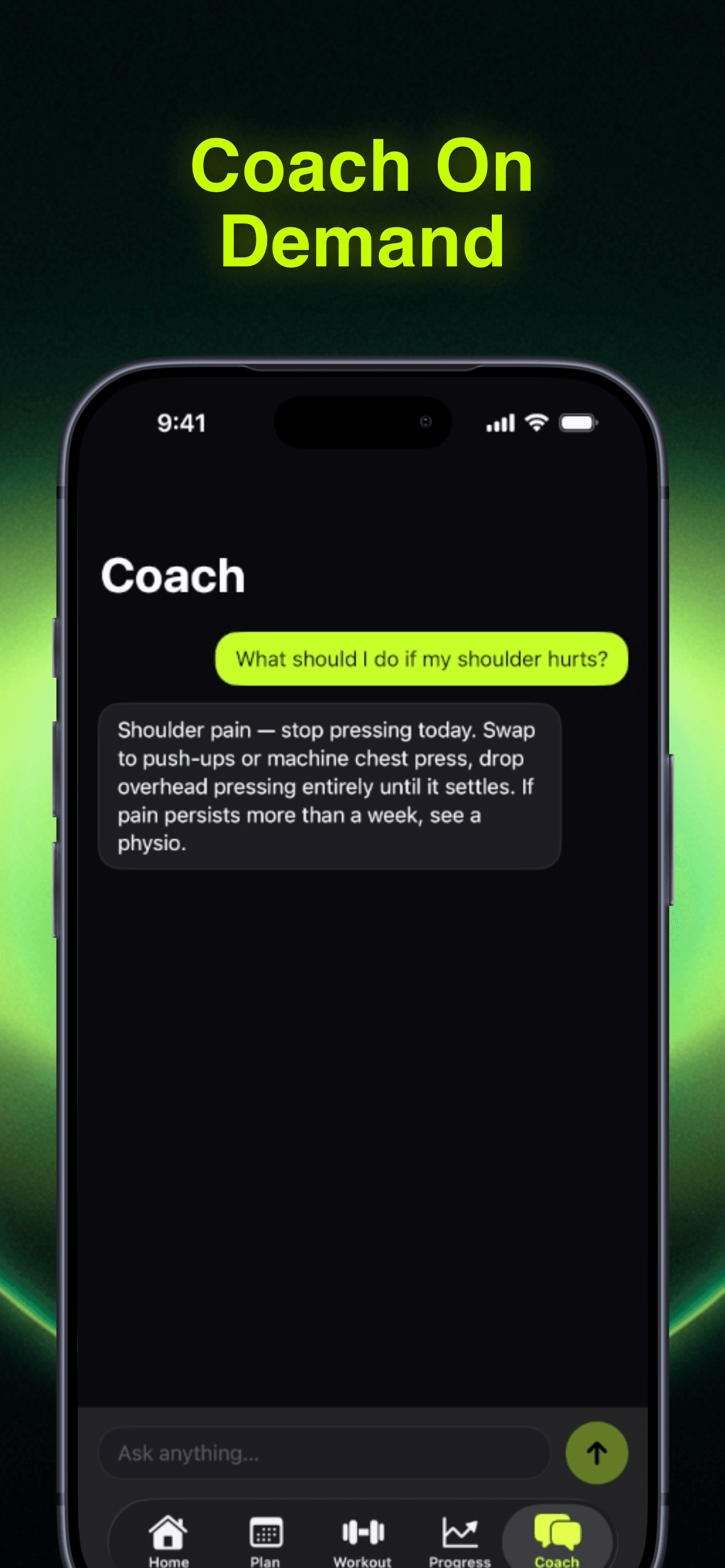
- They cannot diagnose injuries or provide tailored rehab—seek a physiotherapist for pain or rehab plans.
- They can’t force attendance; consistent practice matters more than the specific app or plan.
- Social and environmental factors (gym culture, location, personal confidence) often require real‑world exposure and human coaching.
If you want simple tracking and an on‑phone program to reduce decision‑making during workouts, consider a structured app like RepBro to keep progress visible and sessions predictable.
Final steps to try this week
- Book three short sessions this week at off‑peak times. 2. Use the simple session template above—keep loads light. 3. Log each session and one win (finished warm‑up, completed all sets). 4. Review after two weeks and adjust frequency or seek a one‑time coach check.
Consistent, small exposures plus a reliable plan reduce gym intimidation more than rare, high‑effort visits. Keep the focus on learning and attendance; confidence follows practice.
Frequently asked questions
- How long does it take to stop feeling intimidated at the gym?
- You can notice reduced anxiety in a few sessions if you follow small, repeatable steps: short visits at off‑peak times, a simple plan, and tracking tiny wins. For consistent confidence gains, expect progress across several weeks; habit and exposure, not a single session, create lasting comfort.
- What should I do on my first gym day?
- Arrive 15 minutes early, ask staff for a quick orientation, warm up 5–10 minutes, and follow a short program: two or three compound lifts with 2–3 sets each. Keep loads conservative to learn form; focus on finishing the session rather than lifting heavy.
- Should I tell people I’m a beginner at the gym?
- Yes—briefly mentioning you’re new or asking for equipment guidance is usually met with helpful responses. Most gym users value etiquette and sharing; clear communication avoids accidental equipment conflicts and often leads to quicker, less stressful sessions.