Progressive Overload: The Only Rule That Actually Builds Muscle
Progressive overload means gradually increasing training demands over time to force muscle adaptation. Apply it through weight, reps, sets, frequency, or time under tension.
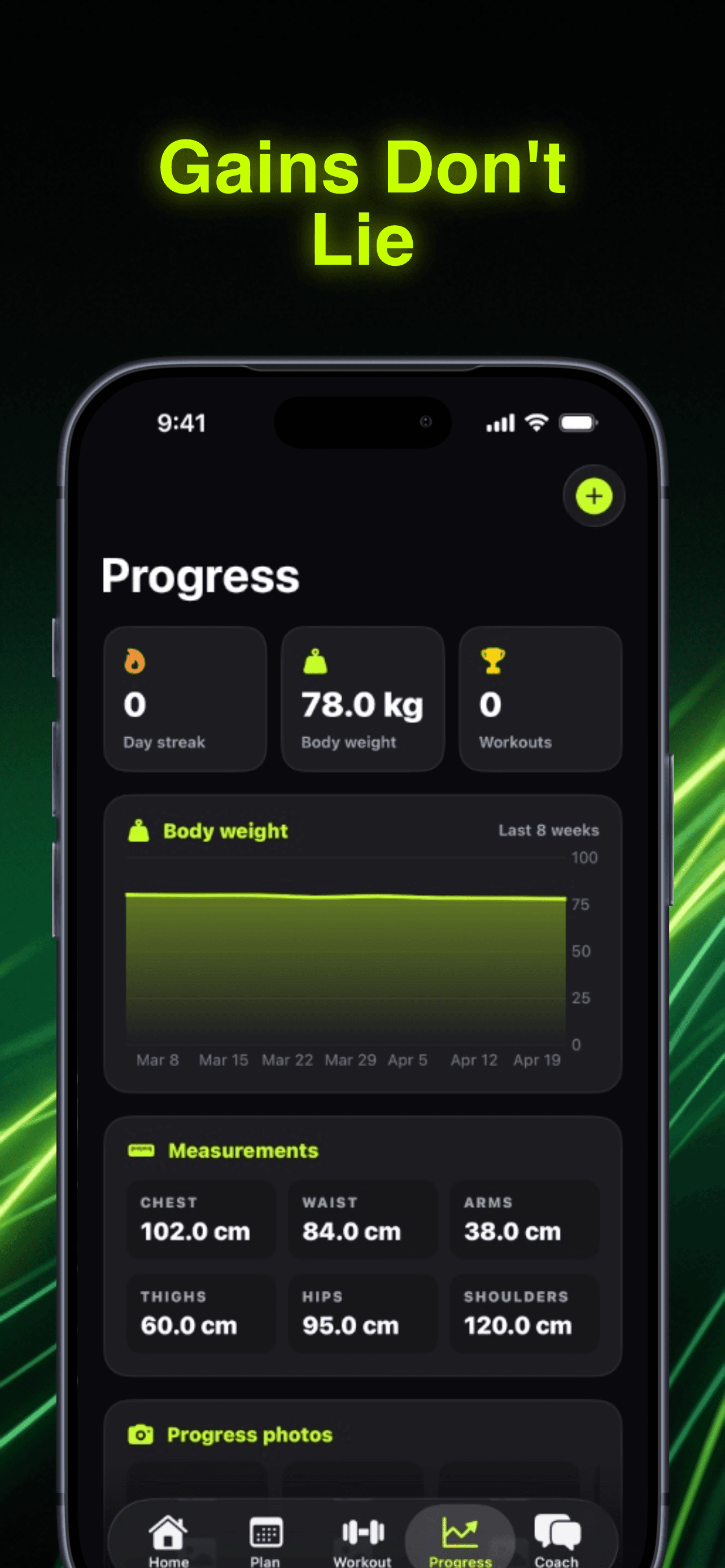
Photo by RepBro.
You walk into the gym with the same routine you've been doing for six months. Same weights, same reps, same everything. You wonder why your biceps haven't grown since March.
Here's the problem: your muscles adapted to your workout weeks ago. They're comfortable. And comfortable muscles don't grow.
Progressive overload explained: gradually increasing the training demands placed on your muscles over time to force continued adaptation and growth. Without it, you're just maintaining what you already have.
This isn't gym broscience. It's the foundational principle behind every successful muscle-building program, backed by decades of exercise physiology research. Your muscles need a reason to get bigger and stronger. Progressive overload gives them that reason.
Why Progressive Overload Actually Works
Your body is remarkably efficient at adaptation. When you first started lifting, everything was hard. Your muscles scrambled to meet the new demands, building new protein structures and recruiting more motor units.
But after 4-6 weeks of the same stimulus, adaptation plateaus. Your muscles can handle the load without breaking down enough to trigger new growth. They've reached equilibrium.
Progressive overload breaks that equilibrium. By systematically increasing training stress, you force your muscles to adapt beyond their current capacity. The result? Continued muscle protein synthesis, strength gains, and visible growth.
The key word is "systematic." Random increases don't work. Neither does adding weight every single session. Effective progressive overload follows specific patterns that respect your body's recovery timeline.
The 5 Methods That Actually Work
Most lifters think progressive overload means adding 5 pounds every week. That's one method, but it's not the only one. Here are five proven ways to progress your training:
1. Load Progression (Adding Weight)
The classic method. Increase the weight while maintaining the same sets and reps.
How to apply it: Add 2.5-5 pounds to compound movements when you can complete all prescribed sets and reps with 1-2 reps in reserve. For isolation exercises, increase by 2.5 pounds or use fractional plates.
Timeline: Every 1-2 weeks for beginners, every 2-4 weeks for intermediates.
2. Volume Progression (More Sets or Reps)
Increase the total amount of work without changing the weight.
Rep progression: If your program calls for 3 sets of 8-10 reps, work from 3x8 to 3x10 before adding weight.
Set progression: Add an extra set to your working weight. Go from 3x8 to 4x8.
Why it works: Volume is the primary driver of hypertrophy. More quality sets mean more muscle growth stimulus.
3. Density Progression (Same Work, Less Time)
Complete the same workout in less time by reducing rest periods.
Method: Decrease rest between sets by 15-30 seconds every 2-3 weeks. Start at 3 minutes, work down to 90 seconds for hypertrophy work.
Benefit: Improves work capacity and metabolic stress, both contributors to muscle growth.
4. Frequency Progression (Training More Often)
Hit each muscle group more times per week.
Example: Progress from training chest once per week to twice per week. Same total volume, distributed across more sessions.
Research backing: Studies show training each muscle 2-3 times per week produces superior hypertrophy compared to once-weekly training.
5. Range of Motion and Tempo Progression
Increase time under tension or improve movement quality.
Tempo manipulation: Slow down the eccentric (lowering) phase from 2 seconds to 3-4 seconds.
Range progression: Work toward deeper squats, fuller chest stretches, or complete overhead mobility.
How to Track Progress Without Spreadsheets
The biggest progressive overload mistake? Not tracking anything. You can't manage what you don't measure.
But you don't need complex spreadsheets. Here's what actually matters:
Track these metrics:
- Weight used for each exercise
- Sets and reps completed
- RPE (Rate of Perceived Exertion) on a 1-10 scale
- Rest periods for key lifts
- Weekly training volume per muscle group
Use the 2-rep rule: When you can perform 2 more reps than prescribed on your last set, increase the weight next session.
Example: Your program calls for 3 sets of 8 reps at 135 pounds on bench press. If you complete 8, 8, 10 reps, increase to 140 pounds next week.
Modern training apps automate this tracking. They log your performance, calculate volume, and suggest when to progress. No mental math required.
When to Progress (And When Not To)
Progressive overload isn't about adding weight every session. That's a recipe for burnout and injury.
Progress when:
- You complete all sets and reps with 1-2 reps in reserve
- Your form remains solid throughout all sets
- You've maintained the current load for at least one full week
- You're recovering well between sessions
Don't progress when:
- Your form breaks down on the last reps
- You're not sleeping or eating adequately
- You're dealing with unusual life stress
- You missed sessions in the past week
Sometimes the best progression is maintaining your current load while improving technique or consistency.
The Progression Timeline That Actually Works
Beginners can progress faster than intermediates. Here's a realistic timeline:
Weeks 1-12 (Beginner): Add weight every 1-2 weeks on major lifts. Focus on form and consistency.
Months 4-24 (Intermediate): Progress every 2-4 weeks. Use periodization and deload weeks.
Years 2+ (Advanced): Monthly or bi-monthly progressions. Emphasize technique refinement and weak point training.
Deload strategy: Every 4-6 weeks, reduce training load by 40-50% for one week. This isn't time off—it's strategic recovery that enables future progression.
Making It Automatic
The lifters who build the most muscle don't overthink progressive overload. They use systems that make progression automatic.
Your training app should track your performance, suggest when to add weight, and adjust your program based on your progress. It should know that you hit a PR last week and recommend the next logical step.
The best progression happens when you focus on training hard and let technology handle the numbers. Show up, follow the plan, and trust the process.
Ready to put progressive overload into action? The fastest way to start tracking your progression and automate your gains is with a training app that handles the calculations for you.
Frequently asked questions
- How often should I add weight to my lifts?
- Add weight when you can complete all prescribed sets and reps with 1-2 reps in reserve. For beginners, this might be every 1-2 weeks. Intermediate lifters typically progress every 2-4 weeks.
- What if I can't add weight every week?
- Use other progression methods like adding reps, sets, or reducing rest time. Progressive overload doesn't always mean adding weight—increasing training volume or density also drives muscle growth.
- How much weight should I add each time?
- Add 2.5-5 pounds to compound movements like squats and deadlifts. For smaller isolation exercises, increase by 2.5 pounds or use fractional plates for smaller jumps.
- Should I progress every exercise every week?
- No. Focus on progressing your main compound lifts consistently. Accessory exercises can progress more slowly, and some sessions should prioritize form over adding weight.
- What is RPE and why does it matter for progression?
- RPE (Rate of Perceived Exertion) measures how hard a set feels on a 1-10 scale. It helps you determine when to progress—if you're hitting RPE 8 when the program calls for RPE 9, you can likely add weight next session.