PHUL Explained: How Power Hypertrophy Upper-Lower Works (Program, Progression, and Who It's Not For)
Practical guide to PHUL: 4-day weekly layout, exercise choices, progression rules, deloads and who should avoid it. Evidence-aware, actionable programming.
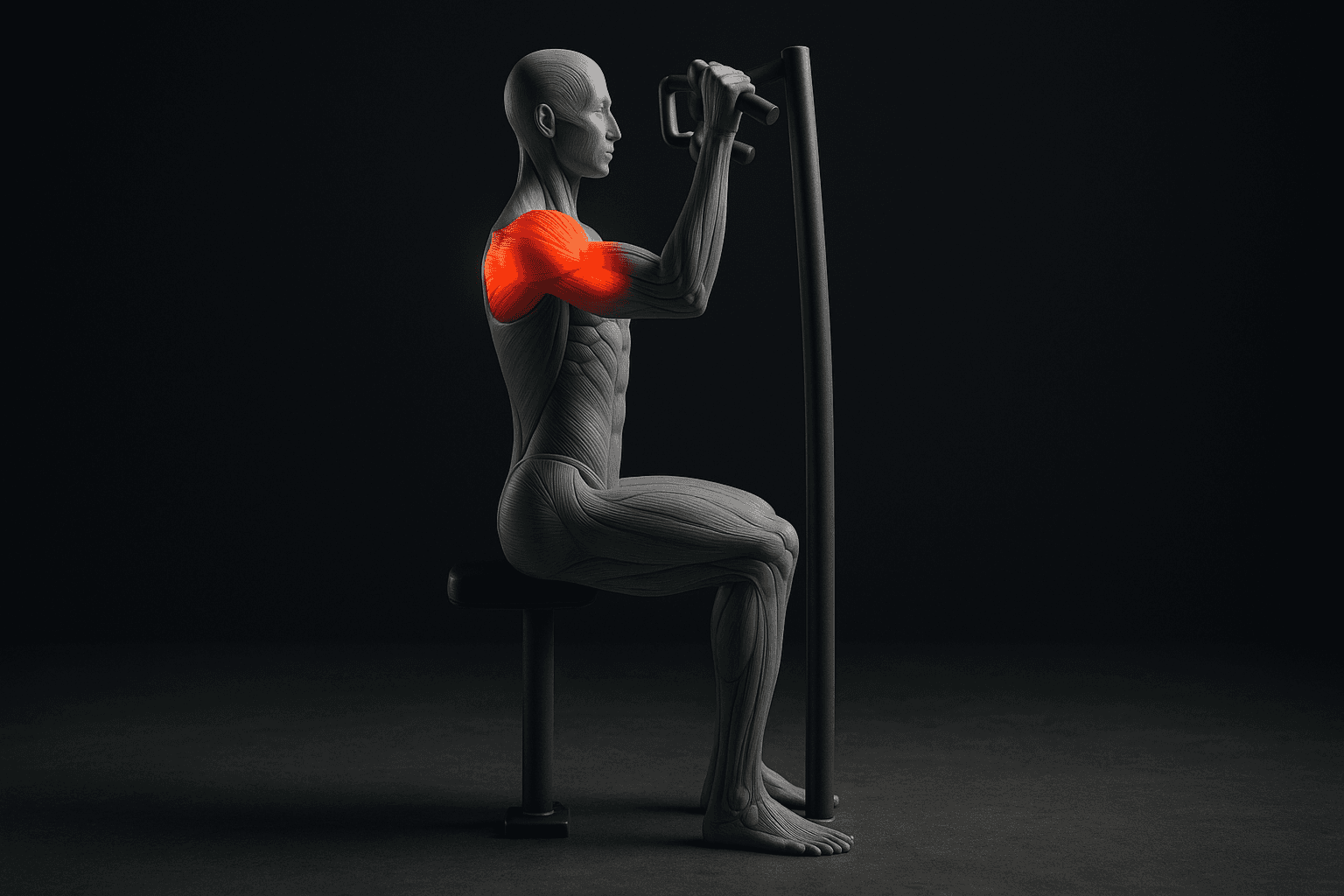
Photo by RepBro.
PHUL — Power Hypertrophy Upper Lower — is a four‑day split that pairs two low‑rep heavy “power” sessions with two higher‑volume “hypertrophy” sessions so muscles are stimulated for both strength and size roughly twice per week. It balances compound strength practice with targeted volume work.
What is the weekly layout of PHUL and how often do I train each muscle?
A standard PHUL week is 4 training days: upper power, lower power, upper hypertrophy, lower hypertrophy. A practical schedule is:
- Monday: Upper Power (strength focus)
- Tuesday: Lower Power (strength focus)
- Thursday: Upper Hypertrophy (volume focus)
- Friday: Lower Hypertrophy (volume focus)
This layout gives each muscle group two direct stimuli per week, which aligns with evidence that training frequency of around twice weekly per muscle is effective for hypertrophy and strength for most lifters. Rest days between stimulus days help recovery.
Which exercises belong on Power days versus Hypertrophy days?
Exercise selection follows simple logic: practice heavy, multi‑joint movements on Power days; use those same compounds plus more single‑joint and variation work on Hypertrophy days.
Example choices and set/rep guidelines:
-
Upper Power
- Bench Press 3–5 sets of 3–6 reps
- Barbell Row or Weighted Pull‑Up 3–5 sets of 3–6 reps
- Overhead Press 3–4 sets of 4–6 reps
- Optional light accessory: face pulls 2–3 sets of 10–15 reps
-
Lower Power
- Squat (back/front) 3–5 sets of 3–6 reps
- Deadlift variant (conventional/hextrap) 2–4 sets of 2–6 reps
- Hip hinge accessory (good morning/RDL) 2–3 sets of 4–8 reps
-
Upper Hypertrophy
- Incline or Flat Dumbbell Bench 3–4 sets of 8–12 reps
- Chest-supported Row or Machine Row 3–4 sets of 8–12 reps
- Lateral Raises 3–4 sets of 10–15 reps
- Biceps curls/triceps extensions 2–4 sets of 8–15 reps
-
Lower Hypertrophy
- Squat variation or Leg Press 3–4 sets of 8–12 reps
- Romanian Deadlift 3–4 sets of 6–10 reps
- Hamstring curl 2–3 sets of 10–15 reps
- Calf raises 3 sets of 8–15 reps
Aim for compound exercises to be the focus of Power days; hypertrophy days should increase total weekly sets for target muscles using moderate loads and controlled tempo.
How much weekly volume should I do for hypertrophy and strength?
Current practice-informed guidance suggests most lifters make progress with roughly 10–20 hard sets per muscle group per week for hypertrophy, with some muscles (e.g., quads, chest, back) sometimes needing the upper end. Strength progress relies on frequent practice of the main lifts plus supportive volume; 3–6 heavy sets for each top lift per week is a common approach.
On PHUL, distribute volume so Power days provide the heavy practice (lower set count, high intensity) and Hypertrophy days supply the bulk of weekly sets.
How should I progress sets, reps, and load on PHUL?
Use objective, small steps and a simple rule set:
- Strength (Power days): add small load increments (~2.5–5%) when you complete all prescribed sets and reps with good technique. If you miss reps, repeat the same weight next session or reduce load slightly.
- Hypertrophy (Hypertrophy days): increase reps first within the target range (e.g., 8 to 12). Once you reach the top of the range across all sets, add weight next session. Alternatively, add a set to slowly increase weekly volume.
- Track weekly set totals per muscle and aim for steady increases over weeks. If performance or recovery declines, back off volume or intensity.
Beginners can often follow more aggressive linear progression on main lifts; intermediates should use autoregulation (RPE/reps-in-reserve, or tracking performance trends) to decide load increases.
How do deloads and recovery fit into PHUL?
Deload when you notice persistent fatigue, stalled progression, or reduced performance, or on a planned schedule every several weeks. During a deload, reduce weekly volume and/or intensity (commonly by reducing volume by a substantial portion or lowering intensity while keeping movement practice). Sleep, nutrition, and managing work/stress are equally important for recovery.
How does PHUL compare to similar splits?
| Program | Frequency | Main focus | Suited for |
|---|---|---|---|
| PHUL | 4 days/week | Strength + hypertrophy split, 2×/muscle | Lifters wanting both strength and size with moderate time commitment |
| PHAT | 5 days/week | Higher overall volume with dedicated power & hypertrophy days | More advanced lifters able to handle extra volume |
| Traditional Upper/Lower | 2–4 days/week | Can be programmed for either goal | Flexible—good for beginners to intermediates |
Who should NOT run PHUL?
PHUL is not ideal for everyone. Consider alternatives if you are:
- A complete beginner who needs to prioritize technical practice and linear progression on 3 full‑body sessions per week.
- Highly time‑constrained and unable to train four days per week consistently.
- Managing specific rehabilitation/medical restrictions—rehab programs should be prescribed and supervised by a clinician.
- An advanced competitive strength athlete whose peaking schedule needs more specialized periodization.
What are the main safety considerations?
Stop on sharp or unusual pain and consult a qualified professional for persistent issues. Use technique first—reduce load if form breaks. This article does not diagnose injuries or promise prevention. If you’re unsure about exercises or have a medical condition, seek an in‑person assessment.
What can't apps and AI coaching do for you? (Limitations)
No app or AI can fully replace in-person coaching: they cannot see your subtle technique, detect compensations, or perform hands‑on assessment and manual therapy. They can track sets, suggest progressions, and log trends, but they cannot diagnose injuries or adjust program details based on nuanced movement faults. A plan is only effective with consistent practice; showing up and recovery matter more than app choice.
If you want to log and track progressive overload cleanly, consider a tracking app like RepBro to monitor sets, loads, and weekly volume.
Summary: PHUL organizes four weekly sessions into two power and two hypertrophy days to stimulate strength and size twice per week. Use heavy compounds and small, consistent load increases on Power days, and prioritize volume and rep progression on Hypertrophy days. Monitor recovery, deload when needed, and avoid the program if you can’t commit to the frequency or have specific rehab needs.
Frequently asked questions
- What is the PHUL program in one sentence?
- PHUL is a four-day-per-week split that separates power (low-rep, heavy compound lifts for strength) from hypertrophy (higher-volume, moderate-load work for muscle size), allowing most muscle groups to be trained twice weekly with distinct strength and size stimuli.
- How many days per week do I run PHUL and what's a sample layout?
- PHUL is typically four days per week: Upper Power, Lower Power, Upper Hypertrophy, Lower Hypertrophy. A common schedule is Mon (Upper Power), Tue (Lower Power), Thu (Upper Hypertrophy), Fri (Lower Hypertrophy), giving two rest/recovery days mid- and end-week.
- How should I progress strength and hypertrophy on PHUL?
- Progress strength by adding small load increments when you can complete prescribed sets and reps cleanly (e.g., add ~2.5–5% when you hit top reps). For hypertrophy, prioritize adding reps within the target range, then increase load or sets to raise weekly volume; monitor fatigue and adjust.