5/3/1 for Beginners: A Practical Walkthrough
A practical, evidence-aware guide to running Jim Wendler's 5/3/1 as a beginner: weekly layout, exercise choices, exact progression rules, safety and who should choose another path.
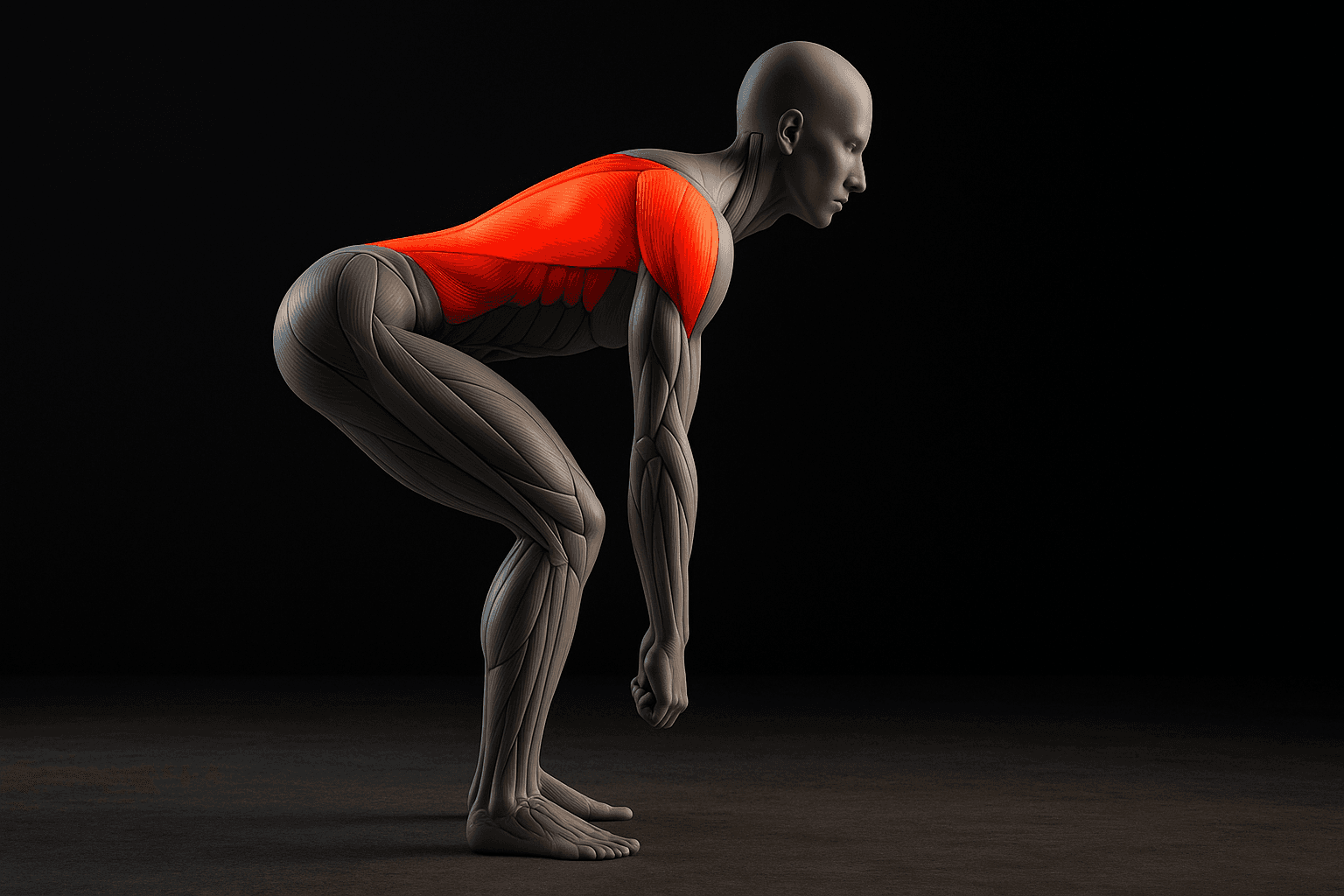
Photo by RepBro.
5/3/1 can be adapted for beginners by using a 90% training max, conservative final-set effort, clear assistance rules, and 3–4 sessions per week. Progress is slow but sustainable: add 2.5 kg (5 lb) to upper and 5 kg (10 lb) to lower lifts each 4-week cycle.
What is the 5/3/1 cycle and how do I set my numbers?
5/3/1 is a four-week cyclic template built around four main barbell lifts (squat, bench press, deadlift, overhead press). Use a training max (TM) equal to 90% of your tested 1-rep max. Week percentages (of TM) are: Week 1 — 65%/75%/85% (5s); Week 2 — 70%/80%/90% (3s); Week 3 — 75%/85%/95% (5/3/1); Week 4 — 40%/50%/60% (deload).
The final set in week 1–3 is typically an AMRAP (as many reps as possible). For beginners, avoid true failure — treat AMRAPs as RPE ~8 (leave 1–2 reps in reserve) to preserve recovery and technique.
How do I lay out a weekly plan as a beginner (3-day and 4-day examples)?
4-day (classic):
- Day 1: Squat (5/3/1 work) + 3–5 assistance sets (6–12 reps)
- Day 2: Bench (5/3/1) + assistance
- Day 3: Deadlift (5/3/1) + assistance
- Day 4: Press (5/3/1) + assistance
3-day (time-constrained):
- Day 1: Squat (5/3/1) + Press or light assistance
- Day 2: Bench (5/3/1) + upper accessory
- Day 3: Deadlift (5/3/1) + posterior chain assistance
Keep sessions 48–72 hours apart for major lifts. For beginners, aim to hit each main lift at least once per week; twice per week can be productive but requires managing volume.
Which assistance exercises should I pick and why?
Choose assistance to (a) build weak points, (b) add hypertrophy for joint/ligament health, and (c) maintain movement practice. Examples:
- Squat day: lunges, front squats, Romanian deadlifts
- Bench day: close-grip bench, dumbbell bench, rows
- Deadlift day: good mornings, glute-ham raises, heavy rows
- Press day: incline press, lateral raises, triceps work
Use 3–4 assistance exercises for 3–5 sets of 6–15 reps. A simple and effective template for beginners is “2–3 compound assistance sets + 1–2 smaller muscle sets.” Keep overall weekly volume moderate — beginners don't need extreme accessory volume to make progress.
How should I progress load and volume week-to-week?
Progression rules (concrete):
- Use TM = 90% of true 1RM. Run the 4-week cycle above.
- After completing a cycle, increase TM by 2.5 kg (5 lb) for upper-body lifts and 5 kg (10 lb) for lower-body lifts.
- On AMRAP final sets, stop before technical failure; if you hit your rep target easily for multiple cycles, consider adding weight or volume to assistance work.
This slow, consistent progression prioritizes longevity and recovery. For true novices who can tolerate higher frequency and faster increases, a linear progression program may yield faster short-term gains.
How should a beginner manage intensity and deloads?
The 4th week is a built-in deload with significantly lighter percentages. Besides that planned deload, if you miss reps consistently, reduce your TM by a small amount (2.5–5 kg) or repeat a cycle before adding weight. Track performance and readiness — consistent missed reps indicate too much fatigue or technical regression.
Who is 5/3/1 the wrong choice for?
- Absolute beginners who can add weight every session: they often benefit more from linear programs that increase intensity each workout.
- Lifters needing high-skill practice for competition (e.g., Olympic weightlifting) where frequent practice of technical lifts matters.
- Those with extreme time constraints who prefer shorter high-frequency microcycles.
- People rehabbing complex injuries without direct guidance from a clinician.
How does 5/3/1 compare to a novice linear progression?
| Feature | 5/3/1 (beginner-adapted) | Novice Linear Progression |
|---|---|---|
| Progress rate | Slow, steady (per 4-week cycle) | Faster early-session gains |
| Volume control | Moderate, flexible via assistance | Generally lower in accessory work |
| Recovery demands | Designed to be conservative | Can require frequent lifting but low per-session fatigue |
| Suitability for true novice | Acceptable, but not optimal | Generally better for rapid early strength gains |
Safety note
Stop on sharp or unusual pain. Never push through structural pain. This article cannot diagnose injuries. If you have an active injury or medical condition, consult a qualified clinician before following a program.
Limitations: what apps and templates can't do for you
No app or written plan can see or correct your technique in real time. Programs can’t account for sleep, nutrition, stress, or undetected injuries. A plan only works if you are consistent; showing up and executing with reasonable load management matters more than the specific app you use. For persistent pain or rehab, work with a qualified professional.
If you want a simple tracker to log 5/3/1 cycles and assistance work, a general gym tracker such as RepBro can simplify keeping TM and cycle notes.
Summary: 5/3/1 can be a useful, low-risk template for beginners who prefer conservative, long-term progression. Use a 90% training max, follow the 4-week percentage cycle, increase TM by 2.5 kg (5 lb) upper / 5 kg (10 lb) lower per cycle, keep AMRAPs submaximal, and pick simple, targeted assistance exercises. If you are a true novice looking for the fastest early strength gains, consider starting with a linear progression and switching to 5/3/1 when progress slows.
Frequently asked questions
- Is 5/3/1 appropriate for a true beginner?
- Short answer: 5/3/1 can work for beginners if you adjust it for higher frequency and conservative loading, but many true novices gain strength faster on a linear progression program because those programs increase intensity every session rather than every 4-week cycle.
- How much weight do I add each cycle on 5/3/1?
- Use a training max at 90% of your actual 1RM. After each 4-week cycle add 2.5 kg (5 lb) to upper-body lifts and 5 kg (10 lb) to lower-body lifts. Keep accessory work moderate to avoid excess fatigue.
- How often should I lift with 5/3/1 as a beginner?
- A 3- or 4-day per week split fits beginners. Four days allows one main lift per session (squat, bench, deadlift, press). Three days combines two lifts on some days and is fine if you manage volume. Aim for consistent weekly frequency.