How to Stay Consistent at the Gym: The Psychology That Actually Works
Learn why you skip the gym and the science-backed psychology tactics that build lasting workout habits. Discover the accountability systems that turn intentions into consistent action.
Photo by RepBro.
You know the pattern. Monday arrives with fresh motivation. You map out five gym sessions for the week. By Wednesday, you're negotiating with yourself about tomorrow's workout. By Friday, you're promising to restart next Monday.
How to stay consistent at the gym comes down to understanding why your brain sabotages your best intentions—and building systems that work with your psychology, not against it. The secret isn't more willpower. It's designing an environment where showing up becomes the easiest choice, backed by accountability that kicks in when motivation fails.
Why Your Brain Fights the Gym
Your prefrontal cortex loves making gym plans. It's optimistic, forward-thinking, and convinced that future-you will definitely want to squat after a 10-hour workday. But when workout time arrives, your limbic system takes over. It sees the gym as unnecessary stress and energy expenditure.
This isn't a character flaw. It's biology. Your brain evolved to conserve energy for survival, not to pursue voluntary physical stress. The gym represents effort without immediate reward, which triggers avoidance behaviors.
The classic mistake? Relying on motivation. Motivation is an emotion, and emotions are temporary. You need systems that function when you don't feel like training.
The Psychology of Workout Consistency
Research from University College London found that habit formation takes an average of 66 days—not the mythical 21 days. More importantly, the study revealed that missing one day doesn't derail the process, but missing two consecutive days significantly increases the likelihood of abandoning the habit entirely.
This explains why "I'll restart Monday" becomes a cycle. Each restart requires rebuilding neural pathways that were just beginning to form.
The Four Pillars of Gym Consistency
1. Environmental Design Make going to the gym easier than not going. Pack your gym bag the night before. Choose a gym on your route home from work. Lay out your workout clothes. Remove friction from the desired behavior while adding friction to competing behaviors.
2. Identity-Based Habits Stop saying "I want to work out more." Start saying "I'm someone who trains." This shift from outcome-based to identity-based thinking changes how you approach decisions. A person who trains doesn't debate whether to go to the gym—they go because that's who they are.
3. Minimum Viable Workouts Your workout doesn't need to be perfect. It needs to exist. On low-motivation days, commit to showing up for 10 minutes. Often, you'll stay longer once you're there. If not, you still reinforced the habit loop.
4. Accountability Systems This is where most people fail. They rely on self-accountability, which is notoriously unreliable. External accountability—whether through a training partner, coach, or app that tracks your consistency—dramatically improves adherence.
Building Your Consistency System
Step 1: Audit Your Current Obstacles
Track when and why you skip workouts for one week. Common patterns:
- Decision fatigue after work
- Unclear workout plans
- Perfectionism ("I only have 30 minutes, so why bother?")
- Social pressure to skip
- Lack of immediate feedback
Step 2: Design Your Trigger-Routine-Reward Loop
Trigger: Link your workout to an existing habit. "After I have my morning coffee" or "When I leave work."
Routine: Keep it simple initially. Your routine might be "drive to gym, do three exercises, leave."
Reward: Build in immediate gratification. This could be a post-workout protein shake you enjoy, checking off the workout in an app, or simply acknowledging the accomplishment.
Step 3: Implement Progressive Accountability
Start with tracking. Simply logging whether you worked out creates awareness and mild accountability. Progress to external accountability—telling someone your weekly plan and reporting back.
The most effective accountability systems provide both positive reinforcement for consistency and gentle course-correction for missed sessions.
The Accountability Factor That Changes Everything
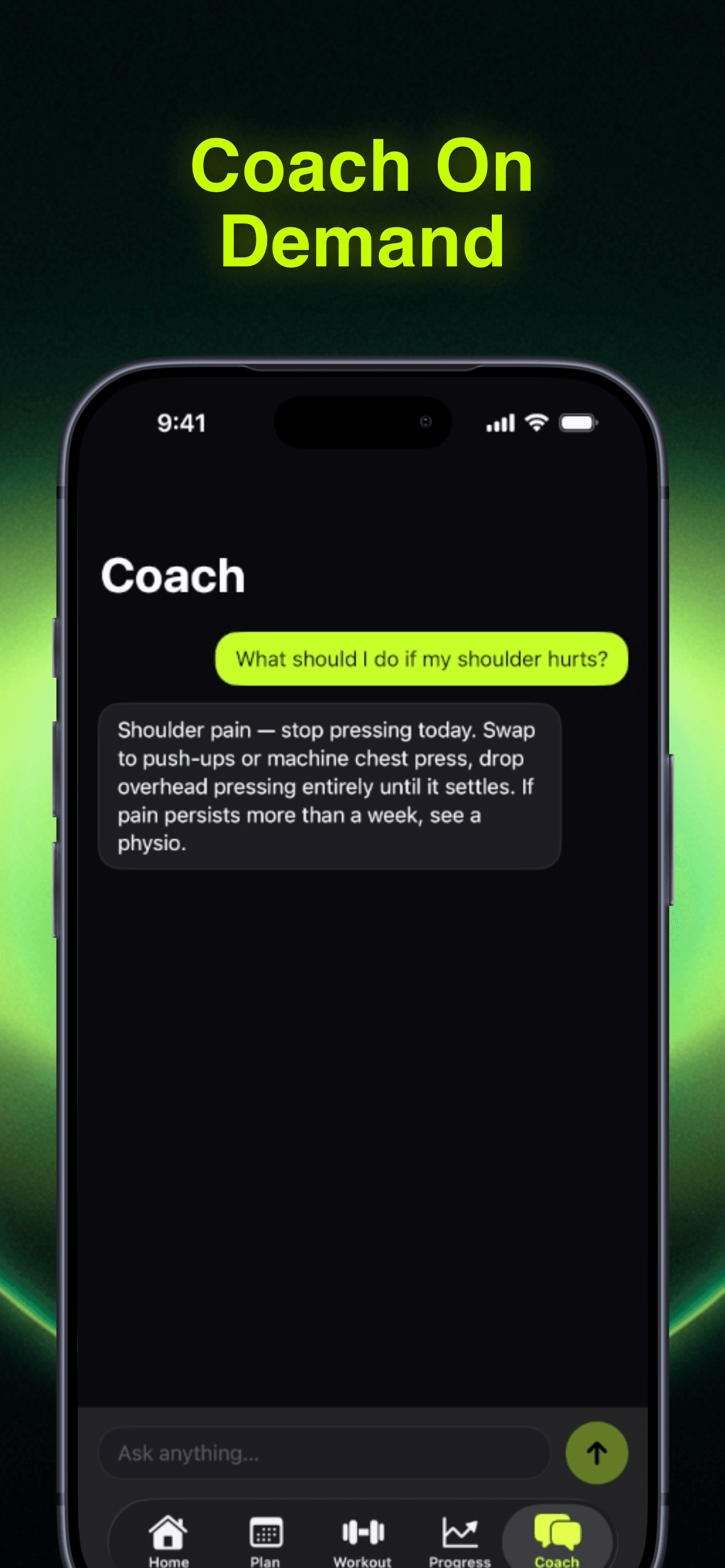
I learned this from a client who went from sporadic gym visits to 18 months of consistent training. The difference wasn't a new program or supplement. It was switching from a generic fitness app to one that actively coached him through each workout and checked in when he missed sessions.
External accountability works because it shifts the psychological cost. Skipping a workout stops being a private decision and becomes a social one. You're not just letting yourself down—you're breaking a commitment to someone or something else.
This is why personal trainers work, even when clients know the exercises. It's not the expertise—it's the appointment. The trainer expects you to show up, which transforms your workout from an optional activity into a scheduled obligation.
When Motivation Fails (And It Will)
Consistency isn't about never having off days. It's about having systems that function during off days. Here's your emergency protocol:
The 10-Minute Rule: Commit to 10 minutes at the gym. No specific workout required. Just show up, move for 10 minutes, leave. This maintains the habit without the pressure of a full session.
The Swap Strategy: Can't do your planned workout? Do something easier. Planned squats but feeling burned out? Do bodyweight squats at home. The habit matters more than the specific exercise.
The Recovery Reset: Missed two days? Don't wait for Monday. Go today, even if it's just for 15 minutes. Break the cycle before it becomes a pattern.
Making It Automatic
The goal isn't to rely on discipline forever. The goal is to make gym attendance automatic—a default behavior that doesn't require conscious decision-making.
This happens when three conditions align: the behavior becomes easier than the alternative, you get immediate feedback on your consistency, and someone or something holds you accountable when you drift off course.
Your next workout doesn't have to be perfect. It just has to happen. The psychology that builds lasting gym habits rewards showing up more than showing off.
Ready to build the accountability system that finally makes gym consistency automatic? The fastest way to turn these principles into action is having a coach that tracks every workout and checks in when you need it most.
Frequently asked questions
- How long does it take to build a consistent gym habit?
- Research shows habit formation takes an average of 66 days, not 21. The key is consistency—missing one day won't derail progress, but missing two consecutive days significantly increases the likelihood of abandoning the habit.
- What should I do if I miss a gym session?
- Don't wait for Monday to restart. Go the next day, even for just 10-15 minutes. Missing one day is normal; missing two consecutive days is when habits start to break down.
- Why does motivation fail for gym consistency?
- Motivation is an emotion and emotions are temporary. Your brain evolved to conserve energy, so it naturally resists voluntary physical stress like gym workouts. You need systems that work when you don't feel motivated.
- What's the minimum workout needed to maintain consistency?
- Any workout that gets you to the gym counts. On low-motivation days, commit to just 10 minutes. Often you'll stay longer once there, but even if you don't, you've reinforced the habit loop.
- How important is accountability for gym consistency?
- External accountability dramatically improves exercise adherence. It shifts skipping from a private decision to a social one—you're not just letting yourself down, but breaking a commitment to someone else.