How Long Should a Workout Actually Be? The Real Answer by Training Goal
Workout length depends on your goal: 45-75 minutes for muscle building, 30-60 minutes for strength, 20-45 minutes for maintenance. Here's how to time your sessions right.
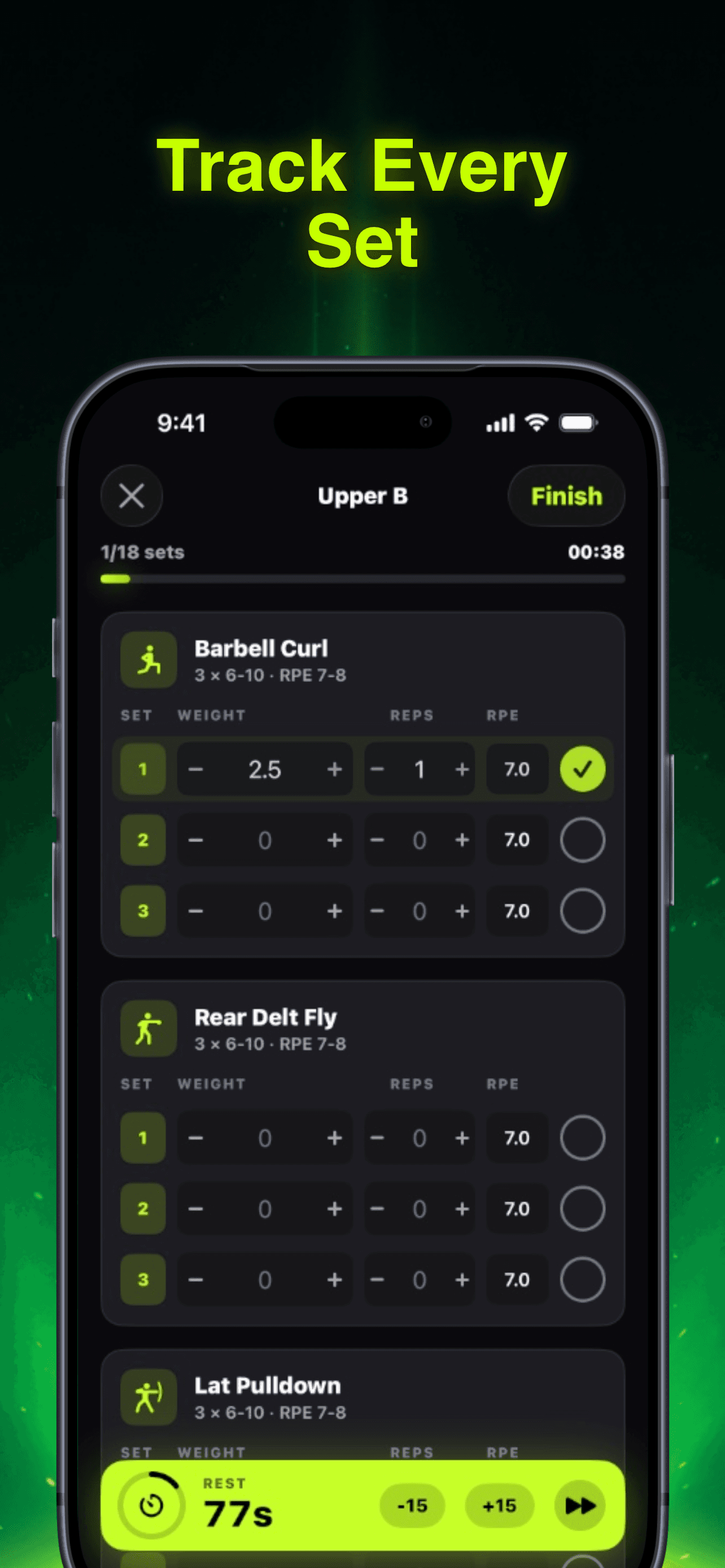
Photo by RepBro.
You walk into the gym with a question that's been bugging you: how long should you actually be here? The fitness industry loves throwing around magic numbers—30 minutes, 45 minutes, an hour max. But the real answer isn't that simple.
How long should a workout be? For muscle building, aim for 45-75 minutes. For strength training, 30-60 minutes works best. For maintenance or fat loss, 20-45 minutes is sufficient. The key is matching your session length to your training goal, not following arbitrary time limits.
Your workout duration should serve your goals, not the other way around. A powerlifter hitting heavy singles needs different timing than someone chasing a pump. Here's how to get it right.
Why Workout Length Actually Matters
Most lifters obsess over sets, reps, and weight. They ignore session duration entirely. That's a mistake.
Session length affects three critical factors: training quality, recovery between sets, and total weekly volume. Go too short and you'll miss volume targets. Go too long and your performance tanks from fatigue.
Research shows that workout quality starts declining after 60-90 minutes for most people. Testosterone drops, cortisol rises, and your focus wavers. But that doesn't mean every workout needs to end at the 60-minute mark.
The sweet spot depends on what you're trying to accomplish.
How Long Should Different Types of Workouts Be?
Muscle Building Workouts: 45-75 Minutes
Hypertrophy training requires volume. You need multiple sets per muscle group, moderate to high rep ranges, and enough exercises to hit muscles from different angles.
A typical muscle-building session includes:
- 5-10 minutes warm-up
- 35-60 minutes of working sets
- 5 minutes cool-down
This gives you time for 12-20 working sets across 4-6 exercises. You can hit 2-3 muscle groups thoroughly without rushing between exercises.
Example: A push day might include bench press (4 sets), incline dumbbell press (3 sets), overhead press (4 sets), lateral raises (3 sets), tricep dips (3 sets), and tricep extensions (3 sets). With 2-3 minutes rest between sets, you're looking at 60-70 minutes total.
Strength Training Workouts: 30-60 Minutes
Strength work is different. You're lifting heavier weights with longer rest periods, but you need fewer total sets.
A strength session typically includes:
- 10-15 minutes warm-up (more mobility work, ramping up to working weight)
- 20-40 minutes of main lifts
- 5-10 minutes accessory work
The extended warm-up matters more when you're handling 85%+ of your max. But your working sets are fewer—maybe 3-5 sets of your main lift plus 2-3 accessory exercises.
Example: Squat day might be 10 minutes warming up, 5 working sets of squats (15-20 minutes with 3-5 minute rests), then Romanian deadlifts and calf raises (10-15 minutes). Total: 40-50 minutes.
Maintenance and Fat Loss Workouts: 20-45 Minutes
When you're maintaining muscle or prioritizing fat loss, efficiency trumps everything. You want enough stimulus to preserve muscle without creating excessive fatigue.
These sessions focus on:
- Compound movements
- Shorter rest periods (60-90 seconds)
- Circuit-style training or supersets
- Higher training density
A 30-minute full-body session can hit every major muscle group if you're smart about exercise selection and rest periods.
What Determines Your Optimal Workout Length?
Training Experience Level
Beginners need less time. Their working weights are lighter, they fatigue faster, and they don't need as much volume to drive adaptation.
A beginner's full-body workout might take 30-40 minutes. An advanced lifter doing the same muscle groups could easily spend 75-90 minutes.
Rest Period Requirements
Your rest periods between sets dramatically affect session length. Here's what different goals require:
- Strength (85%+ 1RM): 3-5 minutes between sets
- Hypertrophy (65-85% 1RM): 2-3 minutes between sets
- Muscular endurance (50-65% 1RM): 60-90 seconds between sets
If you're doing 15 sets with 3-minute rests, that's 42 minutes of rest time alone.
Exercise Selection and Setup
Compound movements take longer. You need more warm-up sets, longer rest periods, and more setup time between exercises.
A workout built around squats, deadlifts, and bench press will take longer than one using machines and dumbbells. Factor this into your planning.
Training Split
Your split affects individual session length. Upper/lower splits allow longer sessions since you're only training half your body. Full-body workouts need to be shorter to remain manageable.
- Full-body: 30-50 minutes
- Upper/lower: 45-75 minutes
- Push/pull/legs: 45-70 minutes
- Body part splits: 30-60 minutes
Signs Your Workouts Are Too Long or Too Short
Too Long
- Performance drops significantly in the last 30 minutes
- You're constantly checking the clock
- Recovery between sessions suffers
- You start skipping workouts because they feel overwhelming
Too Short
- You feel like you barely got started
- You're not hitting your volume targets
- You leave the gym feeling unsatisfied
- Your progress stalls despite consistent training
How to Optimize Your Workout Duration
Plan Your Session Structure
Before you walk into the gym, know exactly what you're doing. Write down your exercises, sets, reps, and target weights. This eliminates decision fatigue and wasted time.
Structure your workout in blocks:
- Dynamic warm-up (5-10 minutes)
- Primary exercises (20-40 minutes)
- Secondary exercises (10-20 minutes)
- Finisher/accessories (5-15 minutes)
- Cool-down (5 minutes)
Use Rest Periods Strategically
Don't just sit on your phone between sets. Use longer rest periods for compound movements where you need full recovery. Use shorter rests for isolation exercises where you can handle some fatigue.
Consider alternating between non-competing muscle groups. While your chest recovers from bench press, you can do some back work. This maintains training density without compromising performance.
Track Your Session Times
Pay attention to how long different workout styles take you. A push day might consistently run 65 minutes, while leg day finishes in 50. Use this data to plan your schedule realistically.
The Bottom Line on Workout Duration
The best workout length is the one that lets you complete your planned training with good form and appropriate intensity. For most people training for muscle and strength, that's 45-75 minutes.
Don't get trapped by arbitrary time limits. Some days you'll need 90 minutes to do justice to your program. Other days, 30 minutes of focused work is exactly what you need.
The key is matching your session length to your goals, not forcing your goals into someone else's time constraints.
Your next workout should feel purposeful from start to finish. Plan the structure, respect the rest periods your training demands, and give yourself enough time to execute properly. That's how you build the physique and strength you're after.
Frequently asked questions
- Is a 30-minute workout enough to build muscle?
- A 30-minute workout can maintain muscle and provide some growth for beginners, but most people need 45-75 minutes to achieve optimal muscle-building volume. You can make 30 minutes work by focusing on compound movements and reducing rest periods, but longer sessions typically produce better results.
- What happens if I work out for too long?
- Workouts longer than 90 minutes often lead to decreased performance, elevated cortisol levels, and poor recovery. You may experience fatigue, reduced focus, and diminishing returns on your training efforts. Most people see optimal results with sessions between 45-75 minutes.
- How long should I rest between sets?
- Rest periods depend on your goal: 3-5 minutes for strength training (85%+ 1RM), 2-3 minutes for muscle building (65-85% 1RM), and 60-90 seconds for muscular endurance (50-65% 1RM). These rest periods significantly impact your total workout duration.
- Should beginners have shorter workouts?
- Yes, beginners typically need 30-45 minutes per session. They fatigue more quickly, need less volume to drive adaptation, and should focus on learning proper form rather than maximizing training time. As experience increases, workout duration can gradually extend.
- Can I build strength with short workouts?
- Yes, strength can be built with 30-45 minute sessions focused on heavy compound movements. Strength training requires fewer total sets than hypertrophy work, making shorter sessions viable. The key is allowing adequate rest between sets (3-5 minutes) and prioritizing main lifts.