Full Body Workout 3x a Week: The Simplest Program That Works
A full body workout 3x a week hits each muscle group with optimal frequency for muscle growth and strength. This simple approach beats complex splits for most lifters.
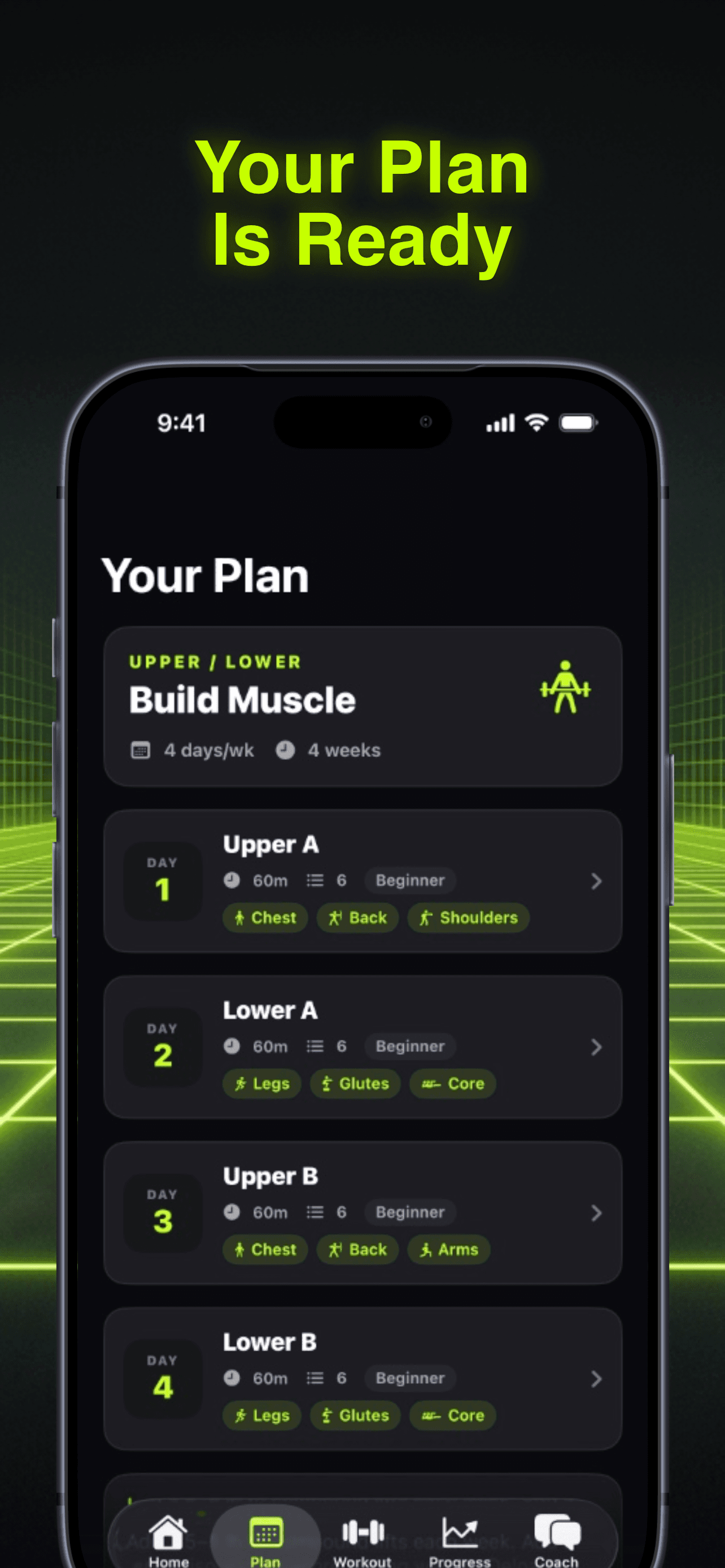
Photo by RepBro.
You walk into the gym three days a week. Monday, Wednesday, Friday. Each session, you train your entire body. Squats, bench press, rows, overhead press. Simple movements that work multiple muscle groups at once.
A full body workout 3x a week provides optimal muscle stimulation frequency for most lifters. Each muscle group gets trained every 48-72 hours, which aligns with muscle protein synthesis patterns and recovery timelines. This approach maximizes both muscle growth and strength gains while requiring just three gym sessions per week.
Most lifters overcomplicate their training. They think more days equals better results. They split their body into tiny pieces across six different sessions. But research consistently shows that training frequency matters more than training volume when it comes to muscle growth.
Why Full Body Beats Body Part Splits
Muscle protein synthesis stays elevated for 24-48 hours after training. When you train chest on Monday and don't touch it again until the following Monday, you're leaving six days of potential growth on the table.
Full body training hits each muscle group every 48-72 hours. This matches the natural rhythm of muscle recovery and growth. You're constantly providing a new stimulus before the previous one completely fades.
The math is simple:
- Bro split: Each muscle trained once per week = 52 training sessions per muscle per year
- Full body 3x/week: Each muscle trained 3x per week = 156 training sessions per muscle per year
That's three times more frequent stimulation for the same weekly time investment.
The Science Behind Training Frequency
Multiple studies comparing training frequencies show consistent results. When total weekly volume is matched, higher frequency training produces superior muscle growth and strength gains.
A 2016 meta-analysis found that training each muscle group twice per week led to greater hypertrophy than once per week. The effect was even more pronounced in trained individuals who had moved beyond beginner gains.
Your muscles don't know what day it is. They respond to consistent, frequent stimulation. Full body training provides exactly that.
How to Structure Your Full Body Routine
Each workout should include:
- One squat or hip-dominant movement
- One horizontal push (bench press, push-ups)
- One horizontal pull (rows, pull-ups)
- One vertical push (overhead press)
- One vertical pull (lat pulldowns, chin-ups)
Sample Full Body Workout:
- Squat: 3 sets of 8-12 reps
- Bench Press: 3 sets of 8-12 reps
- Bent-Over Row: 3 sets of 8-12 reps
- Overhead Press: 3 sets of 10-15 reps
- Romanian Deadlift: 3 sets of 10-15 reps
- Plank: 3 sets of 30-60 seconds
This hits every major muscle group in 45-60 minutes. Repeat this basic template three times per week with at least one day of rest between sessions.
Progressive Overload Made Simple
Full body training makes progression straightforward. You see each exercise three times per week, so you can track improvements session to session.
Week 1: Squat 135lbs for 3x8
Week 2: Squat 135lbs for 3x10
Week 3: Squat 135lbs for 3x12
Week 4: Squat 140lbs for 3x8
This linear progression works for months when you're starting out. The frequent practice builds both strength and technical proficiency faster than training each movement once per week.
Who Should Train Full Body 3x Per Week
This approach works best for:
- Beginners with less than two years of consistent training
- Intermediate lifters who can only train 3-4 days per week
- Anyone returning to training after a break
- Lifters who prefer simple, sustainable routines
Advanced lifters might need higher training volumes that require more specialized splits. But most people aren't advanced lifters. Most people need a simple program they can follow consistently.
Common Full Body Training Mistakes
Mistake 1: Doing too much volume per session. You're training the same muscles again in 48 hours. You don't need to annihilate them today.
Mistake 2: Training consecutive days. Your muscles need time to recover and adapt. Monday-Tuesday-Wednesday doesn't work. Monday-Wednesday-Friday does.
Mistake 3: Changing exercises constantly. Pick 5-6 compound movements and get strong at them. Exercise variety is overrated compared to progressive overload.
Mistake 4: Skipping rest days. Recovery is when adaptation happens. More is not always better.
Making It Work Long-Term
The best program is the one you can stick to for months and years. Full body training wins here because it's simple and flexible.
Traveling for work? Hit a hotel gym and do bodyweight squats, push-ups, and planks. Same movement patterns, different tools.
Short on time? Cut each exercise to 2 sets instead of 3. You're still training everything.
Feeling beat up? Drop the weight 10% and focus on form. Consistency beats intensity over the long haul.
When to Consider Other Approaches
Full body 3x per week isn't optimal for everyone forever. You might outgrow it if:
- You can train 4-6 days per week consistently
- You've been progressing linearly for 6+ months
- You want to specialize in specific lifts or muscle groups
But even then, full body training makes an excellent foundation. Master the basics first. Get strong at compound movements. Build the habit of consistent training.
The simplest program that you actually follow beats the perfect program that you quit after three weeks. Full body training three times per week is simple enough to follow and effective enough to work.
Start with your next workout. Pick five compound exercises. Train them three times this week. See how your body responds to frequent, consistent stimulation. The results might surprise you.
Ready to put full body training into practice? RepBro generates personalized full body routines based on your equipment, experience level, and goals. No guesswork, just effective programming that adapts as you get stronger.
Frequently asked questions
- How many sets per muscle group in a full body workout?
- Aim for 8-12 total sets per muscle group per week, spread across your three sessions. This typically means 2-4 sets per muscle group per workout, depending on the exercises you choose.
- Can I do full body workouts on consecutive days?
- No, you need at least one day of rest between full body sessions. Your muscles need 48-72 hours to recover and adapt. Monday-Wednesday-Friday or Tuesday-Thursday-Saturday work well.
- What's the difference between full body and upper/lower splits?
- Full body trains all muscle groups each session, while upper/lower alternates between upper body and lower body days. Full body requires fewer weekly sessions but may limit volume per muscle group per workout.
- How long should each full body workout take?
- A well-structured full body workout should take 45-75 minutes. Focus on compound movements that work multiple muscle groups efficiently rather than isolation exercises.
- When should I switch from full body to a split routine?
- Consider switching when you can consistently train 4+ days per week, have been progressing for 6+ months, or need higher training volumes than full body sessions can accommodate.