Your First Day at the Gym: An Exact Script to Follow
Follow this minute-by-minute first day at the gym script. From walking in to your final set, never guess what to do next on your first gym visit.
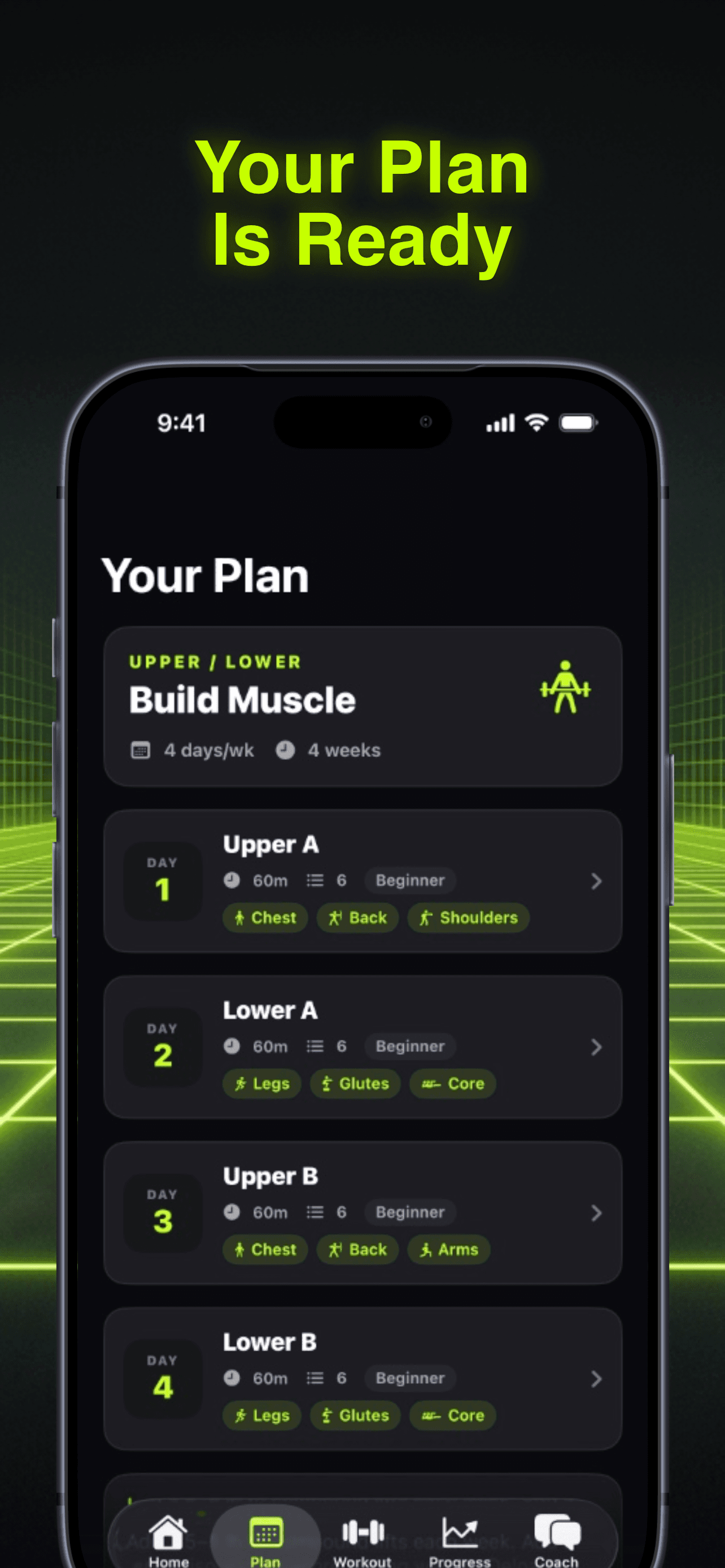
Photo by RepBro.
Walking into a gym for the first time feels like entering a foreign country without a phrasebook. Everyone seems to know exactly what they're doing while you're standing there wondering if you're even allowed to touch that barbell.
Here's your exact first day at the gym script: arrive 15 minutes early, do a 5-minute bodyweight warm-up, complete 3 basic exercises for 2-3 sets each, spend 5 minutes on light cardio, then leave. Total time: 45 minutes. This script removes every decision point so you can focus on showing up and building the habit.
Your gym anxiety isn't irrational. Most beginners quit within the first month because they walk in without a plan, feel overwhelmed, and convince themselves they don't belong. This script fixes that.
Before You Leave Home (10 Minutes)
Pack your gym bag the night before. You need:
- Water bottle (filled)
- Small towel
- Gym shoes (not running shoes if you're lifting)
- Comfortable clothes you can move in
- Phone with this script saved
Eat something light 1-2 hours before if it's been more than 4 hours since your last meal. A banana or small protein bar works. Don't go hungry, but don't go stuffed either.
Download a simple workout tracking app or bring a notebook. You'll log three numbers for each exercise: weight used, reps completed, and how hard it felt (1-10 scale).
Walking In: Minutes 0-5
Minute 0: Walk through the front door. Head straight to the front desk if you're not a member yet. If you are, scan your card and keep moving.
Minute 1: Find the locker room. Even if you don't need to change, locate it now. This is your safe space if you need a moment to regroup.
Minute 2: Do a lap around the gym floor. Don't touch anything yet. Just walk and observe. Notice where the free weights are, where the machines cluster, and where people do stretching.
Minute 3: Claim your space. Find an area with some floor space near lighter dumbbells (5-25 lbs). This is your home base.
Minute 4: Set down your water bottle and towel. You've officially staked your claim.
Minute 5: Take three deep breaths. You're here. That's already more than most people do.
Your Warm-Up: Minutes 5-10
Start with bodyweight movements. No equipment needed, no wondering if you're using something wrong.
Arm circles: 10 forward, 10 backward. Wake up your shoulders.
Leg swings: Hold something for balance, swing each leg forward and back 10 times, then side to side 10 times.
Bodyweight squats: 10 slow reps. Sit back like you're sitting in a chair, stand up. If your knees hurt, don't go as deep.
Modified push-ups: 5-10 reps. Use your knees if you need to. If regular push-ups are easy, do 10.
Arm reaches: Reach both arms overhead, then touch your toes (or as close as you can get). Do this 5 times.
You should feel slightly warm but not tired. This isn't your workout—it's preparation.
Your First Workout: Minutes 10-35
You'll do three exercises. Pick weights that feel light to moderate. You should be able to complete all reps with 2-3 reps left in the tank.
Exercise 1: Goblet Squat (Minutes 10-18)
Find a dumbbell between 10-25 lbs. Hold it against your chest with both hands.
Setup: Feet shoulder-width apart, toes slightly turned out. Hold the dumbbell like you're hugging it.
Movement: Sit back and down like there's a chair behind you. Go as deep as comfortable, then stand up by pushing through your heels.
Sets: 2-3 sets of 8-12 reps. Rest 60-90 seconds between sets.
What you're learning: Basic squatting pattern, how to hold and move with weight, what "challenging but doable" feels like.
Exercise 2: Dumbbell Row (Minutes 18-26)
You'll need one dumbbell and a bench or sturdy surface.
Setup: Put one knee and same-side hand on the bench. Your back should be flat, not rounded. Hold the dumbbell in your free hand.
Movement: Pull the dumbbell to your ribs, squeezing your shoulder blade back. Lower it slowly.
Sets: 2-3 sets of 8-12 reps each arm. Rest 60-90 seconds between sets.
What you're learning: How to brace your core, pulling movement pattern, unilateral (one-side) training.
Exercise 3: Dumbbell Press (Minutes 26-35)
Grab two lighter dumbbells (5-15 lbs each). You can do this standing or sitting on a bench.
Setup: Hold dumbbells at shoulder height, palms facing forward.
Movement: Press straight up until your arms are extended, then lower slowly back to shoulder height.
Sets: 2-3 sets of 8-12 reps. Rest 60-90 seconds between sets.
What you're learning: Overhead pressing pattern, bilateral coordination, shoulder stability.
Cool Down: Minutes 35-40
Walk to the cardio area. Pick any machine—treadmill, bike, elliptical. Set it to the easiest setting.
Move at a pace where you could hold a conversation. This isn't cardio training—you're just helping your heart rate come down gradually.
If all the cardio machines are taken, just walk around the gym slowly for 5 minutes.
Finishing Strong: Minutes 40-45
Minute 40: Wipe down any equipment you used with the provided sanitizer and paper towels. This is basic gym etiquette.
Minute 41: Pack your stuff. Don't rush, but don't linger either.
Minute 42: Log your workout. Write down the three exercises, weights used, and reps completed. Rate how the workout felt on a 1-10 scale.
Minute 43: Walk to your car or transportation. You did it.
Minutes 44-45: Sit for a moment and acknowledge what you just accomplished. You went to a gym, did a structured workout, and left in one piece.
What to Expect (And What Not to Worry About)
You'll probably feel slightly sore tomorrow. This is normal adaptation, not injury. You might also feel energized or accomplished—also normal.
You won't be the strongest person there. You won't know where everything is. Someone might be using the equipment you want. These aren't problems—they're just Tuesday at the gym.
Most people are focused on their own workouts. The guy benching 315 lbs isn't judging your 15-lb dumbbell press. He's thinking about his next set.
Your Next Three Visits
Visit 2: Same script, but try to add 2.5-5 lbs to each exercise or do 1-2 more reps if the weight felt too easy.
Visit 3: Same script again. You're building consistency, not chasing personal records.
Visit 4: Consider adding one new exercise or extending your workout by 5-10 minutes. But only if the first three visits felt manageable.
The goal isn't to transform your body in week one. It's to prove to yourself that you can show up, do the work, and leave feeling capable.
When You're Ready for More Structure
This script gets you through the door and builds confidence. After 2-3 weeks of consistent visits, you'll want a more structured program that progresses systematically and adapts to your goals, equipment, and schedule.
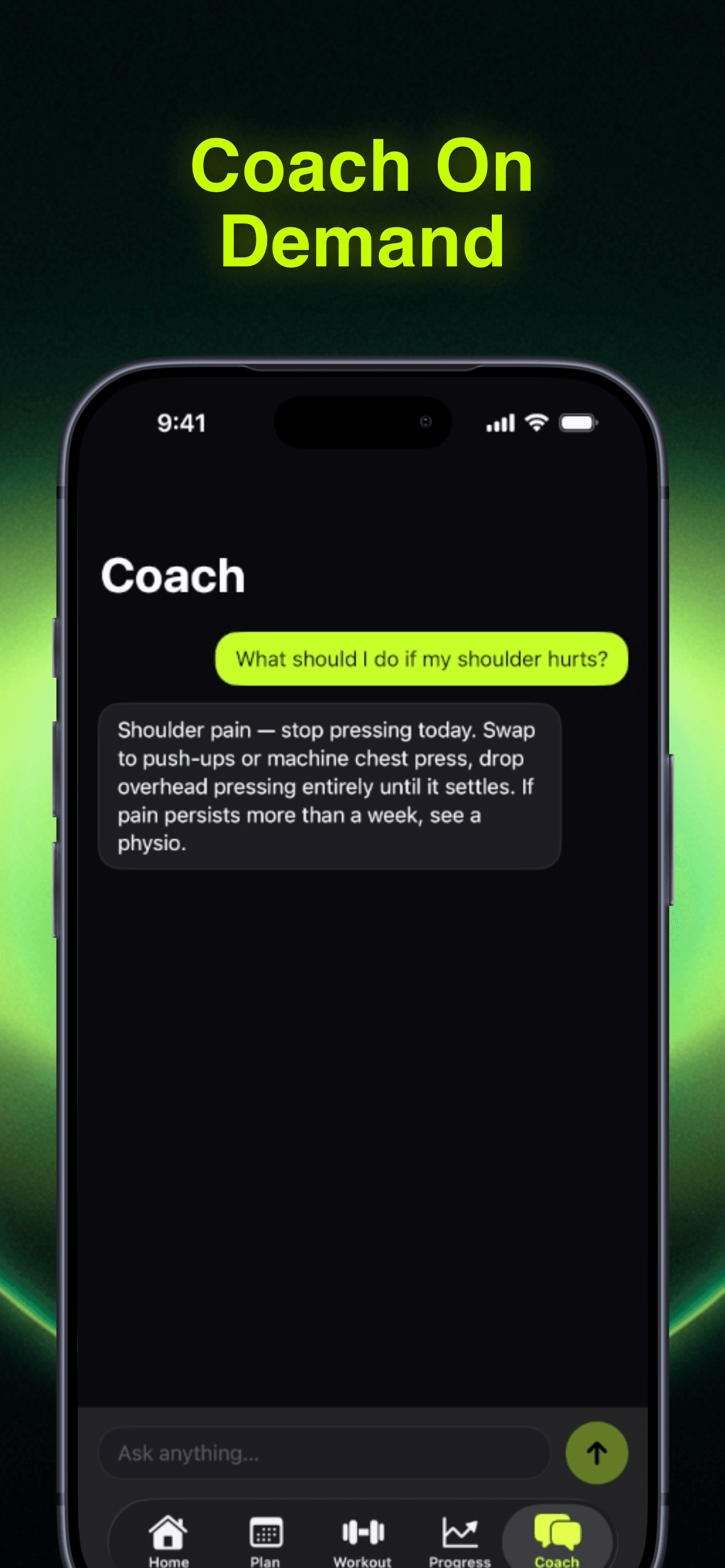
That's where having a personalized plan becomes invaluable. Instead of guessing what to do next, you'll have a program that knows your history, tracks your progress, and adjusts based on how you're responding to training.
Frequently asked questions
- How long should I spend at the gym on my first day?
- 45 minutes total: 5 minutes getting oriented, 5 minutes warming up, 25 minutes exercising, 5 minutes cooling down, and 5 minutes finishing up. Don't stay longer on your first visit.
- What if someone is using the equipment I need?
- Wait nearby or ask how many sets they have left. Most people will let you work in between their sets. If they'll be a while, substitute with a similar exercise using different equipment.
- How much weight should I start with as a complete beginner?
- Start lighter than you think you need. For goblet squats, try 10-20 lbs. For dumbbell rows and presses, start with 5-15 lbs. You should be able to complete all reps with 2-3 reps left in reserve.
- Is it normal to feel anxious about my first gym visit?
- Completely normal. Most gym-goers felt the same way initially. Having a specific plan like this script reduces anxiety by eliminating decision-making and giving you clear steps to follow.
- Should I hire a personal trainer for my first gym session?
- Not necessary for your very first visit if you follow this beginner-friendly script. However, a trainer can be valuable after you've been consistent for 2-3 weeks and want to learn more complex movements.