Turkish Get-up: Muscles Worked and Solid Alternatives
Clear breakdown of which muscles the Turkish get-up trains, how to program it, and 3–4 practical alternatives depending on equipment, injuries, or plateaus.
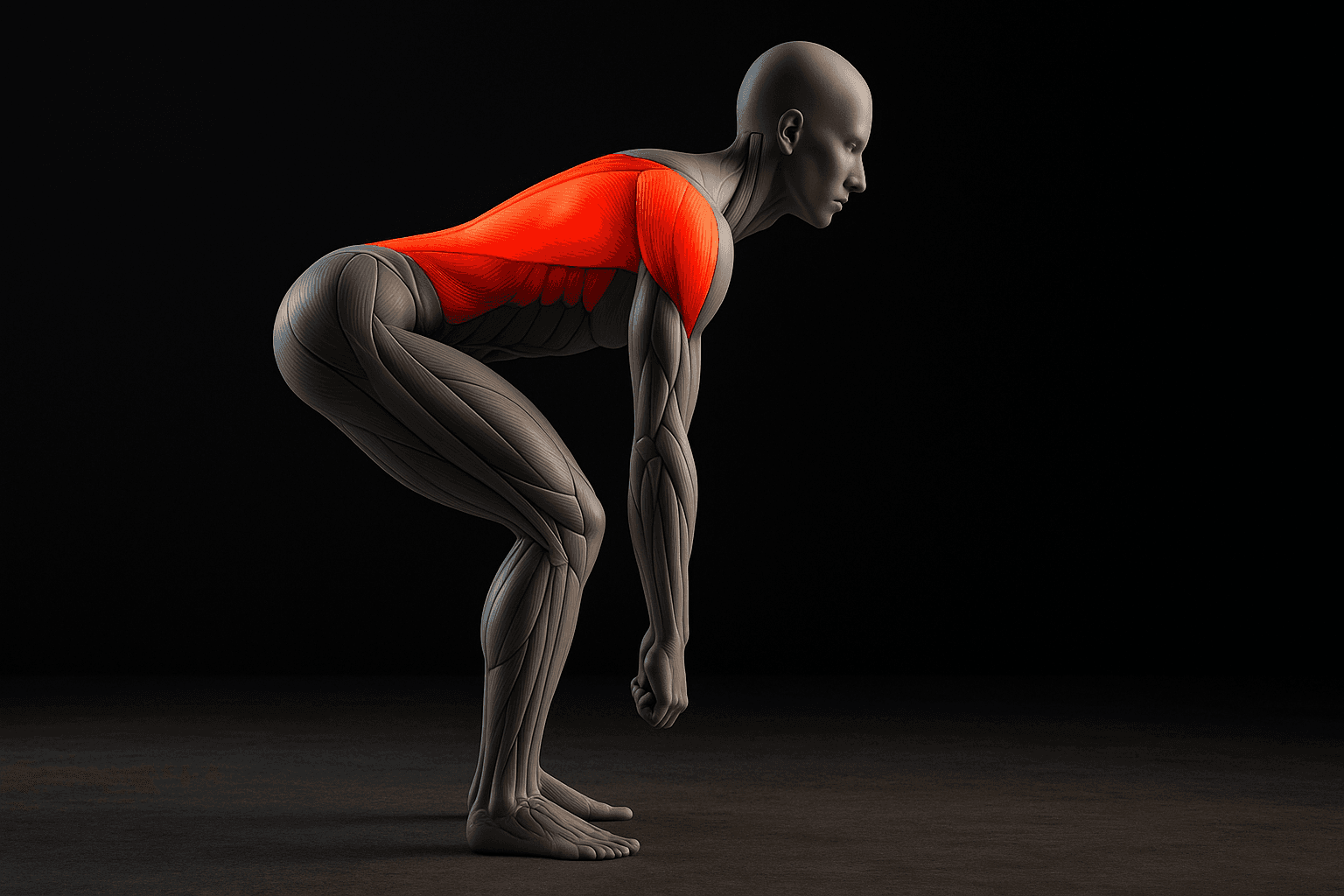
Photo by RepBro.
The Turkish get-up (TGU) is a full-body, multi-joint skill that primarily challenges the shoulder (overhead stability), hips and glutes (bridging and standing), and the obliques/rectus abdominis for anti-rotation and transfer of force — with many secondary stabilizers involved.
Which muscles does the Turkish get-up train most directly?
Primary muscles worked
- Shoulder stabilizers: deltoids for holding the load overhead and rotator cuff muscles for joint integrity.
- Gluteus maximus and hamstrings: drive the bridge and stand phases.
- Core: obliques and rectus abdominis for anti-rotation and trunk stiffness during transitions.
Secondary muscles
- Lats and teres major help position and stabilize the arm and upper torso.
- Quadriceps assist in the stand phase.
- Scapular stabilizers (trapezius, serratus anterior) support the overhead position and push phases.
- Forearm/grip muscles during set-up and lowering.
The TGU is highly integrative: one rep recruits many muscle groups sequentially, so it’s often used for conditioning, shoulder health work, and teaching safe overhead positioning rather than as a primary hypertrophy exercise.
How should I program the Turkish get-up into a routine?
- Frequency: 1–3 times per week depending on skill and load. For most lifters, 1–2 sessions weekly is efficient.
- Sets & reps: 2–4 sets of 2–6 reps per side. Because each rep is long and technically demanding, keep total reps low.
- Intensity & progression: prioritize technical mastery and gradually increase load or add reps once you can complete prescribed sets with perfect form. Progress by load first, then small rep increases.
- Placement: use TGUs as part of the warm-up/skill block to train stability, or at the end of a session as a conditioned accessory. Avoid doing heavy TGUs when you’re already heavily fatigued in the shoulder.
Safety note: stop on sharp joint pain. If form breaks (loss of control, wrist collapse, or shoulder slipping), reduce load or regress to simpler steps. Consult a qualified professional for persistent pain.
What are practical alternatives to the Turkish get-up and when should I pick each?
Below are four alternatives with reasons to choose them.
- Overhead carry (single-arm kettlebell or dumbbell)
- Muscles emphasized: shoulder stabilizers, obliques, upper traps, and leg/hip stabilizers.
- When to pick it: limited time or skill; useful if you have balance issues or want to build progressive time-under-tension in overhead position. Good when you lack space or when a TGU causes neck/shoulder discomfort.
- Programming: 2–4 sets of 20–60 seconds per side.
- Kettlebell windmill
- Muscles emphasized: obliques, hip hinge musculature, glutes, shoulder stability of the top arm.
- When to pick it: you want more hip-hinge and oblique emphasis with less complexity than a TGU. Also helpful if you plateaued on TGUs and need higher-load anti-rotation training.
- Programming: 2–4 sets of 5–8 reps per side.
- Half-kneeling single-arm press (or landmine single-arm press)
- Muscles emphasized: shoulder press mechanics, anti-rotation core stability, and hip position control.
- When to pick it: shoulder injury history or poor overhead mobility. The half-kneeling position reduces spinal loading and isolates shoulder/trunk control while still training unilateral overhead stability.
- Programming: 3–5 sets of 4–8 reps per side.
- Segmented get-up drills (bridge-to-stand, sit-to-press progressions)
- Muscles emphasized: the same chain as TGU but broken into technical components (hip drive, lunge/stand, press).
- When to pick it: you’re a beginner, rehabbing an injury, or learning movement patterns. Segmenting allows overload of weak points safely until full TGU is controlled.
- Programming: perform 3–6 sets of 3–6 reps per segment, focus on tempo and control.
How does the Turkish get-up compare to these alternatives?
| Exercise | Primary emphasis | Equipment | Best when |
|---|---|---|---|
| Turkish get-up | Full-body integration, overhead stability, hip drive | Kettlebell/dumbbell | You want skill + total-body stability and have time for technical reps |
| Overhead carry | Sustained shoulder stability, anti-lateral-flexion | Dumbbell/kettlebell | You need simple, time-efficient overhead conditioning |
| Kettlebell windmill | Obliques, hinge, shoulder stability | Kettlebell | You want higher oblique/hinge load and rotational control |
| Half-kneeling press | Press mechanics, trunk anti-rotation | Dumbbell/landmine | You need safer shoulder work or mobility-limited options |
This table helps match the exercise to equipment availability, injury considerations, and specific deficits.
How should I progress and avoid plateaus with the TGU?
- Vary load, not just reps: increase weight when you can finish all sets with pristine form for several workouts.
- Use tempo: control transitions and pauses to increase time under tension without adding risky load.
- Address weak links: if your bridge or lunge stalls, add targeted glute/hip and single-leg strength work.
- Cross-train with alternatives: use carries and windmills to overload the shoulder and obliques in different ways when TGUs feel stagnant.
What should I watch out for (safety and common faults)?
- Common faults: letting the elbow collapse, wrist flexion under the load, rotating the torso to cheat, poor hip drive during the bridge.
- Safety: stop on sharp or radiating pain. Regress to lighter load or segment drills if control is lost. Never use swinging or ballistic momentum in place of controlled muscle tension.
What can't apps and AI coaching do for your Turkish get-up training?
- No app or AI can reliably see and correct detailed form in real time; video review with a qualified coach is necessary for technical fixes.
- Apps cannot diagnose injuries or prescribe medical rehab — consult a licensed clinician for pain or injury guidance.
- A plan’s effectiveness depends on consistency, recovery, and progressive overload; software alone won’t create results without adherence.
If you track sets, weights, or progression, consider using a logging tool such as RepBro to record load and reps for each side.
Limitations
This guide summarizes common, evidence-aligned training practices but does not replace an individualized assessment. It cannot inspect your movement, diagnose medical conditions, or substitute for a qualified strength coach or physical therapist. If you have pain, a recent injury, or a medical condition, seek professional evaluation before loading overhead.
Acknowledgment: apply conservative progression, prioritize technique, and consult professionals for injuries. Consistency and correct form are the most reliable paths to improvement.
Frequently asked questions
- Does the Turkish get-up build shoulder stability or core strength?
- The Turkish get-up trains both. It loads the shoulder in the overhead position under stability demand while the torso resists rotation and flexion, so you develop shoulder stability and anti-rotation core strength simultaneously. It’s less efficient for pure hypertrophy than targeted isolation work.
- How often should I do Turkish get-ups in a week?
- Frequency depends on goals: 1–3 sessions per week is common. For general strength and skill retention, once or twice weekly is sufficient; include 2–4 sets per side and progress weight or reps gradually. Avoid daily high-volume TGU work because it’s technically demanding.
- Can I use a Turkish get-up with an injured shoulder?
- Use caution. If you have shoulder pain or an active injury, avoid loaded TGUs until cleared by a qualified clinician. Unloaded progressions (no weight or very light) and alternative anti-rotation drills can maintain conditioning while reducing joint load; always consult a medical professional.