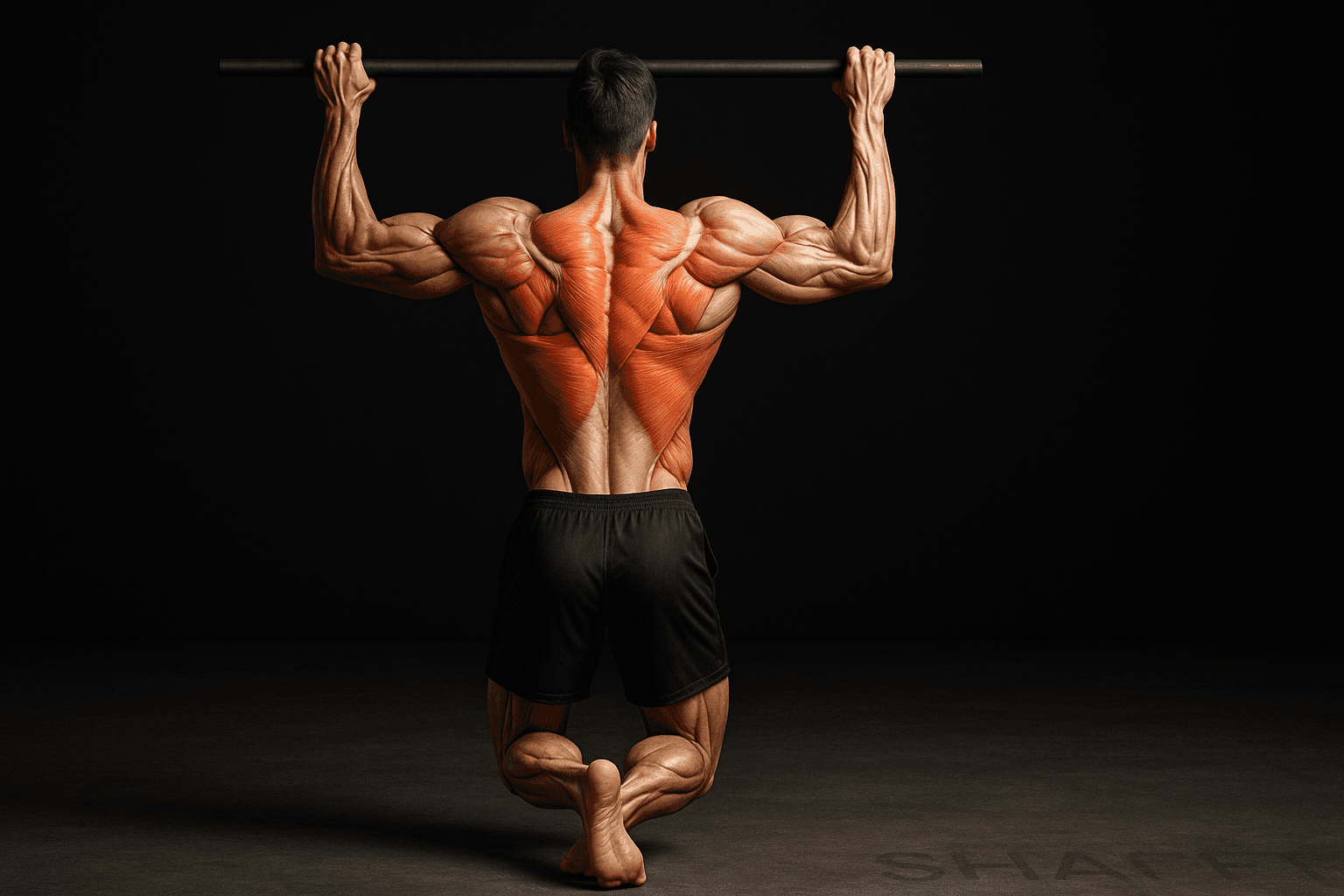
Tricep Pushdown: Muscles Worked and Best Alternatives
Learn which muscles the tricep pushdown trains (primary and secondary), where it fits in a program, and 4 practical alternatives with when to pick each.
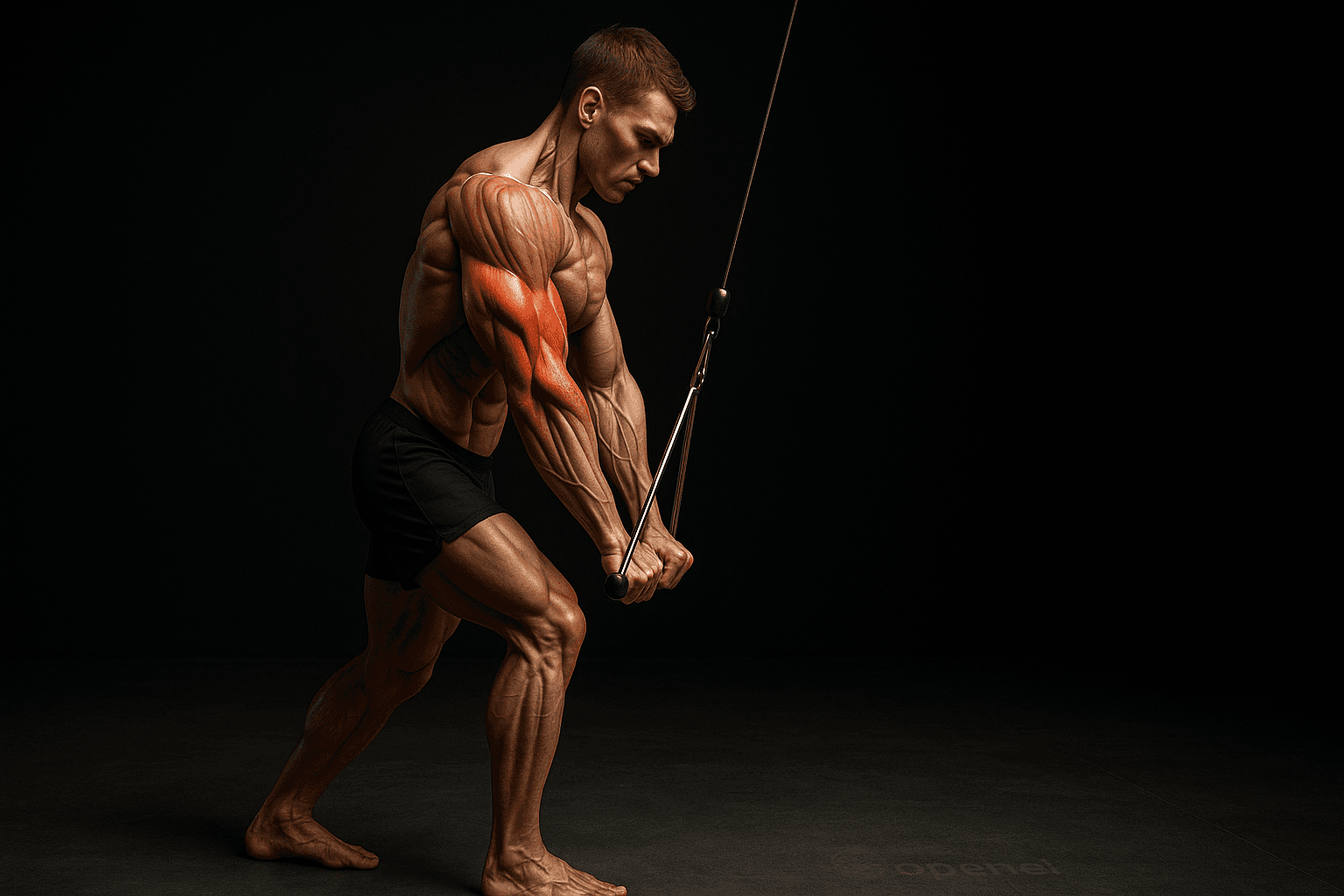
Photo by RepBro.
Tricep Pushdown: Muscles Worked and Best Alternatives
The tricep pushdown primarily trains the triceps brachii—especially the lateral and medial heads—with smaller contributions from the anconeus and the forearm extensors for stabilization; the long head of the triceps is involved less because shoulder position limits its stretch. In short: it’s an isolation exercise for elbow extension that’s best used as an accessory after pushing or pressing work.
What exactly does the pushdown train (primary and secondary muscles)?
Primary
- Triceps brachii: all three heads contribute to elbow extension, but pushdowns emphasize the lateral and medial heads most because the shoulder is neutral. The long head (which crosses the shoulder) is unloaded relative to overhead positions.
Secondary
- Anconeus: small elbow extensor that assists the triceps near lockout.
- Forearm extensor/pronator muscles: help grip and stabilise the bar or rope.
- Core and shoulder stabilizers: minimal isometric activation to hold posture while standing.
Why this matters: if your goal is to improve elbow-extension strength or dial in triceps size without loading the shoulder strongly, pushdowns are efficient and low-systemic-cost.
Where does the pushdown fit in a program?
- Placement: after big compound pressing and vertical/horizontal pushes (bench, overhead press, dips). It’s an accessory isolation exercise, not a first-mover compound.
- Frequency: 1–3 times per week depending on volume elsewhere. If you already do heavy presses twice weekly, 1 session with 2–3 sets of pushdowns is often enough; if you prioritize arm size, add 2 sessions/week.
- Sets and reps: 2–4 sets of 8–20 reps. Use 8–12 reps for heavier, strength-oriented work and 12–20 for higher volume/metabolic emphasis.
- Progression: increase weight when you can complete the top range for all sets with good form, add 1–2 sets before increasing load, or add slow eccentrics (2–3s lowering) to increase stimulus.
Form cues (quick)
- Keep elbows pinned at your sides; avoid letting them drift forward.
- Fully extend the elbow without locking aggressively; control the eccentric return to just above 90° of elbow flexion.
- Choose attachment: straight bar limits supination, rope allows separation at the end for a stronger contraction.
Safety note: stop on sharp or unusual pain and consult a qualified professional; this is general information, not medical advice.
What are the best alternatives and when should I pick each?
Below are four practical alternatives, why they work, and when to choose them.
- Close-Grip Bench Press
- What it trains: compound pressing that loads triceps strongly (all heads) while also recruiting chest and anterior deltoid.
- When to pick it: you want greater overall pressing strength or don’t have a cable; you need a heavy-loading option to break plateaus in triceps strength or mass.
- Equipment: barbell and bench (or dumbbells).
- Programming: 3–5 sets of 3–8 reps for strength, or 3–4 sets of 8–12 for hypertrophy. Use progressive overload (add 2.5–5 kg when reps are achieved).
- Cautions: keep wrists neutral and scapula stable; avoid excessive flaring of elbows.
- Overhead Triceps Extension (Dumbbell or Cable)
- What it trains: emphasizes the long head because the shoulder is in flexion/abduction, placing the long head on stretch.
- When to pick it: you want to prioritize long-head development, have access to a dumbbell/cable, or need an alternative that reduces elbow shear compared with heavy presses.
- Equipment: dumbbell, kettlebell, single cable, or band.
- Programming: 2–4 sets of 8–15 reps. Use single-arm variations to fix imbalances.
- Cautions: avoid if overhead shoulder pain is present; use lighter loads and controlled tempo.
- Parallel-Bar Dips (or Bench Dips with Caution)
- What it trains: strong triceps stimulus plus chest and shoulders; dips allow heavy loading via added weight once bodyweight becomes easy.
- When to pick it: you want a heavy-bodyweight/compound alternative and have no cable; useful to overload the triceps and transfer to pressing strength.
- Equipment: dip bars or a bench (bench dips are a regression but place more shoulder stress—use with caution).
- Programming: 3–5 sets of 4–12 reps (weighted as needed). If shoulder pain occurs, stop and regress.
- Cautions: do not force deep range of motion if you feel anterior shoulder discomfort; parallel bars with upright torso bias triceps more than chest.
- Skull Crushers / Lying Triceps Extensions
- What it trains: strong isolation with an emphasis on the long head if you perform with a slight elbow-back position; allows precise loading and tempo control.
- When to pick it: you have a bench and barbell/dumbbells, want controlled heavy isolation to break a plateau, or prefer seated/lying variations that reduce lower-back demands.
- Equipment: barbell, EZ-bar, or dumbbells and a bench.
- Programming: 3–4 sets of 6–12 reps. Increase time under tension by slowing eccentrics to increase stimulus.
- Cautions: choose range and angle to avoid pinching at the elbow; reduce weight if you feel elbow pain.
Which alternative should I choose for common constraints?
- No cable machine: Close-grip bench press or skull crushers are best—both need only a barbell/dumbbells.
- Want long-head emphasis: Overhead extensions or skull crushers.
- Need strength transfer to pressing: Close-grip bench press or weighted dips.
- Shoulder or elbow pain: pick low-systemic options with controlled ROM (light overhead with pain-free range, or cable pushdowns if available because they allow easy load management). Always stop on sharp pain and consult a professional.
How do I measure progress and avoid plateaus?
- Track one clear metric: reps at a target weight or total volume per session (sets × reps × load).
- Use simple progression: add 1–2.5 kg to pushdowns or move up 1 rep per set week-to-week until you hit the top rep range, then increase load.
- Swap in an alternative for 4–8 weeks if progress stalls, then return to pushdowns—changing plane (overhead vs. press) often breaks plateaus.
If you train digitally, tools like RepBro help log sets and plan progress; for comparing options consider a side-by-side approach (see https://www.repbro.app/vs).
Safety note: always stop on sharp pain, and consult a qualified clinician or coach for persistent issues—this article is general guidance, not medical advice.
One-sentence takeaway: The tricep pushdown is a focused elbow-extension isolation that best targets the lateral and medial heads and pairs well with compound presses, while close-grip bench press, overhead extensions, dips, and skull crushers are practical alternatives depending on equipment, injury history, and training goals.
Frequently asked questions
- Which triceps head does the pushdown hit most?
- The tricep pushdown primarily targets the triceps brachii, with greatest emphasis on the lateral and medial heads; the long head is less involved because the shoulder is not placed in an extended (overhead) position.
- How many sets and reps should I do for pushdowns?
- As an accessory exercise do 2–4 sets of 8–20 reps. Use 8–12 reps for strength/hypertrophy bias with heavier loads, and 12–20 reps for higher volume or metabolic work.
- What's the best alternative if I don't have a cable machine?
- If you lack a cable: close-grip bench press (barbell or dumbbell) is the best compound substitute for strength and mass; skull crushers or dumbbell overhead extensions work well for isolation with minimal equipment.