Tibialis Raise Alternatives at Home (Minimal Equipment)
Practical at-home substitutes for tibialis raises using bodyweight, dumbbells, and bands. What each option preserves or loses compared with the machine, programming tips, and when to go to a gym.
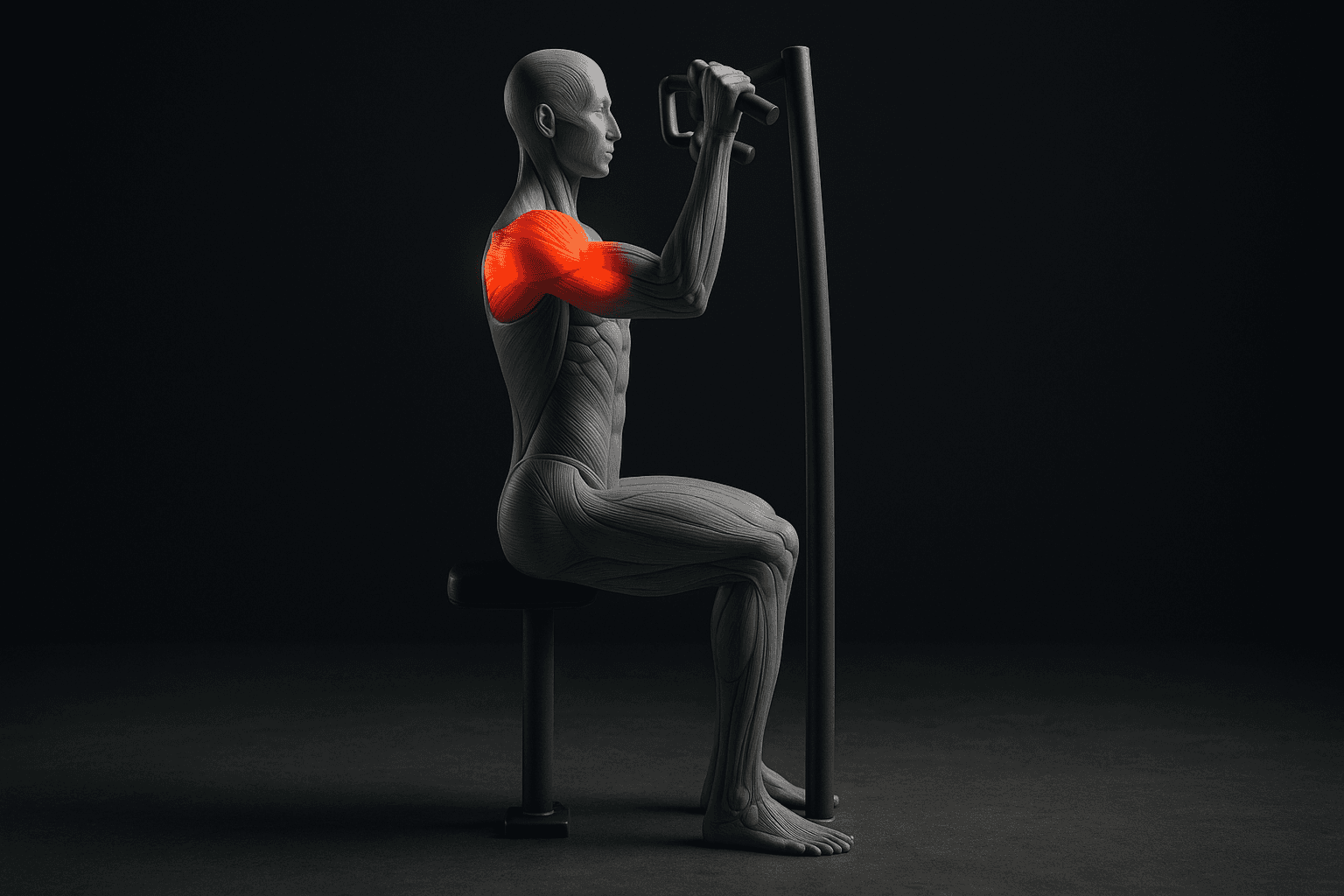
Photo by RepBro.
Banded dorsiflexion, heel-walking, seated dumbbell dorsiflexion, toe taps, and resisted eccentric dorsiflexion reproduce the tibialis raise’s core stimulus (dorsiflexion under load) with minimal equipment. Each preserves the movement but varies in overload control, eccentric emphasis, and progression; use gym options when you need higher absolute loads or precise resistance curves.
What exactly does a tibialis raise do and why would I replace it at home?
A tibialis raise targets the tibialis anterior via resisted ankle dorsiflexion (bringing the toes toward the shin), often with a weight machine that allows controlled resistance and repeatable loading. People replace it at home to maintain ankle strength, reduce shin pain risk, or improve walking/landing control when machine access is limited.
Which at-home alternatives use minimal equipment and what do they preserve or lose?
Below are five practical substitutes. For each: what it preserves (movement pattern, eccentric loading, progression options) and what it loses compared with a dedicated tibialis raise machine.
- Banded seated or standing dorsiflexion
- How: Anchor a theraband to a low point, loop around forefoot, dorsiflex against tension.
- Preserves: Specific dorsiflexion movement, easy to control concentric and eccentric phases, safe and inexpensive.
- Loses: Exact linear load curve and very high absolute resistance; harder to quantify load increments precisely.
- When adequate: General strengthening, rehab, progressive overload up to moderate intensity.
- Heel-walking (bodyweight heel walks)
- How: Walk on your heels for distance or time, toes elevated, focusing on dorsiflexion and tibialis activation.
- Preserves: Functional pattern under dynamic conditions and high-rep endurance stimulus.
- Loses: Precise progressive overload and isolated eccentric loading; less targeted single-joint control.
- When adequate: Conditioning, gait-specific work, initial rehab phases.
- Seated dorsiflexion with a dumbbell on the foot
- How: Sit, hook a light dumbbell over the foot (toes up) and dorsiflex against gravity and weight.
- Preserves: Simple, measurable overload and straightforward progression by changing dumbbell mass.
- Loses: Stability compared to a machine’s fixed path and may be awkward for high reps or heavy loads.
- When adequate: When you have a dumbbell and need greater absolute resistance than a band provides.
- Toe taps / seated rapid dorsiflexion (bodyweight)
- How: Sit with feet flat and tap toes up and down rapidly or lift toes and hold isometrically.
- Preserves: Neuromuscular activation and endurance, useful for warm-up or motor-patterning.
- Loses: Significant resistance for strength gains and controlled eccentric overload.
- When adequate: Warm-ups, motor learning, or high-rep endurance work.
- Eccentric-focused band dorsiflexion (resisted dorsiflexion with slow lowering)
- How: Use a band to dorsiflex actively then resist lowering back slowly for 3–5 seconds.
- Preserves: Eccentric control stimulus which is important for tendon and muscle capacity.
- Loses: Maximal absolute load capacity versus heavy gym options.
- When adequate: Tendon-focused programs, improving control on landings, or when reducing concentric stress is desired.
Quick comparison table: how these alternatives stack up
| Exercise | Equipment | Preserves dorsiflexion? | Progressive overload ease | Practical for rehab/conditioning |
|---|---|---|---|---|
| Banded dorsiflexion | Band | Yes | Moderate (band tension) | High |
| Heel-walks | None | Yes (dynamic) | Low (add distance/time) | High |
| Dumbbell on foot | Dumbbell | Yes | High (weight increments) | Moderate |
| Toe taps (bodyweight) | None | Yes (activation) | Low | Moderate |
| Eccentric banded | Band | Yes (eccentric focus) | Moderate | High |
How should I program these at home? Frequency, sets, reps, progression
Evidence-based accessory guidance supports training a small muscle group like the tibialis anterior 2–3 times per week. Use 3–4 sets per exercise. For strength, target lower reps with higher resistance (roughly 6–12). For endurance or rehab, 12–20+ reps or timed sets work. Progress by increasing band tension, weight on the foot, time under tension (slower eccentrics), or total volume. Plan deloads in the same way as other training blocks — reduce load or volume for a week after several consistent weeks depending on fatigue.
When is an at-home swap adequate and when is a gym required?
Adequate at home:
- Maintaining or building moderate tibialis strength.
- Rehab and motor patterning phases.
- Improving ankle control and endurance for daily activities or lower-level sport.
Consider the gym when:
- You need high absolute loads for an athletic strength goal or hypertrophy beyond what bands/dumbbells allow.
- A clinician prescribes precise force/angle loading (rehab devices or calibrated equipment).
- You require machine-based isolation for pain-free controlled range when home options provoke symptoms.
Safety note
Stop any exercise that causes sharp or unusual pain. Painful or worsening symptoms should be evaluated by a qualified health professional. This article does not diagnose conditions or guarantee prevention of injury. Use controlled movements, and reduce load or volume when form breaks down.
Limitations — what an app or AI can’t do here
No app or AI can physically observe or correct your movement quality in real time; video-based coaching or an in-person assessment by a qualified coach or clinician is necessary for reliable form correction and injury diagnosis. Exercise guidance is useful only if you follow it consistently; adherence and progressive overload determine results more than tool choice. For post-injury rehab or complex pain, consult a licensed physiotherapist or sports clinician.
Optional tool mention: If you track sets, reps, and progressive overload digitally, an app like RepBro can help log progression — but it won’t replace hands-on assessment.
Summary
Several at-home options reproduce the tibialis raise’s core function. Bands and dumbbells let you progress resistance; heel-walking and toe taps are useful for endurance and motor control. For most lifters, 2–3 sessions weekly with progressive tension and occasional deloads is sufficient. Move to gym equipment when you need higher absolute load or clinical-level control.
Frequently asked questions
- Can I strengthen my tibialis anterior at home without a machine?
- Yes. Bodyweight drills (heel walks), resistance-band dorsiflexion, and a dumbbell-on-foot seated dorsiflexion all work the tibialis anterior. Train 2–3 times per week, 3–4 sets, and progress resistance or volume. For heavy-load strength or specific rehab protocols, clinic or gym equipment may be preferable.
- How do I progress a banded dorsiflexion exercise?
- Increase resistance by using a thicker band, shorten the band to increase tension, add slow eccentrics (3–4 second lowering), or increase volume. When these stop challenging you and pain-free form is maintained, consider adding a light dumbbell on the foot or move to gym equipment for higher absolute loads.
- How often and how many reps should I do for tibialis work at home?
- Train the tibialis anterior 2–3 times per week as an accessory. Use 3–4 sets per exercise. For strength aim for lower reps with higher resistance (6–12), for muscular endurance or rehab use higher reps (12–20+). Monitor soreness and reduce frequency or volume if recovery lags.