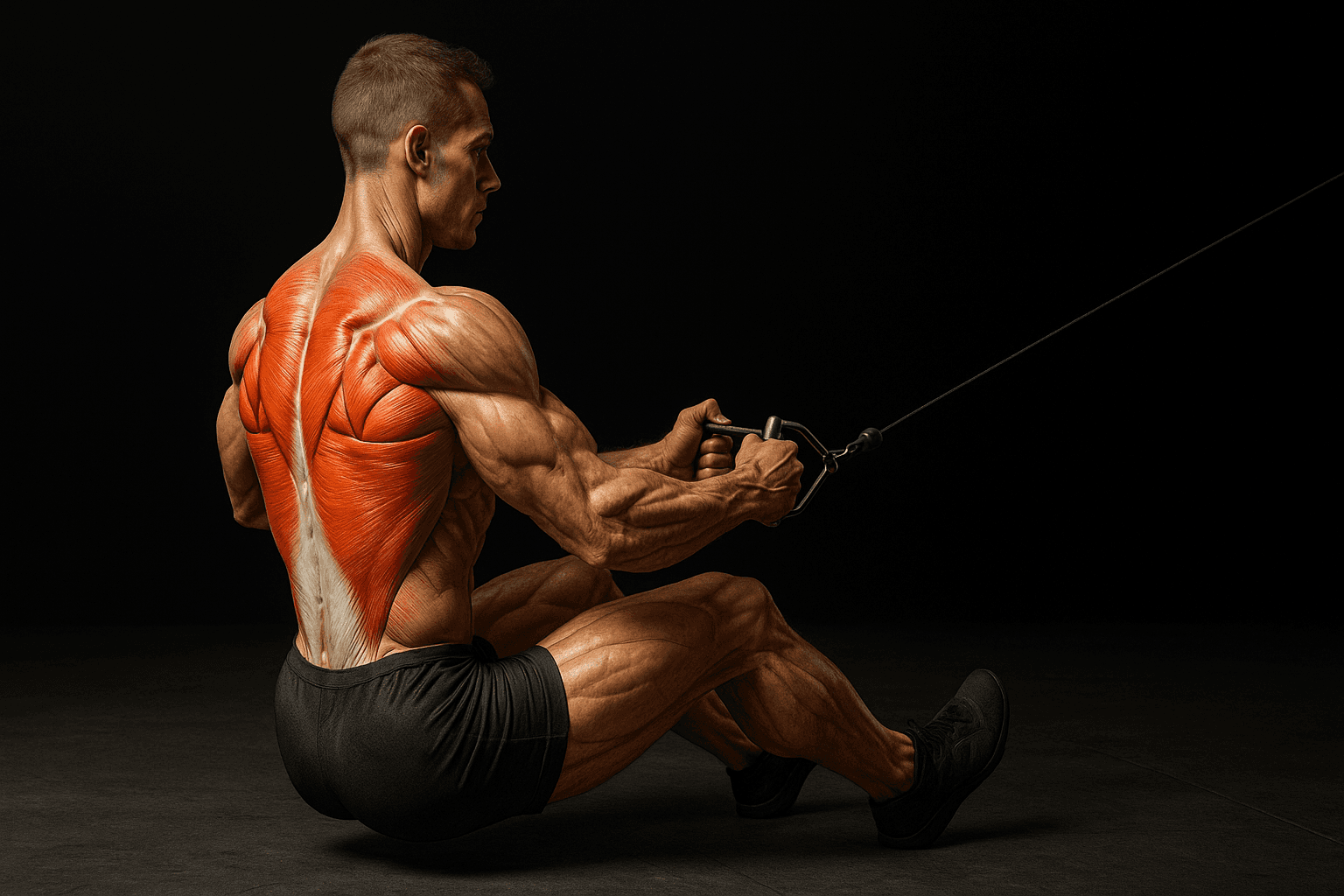
Sumo Deadlift: Muscles Worked and Best Alternatives
Learn which muscles the sumo deadlift trains, where it fits in a program, and 4 practical alternatives with when to choose each (equipment, injury, plateaus).
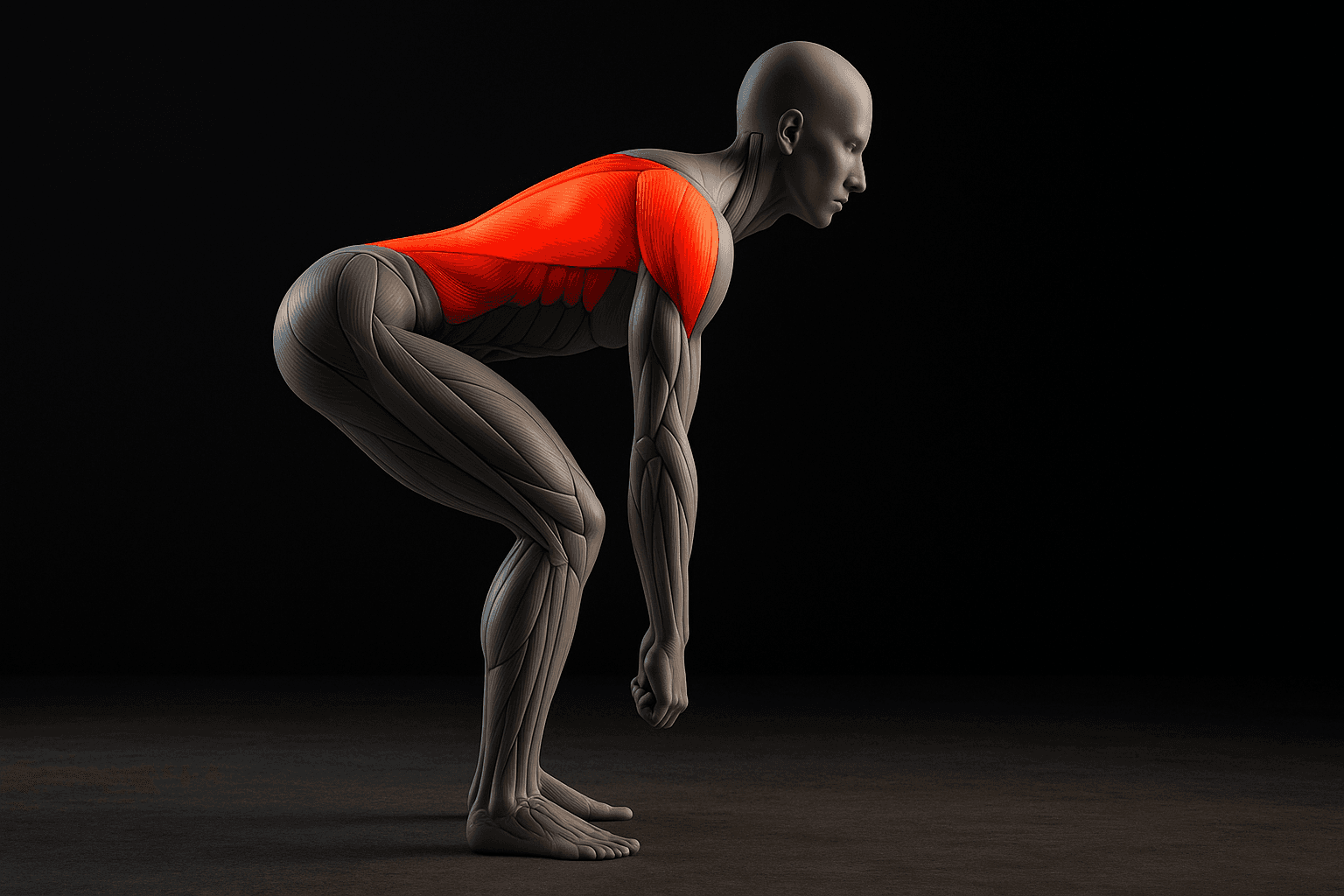
Photo by RepBro.
Sumo Deadlift: Muscles Worked and Best Alternatives
The sumo deadlift primarily trains the hips and posterior chain — especially the glutes and hamstrings — while also loading the adductors, quads, spinal erectors, traps, and core; compared with the conventional deadlift it emphasizes hip drive and knee extension more and requires a wider stance.
What muscles does the sumo deadlift work?
Primary muscles
- Gluteus maximus: major hip extensor and primary driver out of the hole.
- Hamstrings: eccentrically control the hip hinge and assist hip extension.
- Hip adductors (short fibers): active in wide stance to help stabilize and produce force.
Secondary muscles
- Quadriceps: more involved than in a conventional deadlift due to increased knee flexion at the start.
- Erector spinae (lower back): maintains torso posture under load.
- Trapezius and latissimus dorsi: stabilize the shoulder girdle and transfer force.
- Core (obliques and rectus abdominis): resist rotation and keep a neutral spine.
Practical note: stance for a typical sumo is roughly 1.5–2.0× shoulder width (varies by anatomy), toes turned out 10–40°. The wider stance shortens hip travel and increases knee angle, which changes the muscular emphasis compared with conventional pulling.
How does sumo compare to the conventional deadlift in muscle emphasis?
- Sumo places more relative stress on the hips and adductors and usually more knee extension at lockout, so you feel more quad and adductor work than in a narrow conventional pull.
- Conventional deadlifts typically require a greater hip-hinge range and a more horizontal torso, increasing hamstring and lower-back demand for many lifters.
If you're choosing between them, test both with heavy but controlled sets and track bar speed and perceived effort — anatomy and mobility decide which feels stronger and safer.
Where does the sumo deadlift fit in a training program?
- Strength blocks: use 1–5 reps per set at 80–95% of your 1RM; include an accessory day focused on posterior-chain volume.
- Hypertrophy blocks: 6–10 rep ranges at 65–80% with 3–5 sets can build muscle while limiting neural fatigue.
- Technique and speed work: 2–5 sets of 2–3 explosive reps at 50–70% to improve bar path and speed without overtaxing the CNS.
Frequency: 1–2 direct sumo sessions per week is practical for most lifters. If your competition pull is sumo, prioritize it; if not, use it as an accessory to fix hip weakness or improve lockout.
Accessory pairings: hip thrusts, Romanian deadlifts (RDLs), wide-stance box squats, and heavy adductor work (cables or machine) align well with sumo emphasis.
What safety cues should you follow?
Stop immediately on sharp or shooting pain; never push through acute pain. Maintain a neutral spine, set the lats, brace the core, and drive the floor through the feet while keeping the bar close. If you have a known injury, consult a qualified healthcare or strength professional before loading heavy.
What are the best alternatives to the sumo deadlift — and when to pick each?
- Trap-bar (hex-bar) deadlift
- Why: Centers load around your torso, producing a more vertical spine and easier setup for many lifters.
- Use it when: You have lower-back irritation, are a beginner, or your gym lacks a coachable barbell deadlift technique setup.
- Equipment: Hex/Trap bar and plates.
- Programming: Use for strength (3–6 reps at 80–90% of 1RM) or as a heavy assistance movement on deadlift days.
- Romanian deadlift (RDL)
- Why: Targets the hamstrings and glutes through the hip hinge with less knee flexion and lighter spinal compression than maximal pulls.
- Use it when: You want posterior-chain hypertrophy, to shore up hamstring strength, or during a deload/rehab phase.
- Equipment: Barbell or dumbbells.
- Programming: 3–5 sets of 6–12 reps; tempo control (3–4 sec lowering) improves eccentric strength.
- Conventional deadlift (or paused conventional)
- Why: Different bar path and torso angle change loading patterns — more hamstring and lower-back carryover for some lifters.
- Use it when: You stall on off-the-floor or need improved hip hinge strength at longer ranges. Also relevant if you plan to compete conventional.
- Equipment: Barbell and plates. For comparison of the two pulls see RepBro vs. conventional resources.
- Programming: Heavy singles/doubles for strength; paused reps (at mid-shin or just off floor) to fix sticking points.
- Kettlebell or goblet sumo deadlift (wide-stance dumbbell/kettlebell)
- Why: Simple home or crowded-gym option that still trains the wide-stance mechanics and hip drive.
- Use it when: You lack a barbell, are training at home, or want extra technical practice without maximal load.
- Equipment: One heavy kettlebell or dumbbell.
- Programming: 3–5 sets of 8–15 reps for technique and conditioning; keep the kettlebell close and chew on hip engagement.
When to pick each based on problems and limits
- Equipment-limited: Choose kettlebell/goblet sumo or RDLs.
- Lower-back irritation: Trap-bar deadlifts and lighter, higher-volume RDLs first.
- Grip fails or plateaus: Use straps on heavy sets (but train grip twice weekly via farmer carries or heavy holds) or switch to trap-bar temporarily to overload hips.
- Sticking at mid-shin: Paused conventional or deficit pulls will help; if your hips are the weak link, emphasize RDLs and hip thrusts.
How to rotate variations to break plateaus?
- 4–8 week blocks: prioritize one main pull (sumo or alternative) with targeted accessory work. Rotate to an alternative for 4–6 weeks when progress stalls.
- Use intensity cycling: 3 weeks of increasing load, 1 deload week. Swap in technique-focused variations (paused reps, tempo, deficits) during a technical block.
Final safety reminder
Use progressive loading, keep sets intentional (not chasing ego), stop on sharp pain, and consult a qualified coach or clinician if you have persistent joint or back symptoms.
One-sentence takeaway: The sumo deadlift is a hip-dominant pull that emphasizes glutes, hamstrings, and adductors—pick trap-bar deadlifts, RDLs, conventional pulls, or kettlebell/goblet sumo based on equipment, injury history, and what part of the lift needs work.
For programming help and guided templates that include these variations, check out the RepBro app or import plans at https://www.repbro.app/import.
Frequently asked questions
- Is the sumo deadlift better for glutes than the conventional deadlift?
- Sumo shifts more load onto the hips and adductors and often produces greater glute activation for lifters with suitable hip mobility, but individual anatomy matters—test both and track performance.
- How often should I train sumo deadlifts?
- Two sessions per week is common in strength blocks (one heavy, 1–5 reps; one volume or speed, 3–6 sets of 3–6 reps or 5–8 sets of 2 for speed). Adjust frequency based on recovery, fatigue, and total session volume.
- Which variation helps if I have lower-back pain?
- Trap-bar deadlifts or lighter technique work (paused reps, higher-rep Romanian deadlifts) are good starting points, but stop on sharp pain and consult a healthcare professional before continuing.