Smith Machine Squat: Muscles Worked and Practical Alternatives
Which muscles does the Smith machine squat train, how it fits in programs, and 3–4 practical alternatives with when to choose each (equipment, injury, plateaus).
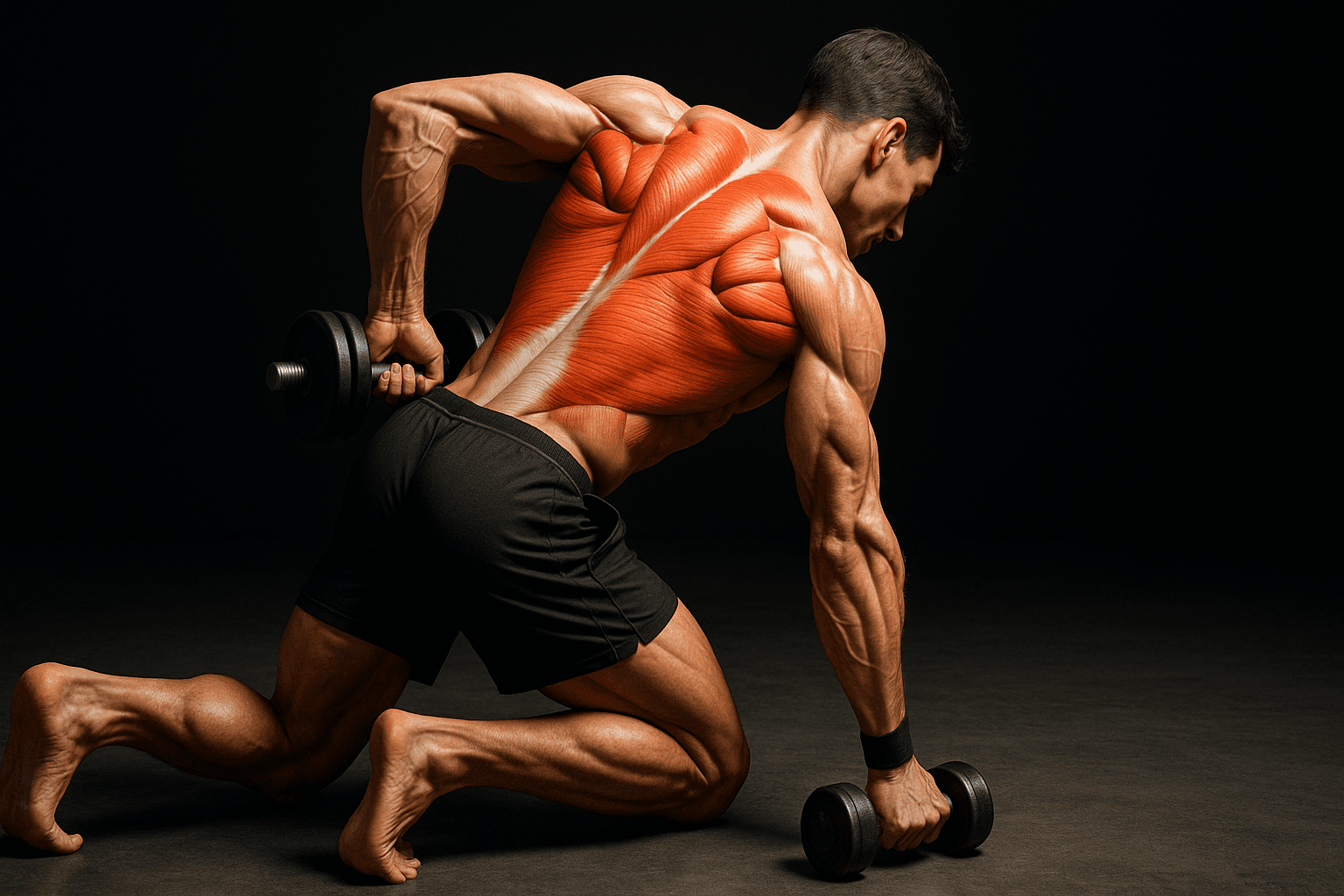
Photo by RepBro.
The Smith machine squat primarily trains the quadriceps and gluteus maximus, with secondary involvement of hamstrings, adductors, calves, spinal erectors and the core. Because the bar path is fixed, stabilizer demand is reduced, making the movement more quad-dominant and easier to control for technique work or solo lifting.
Which muscles does the Smith machine squat train?
Primary movers
- Quadriceps (vastus lateralis, intermedius, medialis, rectus femoris): take most of the knee-extension load, especially with a relatively upright torso and narrow stance.
- Gluteus maximus: contributes hip extension, increasingly loaded with a wider stance or deeper depth.
Secondary and stabilizers
- Hamstrings and adductors: assist hip extension; their contribution rises with a more posterior hip position or wider stance.
- Spinal erectors and core: provide trunk stiffness, but less activation than in free-bar squats because the machine stabilizes the bar path.
- Calves (gastrocnemius, soleus): assist ankle stability and plantar flexion at the top.
The fixed vertical (or near-vertical) bar path reduces the need for horizontal stabilization and balance, which shifts relative emphasis toward prime movers (especially quads) versus free-bar variants.
How does the Smith machine squat differ from a barbell back squat?
- Bar path: Smith machine constrains the bar, reducing balance demands and horizontal shear control.
- Stabilizers: Free-bar squats recruit more hip abductors/adductors and trunk stabilizers; Smith squats reduce that demand.
- Movement variations: Smith machine allows different foot placement and often more upright torso positions without worrying about the bar rolling.
- Safety and solo training: built-in catches make it easier to work near failure alone, but fixed path can force non-ideal joint angles for some lifters.
Where does the Smith machine squat fit in a program?
- As an accessory: Use 2–4 sets of 6–12 reps to target hypertrophy for quads/glutes; pair with hinge-dominant work (Romanian deadlifts, hip thrusts) to balance posterior chain.
- As a primary lift: Reasonable when free barbells aren't available or for short training blocks focused on quad hypertrophy or tolerated heavier loading with less CNS and balance stress.
- Frequency: Follow established resistance-training guidance — work each major muscle group multiple times per week. For most lifters, programming Smith squats 1–3 times weekly fits within typical volume ranges.
- Progression: Increase load or reps when you can complete the top of the target range with good form. Track volume (sets × reps × load) and apply gradual progressive overload.
What are solid alternatives and when should I pick each?
Below are practical alternatives with reasons to choose them based on equipment, injury status, or plateau-busting needs.
- Barbell back squat
- Muscles: Quads, glutes, hamstrings, spinal erectors, core.
- When to pick: You have a training partner or rack, want maximal carryover to strength and sport, and want to develop stabilizers and total-body coordination.
- Limits: Requires good technique and often a spotter for heavy singles.
- Goblet squat
- Muscles: Quads and glutes with modest trunk demand.
- When to pick: Limited equipment (dumbbell or kettlebell), beginners learning squatting depth, or higher-rep metabolic work. Good for troubleshooting upright torso and hip hinge balance.
- Limits: Weight ceiling — not ideal for heavy strength focus.
- Bulgarian split squat (rear-foot elevated split squat)
- Muscles: Quads and glutes with strong unilateral demand and balance challenge.
- When to pick: To address imbalances, increase single-leg strength and hypertrophy, or if low back pain limits bilateral loading.
- Limits: Can cause knee or hip discomfort for some; requires balance and mobility.
- Trap-bar deadlift
- Muscles: Quads, glutes, hamstrings, lower back; more hip-knee balance and less shear than conventional deadlifts.
- When to pick: If you want heavy loading while reducing lumbar shear and preserving a more upright torso. Good alternative when a back squat is uncomfortable or when you want to emphasize total-leg strength.
- Limits: Less specific knee-dominant stimulus than a narrow back squat.
Quick comparison table
| Exercise | Primary muscles | Stabilizer demand | Equipment | When to choose |
|---|---|---|---|---|
| Smith machine squat | Quads, glutes | Low | Smith machine | Solo lifts, technique work, quad focus |
| Barbell back squat | Quads, glutes, erectors | High | Barbell + rack | Strength, athletic carryover |
| Goblet squat | Quads, glutes | Moderate | Dumbbell/kettlebell | Beginners, limited gear |
| Bulgarian split squat | Quads, glutes (unilateral) | High (balance) | Dumbbell/barbell | Imbalances, unilateral strength |
| Trap-bar deadlift | Glutes, hamstrings, quads | Moderate | Trap bar | Heavy leg strength with upright torso |
How should I program sets, reps and frequency for Smith machine squats?
Follow standard resistance-training recommendations: work each major muscle group multiple times per week, using 2–4 sets per exercise for hypertrophy-related work and a rep range that suits your goal (for hypertrophy, commonly 6–12 reps; for strength, lower rep ranges with heavier loads). Increase load, reps, or sets gradually and monitor recovery; consider periodic deloading if performance or recovery declines.
What safety precautions should I follow?
Stop immediately if you feel sharp or unusual pain. Use appropriate footwear and foot placement to keep knees tracking over toes without excessive forward collapse. Use the machine's safety catches or pins. Consult a qualified coach, physiotherapist, or medical professional if you have a history of knee, hip, or low-back injury. This article does not diagnose or treat injuries.
What limitations should I be aware of?
No app or AI can see your form in real time or diagnose complex pain patterns. Formal rehab and injury management require a qualified professional. Programming advice only works when you follow it consistently — adherence and progressive overload matter more than tool choice. If tracking helps, consider tools such as RepBro to log sets, weights and progression, but remember an app cannot replace a coach for technical corrections.
Safety final note: Smith machine squats are useful but are not a guaranteed injury prevention method. Stop on sharp pain and seek professional assessment for persistent pain.
Limitations (honest): an article can explain mechanics and programming principles, but it cannot observe your execution, diagnose structural issues, or provide individualized medical advice. For rehab, pain that limits activity, or complex technique problems, see a qualified clinician or coach.
If your goal is hypertrophy, strength, or practical gym training, use the Smith machine intentionally: pick it for control, safety, or quad emphasis, and rotate in free-bar and unilateral work to maintain stabilizer strength and carryover.
Frequently asked questions
- What are the primary muscles worked by the Smith machine squat?
- The Smith machine squat primarily targets the quadriceps and gluteus maximus. Secondary loading goes to the hamstrings, adductors, calves, spinal erectors, and core. The fixed bar path reduces stabilizer demand, making it more quad-dominant than free-bar squats.
- Can I replace barbell squats with Smith machine squats?
- You can use Smith machine squats as a substitute for some training goals, especially when training alone or working on depth/tempo. They don’t fully replace free-bar squats because stabilizer recruitment and carryover to athletic tasks are lower.
- How often should I program Smith machine squats?
- Program Smith machine squats 1–3 times per week depending on your role (main lift vs accessory) and overall volume. Follow general resistance-training guidelines: multiple sessions per muscle group weekly and 2–4 sets per exercise for strength/hypertrophy.