How Many Sets and Reps (Hold Time) for the Side Plank by Goal
Evidence-aware guidance for side plank sets, hold durations, frequency and progression for strength, hypertrophy, and endurance. Clear rules when to add weight vs time.
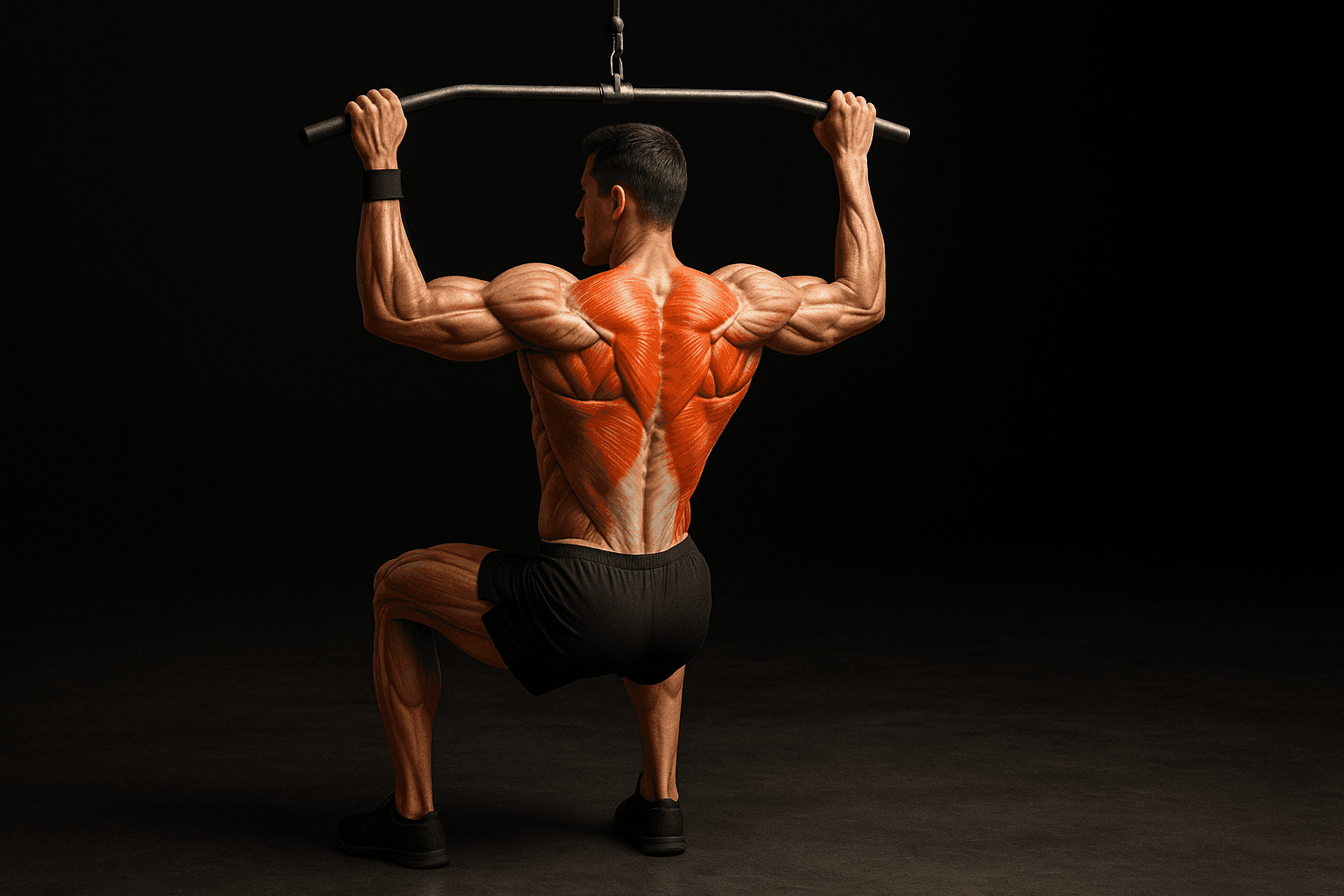
Photo by RepBro.
For most lifters, aim for: strength—3–5 sets of short, high-intensity holds (8–20 s) with added load; hypertrophy—3–4 sets of moderate holds (20–60 s); endurance—2–4 sets of long holds (45–120 s). Train the side plank 2–3 times per week and progress time or load weekly.
Why does the side plank need different sets and hold times for different goals?
The side plank is an isometric unilateral core exercise. Unlike dynamic lifts where "reps" are discrete, progress is usually measured as time under tension (TUT) and external load. Training principles from mainstream strength guidance (set/volume ranges, progressive overload, frequency 2–3 sessions/week) apply: shorter, heavier efforts favor strength; moderate TUT favors muscle-building; long-duration, low-intensity work favors endurance.
How many sets and how long should each side-plank hold be for strength, hypertrophy, and endurance?
-
Strength
- Sets: 3–5 per side
- Hold time: 8–20 seconds per set
- Frequency: 2–3 times per week
- Notes: Use added load (dumbbell on hip, weighted vest) or harder variations (single-leg side plank) to increase intensity. Keep rests longer (60–120 s).
-
Hypertrophy (muscle size of obliques and lateral stabilizers)
- Sets: 3–4 per side
- Hold time: 20–60 seconds per set
- Frequency: 2–3 times per week
- Notes: Aim for moderate TUT and accumulate volume. Short rests (30–90 s) are okay if form stays tight.
-
Endurance
- Sets: 2–4 per side
- Hold time: 45–120 seconds per set
- Frequency: 2–4 times per week
- Notes: Higher overall weekly TUT. You can use shorter rests and more sets to build capacity.
These ranges overlap because the side plank is versatile. Pick the range that matches your primary goal and stay consistent for 4–8 weeks.
How should I progress the side plank week to week?
Use one of two simple progression schemes and switch after 4–8 weeks:
-
Time-first progression (common for beginners/intermediates)
- Add 5–15% more hold time per set each week (for example, 20 s → 22–23 s).
- When you reach the top of your target range for two consecutive sessions, either add load or reset to the lower time bound and repeat with extra load.
-
Load-first progression (for experienced lifters)
- Once you can comfortably hit the upper time bound twice (e.g., 60 s × 3 sets), add small external load (1–5 kg / 2–10 lb) and reduce hold time to the lower bound of your range, then progress time again.
General progression rules
- Increase only one variable at a time (time or load).
- Use small steps: +5–10 seconds or +1–2 kg (2–5 lb) is a reasonable increment.
- Track both per-set time and alignment (hips stacked, ribs down). Log sessions in a tracker or app to spot trends.
(If you use an app for tracking, a tool such as RepBro can record holds and progression.)
When should I add weight instead of more time?
Consider adding external load when all of the following are true:
- You can perform every set at the upper end of your target time range for two consecutive workouts.
- You maintain textbook alignment (straight line from head to heels, no sagging or elevated hips, ribs not flaring).
- The holds feel easy within that time range (rate of perceived exertion consistently low-to-moderate).
If holds are long but form decays (hip drop, torso rotation), regress (knee side plank, elevated hand) rather than add time. When you add weight, reduce time back to the lower end and progress again.
What are sensible weekly templates I can use?
-
Strength block (4–6 weeks)
- Twice weekly: 3–5 sets per side × 8–20 s holds with load or hard variation.
-
Hypertrophy block (4–8 weeks)
- Twice weekly: 3–4 sets per side × 30–60 s holds, moderate rest.
-
Endurance block (4–8 weeks)
- 2–3 times weekly: 2–4 sets per side × 60–120 s holds.
Rotate blocks depending on priorities. Keep at least 48 hours between intense core sessions if they include high-load work.
Which variations and regressions should I use if I can’t hit these ranges?
- Easier: knee side plank, incline side plank (hands on bench), or reduce hold time and build up.
- Harder: weighted side plank (dumbbell on hip), side plank with top leg raise, single-arm farmer-carry variations that tax lateral chain.
How do I know if my side plank form is good enough?
Signs of good form:
- Straight line from head to heels, hips stacked (not rotated forward/back).
- Ribs pulled down and breath steady (avoid breath holding).
- No sharp pain in low back or shoulder.
If you see hip sag, excessive rotation, or shoulder creep toward the ear, reduce load or hold time until technique is restored.
Comparison: sets, hold times, frequency and progression by goal
| Goal | Sets per side | Hold time per set | Frequency | Progression cue |
|---|---|---|---|---|
| Strength | 3–5 | 8–20 s | 2–3/wk | Add load when top time hit twice |
| Hypertrophy | 3–4 | 20–60 s | 2–3/wk | Increase time 5–15% weekly until upper bound, then add load |
| Endurance | 2–4 | 45–120 s | 2–4/wk | Increase total weekly TUT and/or sets |
Safety note
Stop if you feel sharp or radiating pain in the low back, ribs, or shoulder. Consult a qualified clinician for persistent pain or injury. This article does not diagnose conditions or promise injury prevention. Always prioritize strict alignment over adding time or load.
Limitations — what tracking apps and AI coaching cannot do
No app or AI can see your movement to correct technical faults in real time. They cannot diagnose injuries or replace in-person assessment by a qualified professional. Also, even the best plan only works if you consistently perform the work—consistency and recovery matter more than program choice.
Quick summary
Pick the set/time range that matches your goal, progress time by small increments (5–15%) weekly, add external load only after you can reliably hit the top of your time range with perfect alignment for two sessions, and keep frequency at 2–3 times per week. Track holds and technique; regress if form breaks.
Frequently asked questions
- How many sets and reps (hold time) should I do for the side plank?
- For a typical training block: strength—3–5 sets of shorter, high-intensity holds (8–20s) with added load; hypertrophy—3–4 sets of moderate holds (20–60s); endurance—2–4 sets of longer holds (45–120s). Train the side plank 2–3 times per week and progress time or load weekly.
- When should I add weight to my side plank instead of more time?
- Add external load once you can comfortably hit the top of your target hold range for two consecutive sessions with strict alignment and no drift in ribs/hips. If you can hold longer but alignment breaks, add load and reduce hold time to the lower end before progressing time again.
- How should I progress side planks week to week?
- Progress by increasing hold time 5–15% per week or by adding small increments of external load once you reach the upper bound of your time range for two sessions. Alternate time and load blocks (4–8 weeks). Use regressions (knee or incline) if form fails.