The Most Common Leg Press Mistakes (and How to Fix Them)
Fix the 6 most common leg press mistakes—too much weight, locking knees, knees caving, hip lift, bad foot placement, and bouncing—with concrete fixes and numbers.
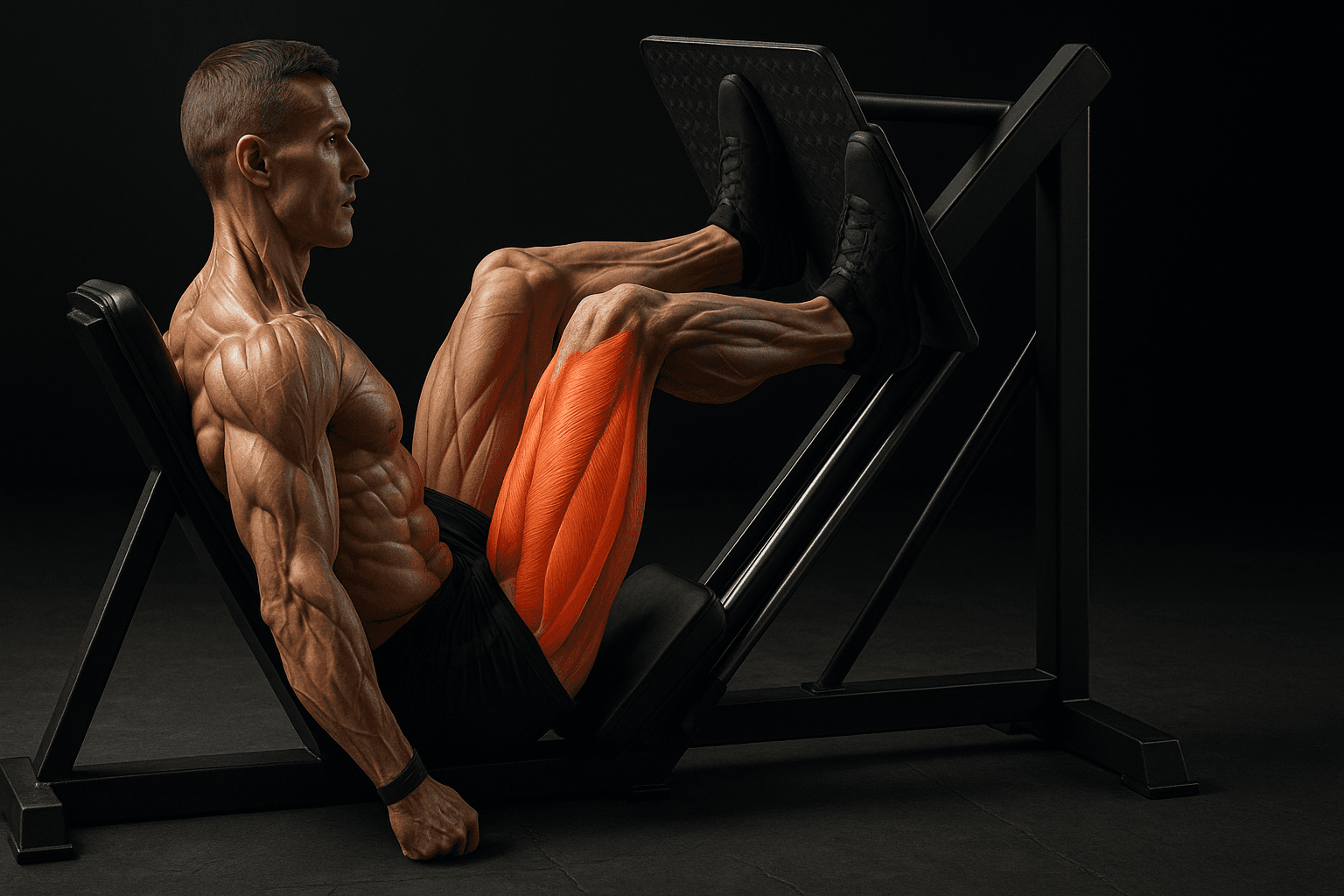
Photo by RepBro.
The Most Common Leg Press Mistakes (and How to Fix Them)
If you searched for "leg press mistakes": the most common errors are using too much weight, locking the knees, letting the knees cave inward, lifting the hips or rounding the lower back at the bottom, incorrect foot placement, and bouncing at the bottom. Each costs either lost strength/hypertrophy or increases injury risk—fix them by dropping the load, controlling range and tempo, cueing knee tracking, and choosing the right foot position.
Am I loading the leg press too heavy?
Why it happens: Ego-loading and treating the machine like a stack-of-plates contest. Heavy loads feel impressive, and the leg press plate stack encourages piling on weight.
What it costs: Loss of quality reps, technique breakdown, and higher joint/compressive stress—especially on knees and low back. Gains shrink because you train momentum and compensation instead of muscle tension.
One concrete fix: Reduce working weight 20–50% and aim for 6–12 controlled reps per set. Use a tempo of 2 seconds down (eccentric), 1-second pause, 1 second up (concentric). Add weight only when you can complete 3–4 clean sets at target reps with the tempo.
Am I locking out my knees at the top?
Why it happens: People try to show control or rest on the bar; some think full extension is stronger. Locking gives a short mechanical rest so the legs do less work.
What it costs: Locking transfers force to passive structures (ligaments and joint surfaces) and increases risk of knee injury under load. You also reduce time under tension and blunt hypertrophy.
One concrete fix: Stop ~5–10° short of full extension (a soft knee). Picture keeping a small bend so quads stay active. If you already lock, consciously stop before lockout for every rep and mark it—use a strip of tape on the machine or a consistent foot placement to reproduce the stop point.
Why are my knees collapsing inward (valgus)?
Why it happens: Weak hip abductors/external rotators, narrow stance, or pushing with toes only. Fatigue and too much weight make the problem worse.
What it costs: Increased patellofemoral stress and uneven loading of quads, which can slow progress and raise injury risk over time.
One concrete fix: Use a resistance loop band around your knees (placed just above the patella or ~5–10 cm above) and push outward against it during sets. Start with a light band and do 2–3 warm-up sets of 12–20 reps focusing on pushing knees out; then perform working sets while maintaining that cue. Also widen feet to hip-width if stance is very narrow.
Why is my butt lifting or my lower back rounding at the bottom?
Why it happens: Excessive range of motion, too much weight, or trying to match someone's deep squat-like depth on a fixed seat angle. When the sled goes too far, the pelvis posteriorly tilts and the lumbar spine flexes.
What it costs: Shear and compressive forces on the lumbar spine and loss of tension in the target muscles. This can cause lingering low-back soreness and reduce safe loading capacity.
One concrete fix: Limit depth so your lower back stays neutral and the butt remains on the pad. A practical cue: stop lowering when you feel the first hint of your pelvis tucking or the sacrum peeling off the pad—typically when knees reach ~90–110° depending on your limb lengths. Reduce the weight until you can maintain that stop every rep.
Is my foot placement wrong (too high/low or narrow/wide)?
Why it happens: Copying others without accounting for limb length, or experimenting without understanding the effect. Foot position changes which muscles dominate.
What it costs: Wrong placement can overload knees or underwork the desired muscle group. High foot placement targets glutes/hamstrings; very low placement increases knee shear and quad dominance.
One concrete fix: Use a neutral starting placement—feet roughly hip-width, centered on the platform, toes turned out 5–15°. If you want more glute/hamstring emphasis, move feet 10–15 cm higher; for more quads, drop them 10–15 cm lower—but avoid going so low that knees track over toes excessively or you have to lower into a pelvic tuck.
Why am I bouncing at the bottom or using momentum?
Why it happens: Heavy load plus desire to get more reps, or fatigue makes people rebound off the safety stops. The leg press lends itself to a "bounce" that looks like power but isn't muscle work.
What it costs: Bouncing reduces eccentric control and increases risk to joints and the safety stops; it turns hypertrophy work into plyometrics you didn't program, and it trains poor motor control.
One concrete fix: Slow the eccentric to 2–3 seconds, pause 0.5–1 second at the bottom without slamming into the stops, and press with intent—no rebounding. If you find yourself bouncing on set 2 or 3, lower the weight 10–20% and repeat the tempo work until form holds for all sets.
Quick safety note
Stop immediately if you feel sharp or unfamiliar pain; this article isn’t medical advice. If pain persists, consult a qualified clinician or coach before continuing. Use the machine safety stops and never leave them disengaged.
If you track technique and loads, try the RepBro app to log controlled tempos and notes. For discussion of how the leg press compares to free-weight squats for your goals, see this comparison: https://www.repbro.app/vs.
One-sentence takeaway: Fix the six common errors—reduce ego loads, keep a soft knee at the top, force knees out, avoid hip lift, pick an appropriate foot position, and control tempo—to make leg presses safer and more effective for strength and size.
Frequently asked questions
- How heavy should my leg press sets be while fixing form?
- Drop weight 20–50% from your current working load and use a 6–12 rep range while you relearn technique; once you can hit clean sets for 3–4 sets, increase load by 5–10%.
- Are leg presses safe for people with knee pain?
- Leg press can be useful but stop on sharp pain and consult a qualified clinician; avoid deep knee flexion (where hips tuck or lower back rounds) until cleared.
- Should I push through my heels or toes on the leg press?
- Aim to distribute force through the whole foot with emphasis on midfoot-to-heel contact; avoid driving only with the toes to reduce knee stress.