The Most Common Leg Extension Mistakes (and How to Fix Them)
Fix the most common leg extension mistakes—pad placement, locking knees, momentum, overload, foot angle, machine fit—with clear fixes and safety tips.
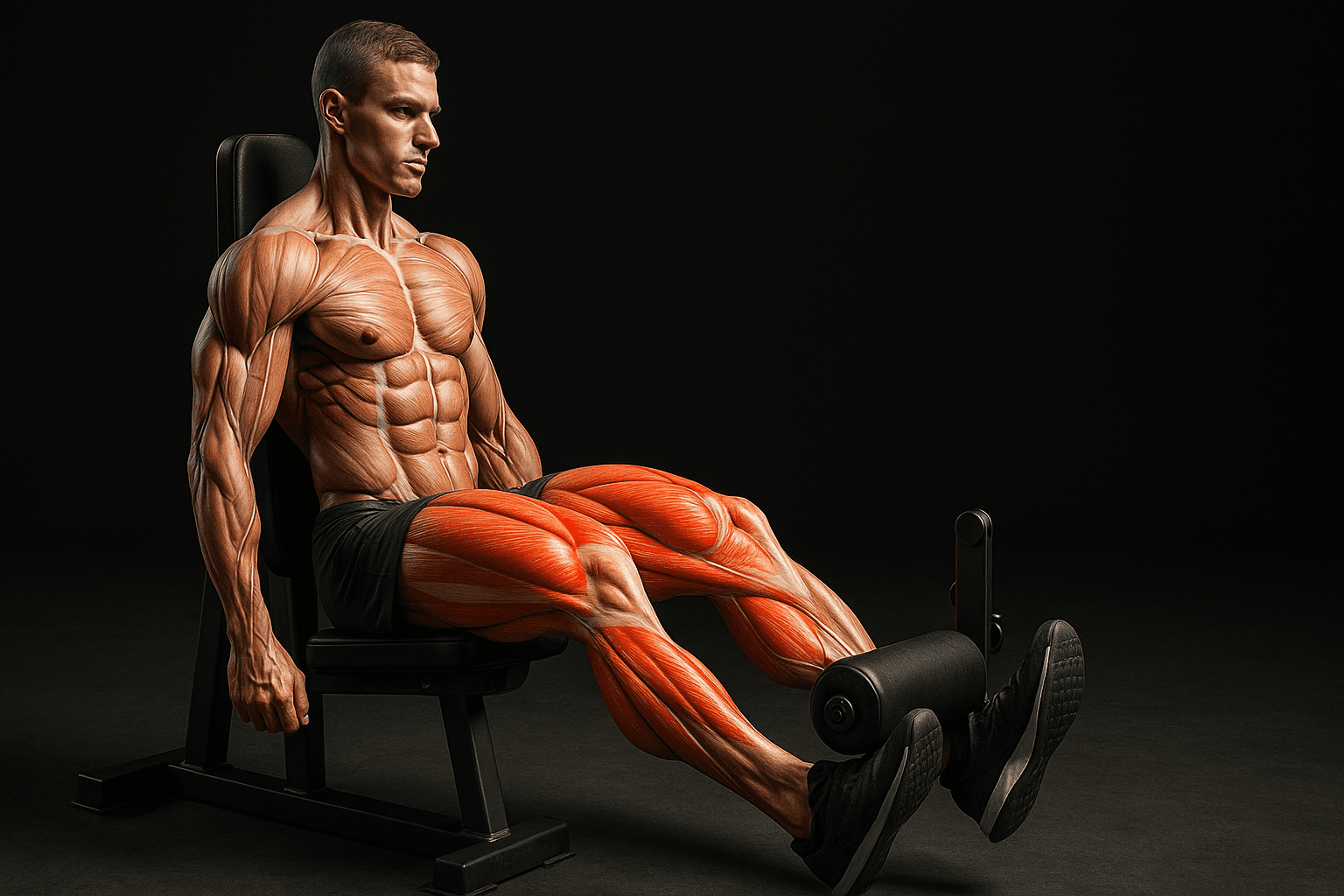
Photo by RepBro.
The most common leg extension mistakes are: incorrect pad alignment, locking or hyperextending the knee, using momentum/fast reps, overloading and lifting the hips, extreme foot/toe angles, and poor machine setup for your leg length. Each one reduces quad stimulus or raises injury risk — below are why they happen, what they cost, and one concrete fix for each.
Why is the pad too high or low?
Why it happens: People set the pad by feel or eyeballing, or they don't retune the machine when someone else used it. Some think the pad should sit on the ankle bone when it should sit on the lower shin.
What it costs: Misplaced pads change the lever arm and knee axis alignment, decreasing quad activation and increasing patellar compression or ankle discomfort.
Fix: Place the pad about 2–3 cm (1 inch) above your ankle joint on the lower shin and align the machine pivot with your knee crease (lateral femoral epicondyle). Quick check: with the shins horizontal and knees just shy of straight, the pad should press the same spot each rep.
Why am I locking or hyperextending my knees at the top?
Why it happens: Lifters chase a visual endpoint — "all the way up" — or use momentum to finish reps. Some programs cue full extension without nuance.
What it costs: Full lockout transfers force into the joint capsule and ligaments instead of the quad muscle; repeated hyperextension strains passive tissue and reduces productive muscular tension.
Fix: Stop 10–15° short of full extension (a small, visible bend remains in the knee). Think "keep tension on the quads at the top," and count that as a successful rep endpoint.
Why do I swing or bang the weight?
Why it happens: Too heavy a load, lack of tempo control, or fatigue leads to fast concentric explosions and dropping the weight eccentrically.
What it costs: Momentum reduces time under tension and the quad's eccentric control. You get fewer quality reps and greater chance of jarring the knee joint.
Fix: Use a controlled tempo: 2 seconds concentric (lifting), 1 second hold at the top, 2 seconds eccentric (lowering). Reduce load until you can maintain this tempo for every rep.
Why are my hips rising or torso moving?
Why it happens: When the weight is too heavy or the seat/backrest is poorly adjusted, people use hip drive or torso movement to help complete the rep.
What it costs: Hip and torso involvement take load away from the quads and can stress the lower back and hips.
Fix: Reduce weight by 20–30% until hips stay glued to the seat and hands can comfortably grip the handles. Wedge your hips back against the pad and keep the lower back neutral.
Why is my foot/toe position causing weird sensations?
Why it happens: Lifters point toes dramatically in or out, or they change foot position mid-set trying to find a stronger angle.
What it costs: Extreme toe positions shift emphasis across quad heads (vastus medialis vs. lateralis, rectus femoris) and can create uneven loading or awkward patellar tracking in some people.
Fix: Use a neutral foot position or a slight external rotation of 10–20° if you want more VMO emphasis. Pick one position and keep it consistent so you load the quads evenly.
Why is the machine set up wrong for my leg length?
Why it happens: Machines are often adjusted for someone else (or not adjusted at all). The knee pivot and backrest position matter more than most people realize.
What it costs: Misalignment changes the force vector at the knee, can increase patellofemoral compression, and makes the exercise feel wrong or painful.
Fix: Adjust seat/backrest so your knee crease lines up with the machine pivot. The backrest should support your hips so you don't slide forward; your thigh should be fully supported on the pad.
When should I stop and see a pro?
Safety note: Stop any set immediately if you feel sharp or catching pain in the knee or front of the leg. Persistent pain after training warrants assessment by a licensed clinician or physiotherapist — this article is guidance, not diagnosis. For tracking form changes and program tweaks, consider using a tool like the RepBro app to log adjustments. If you are comparing different machines or exercises to replace leg extensions, see https://www.repbro.app/vs.
Final checklist you can use on the machine right now:
- Pad: 2–3 cm above the ankle.
- Pivot: lined up with knee crease.
- Range: stop 10–15° short of full lockout.
- Tempo: 2-1-2 (concentric-hold-eccentric).
- Load: drop 20–30% if you compensate with hips or momentum.
- Feet: neutral or 10–20° external rotation, consistent.
One-sentence takeaway: Fix pad and pivot alignment, avoid full lockout, control tempo and load, and the leg extension becomes a precise quad-builder rather than a knee risk.
Frequently asked questions
- Are leg extensions bad for my knees?
- Leg extensions are not inherently bad for knees. Improper setup and technique increase joint stress; using correct pad placement, stopping short of full lockout, and using controlled loads reduces risk. Stop on sharp pain and consult a professional for persistent issues.
- What rep range should I use on leg extensions for size and strength?
- Use 8–15 reps for hypertrophy and 4–8 for strength emphasis; pick a load you can control for the whole set. Tempo and full tension matter more than tiny changes in rep count.
- How do I align the machine for my leg length?
- Seat the machine so the knee crease (lateral femoral epicondyle) lines up with the machine's pivot. The lower pad should sit about 2–3 cm above the ankle. Adjust backrest so hips stay glued to the seat during the lift.