The Most Common Lateral Raise Mistakes (and How to Fix Them)
Learn the 6 most common lateral raise mistakes, why they happen, what they cost, and one concrete fix for each to protect your shoulders and get stronger delts.

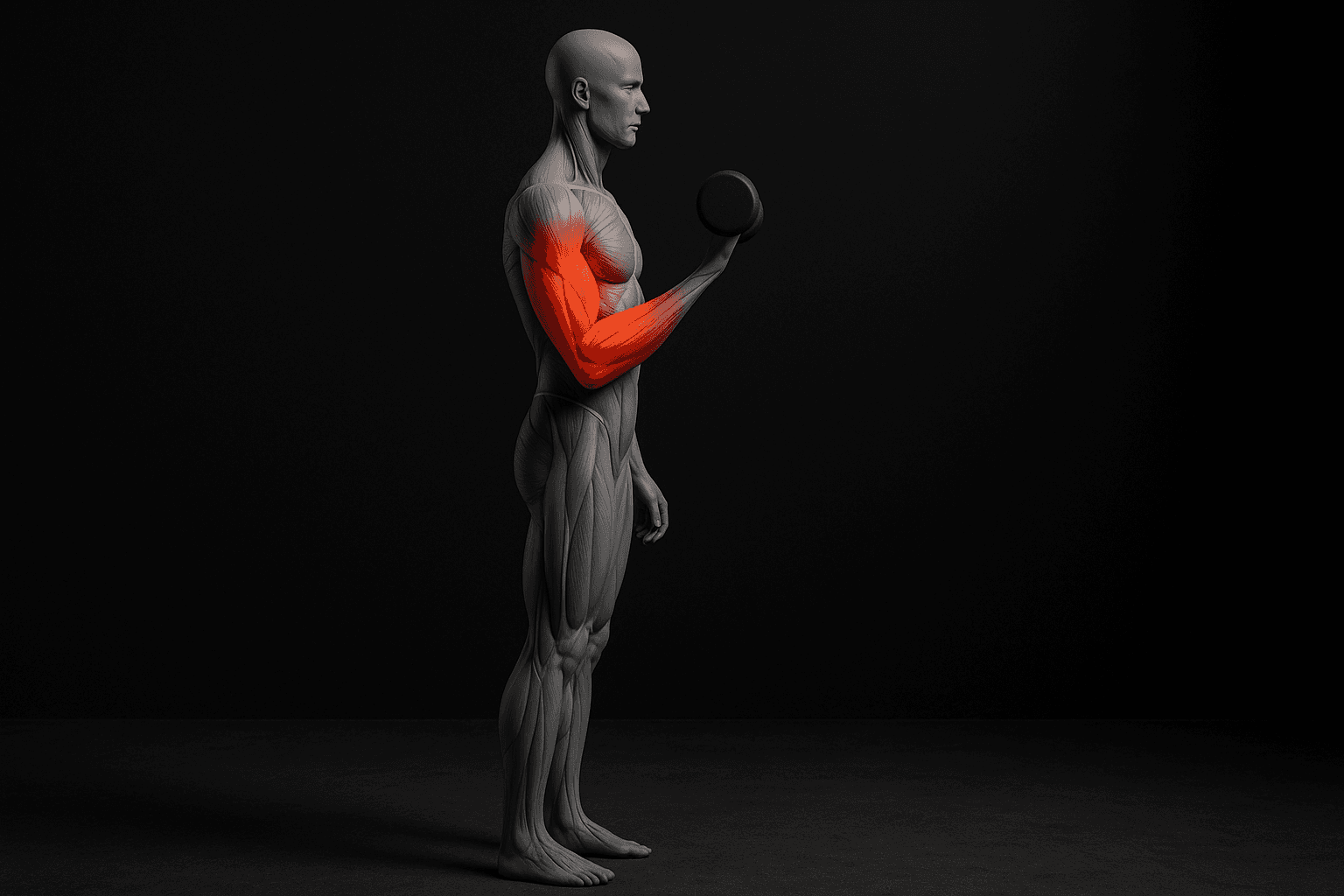
Photo by RepBro.
the most common lateral raise mistakes are using too much weight and swinging, shrugging into the traps, raising the arm too high or internally rotating, locking the elbows or using the wrong elbow bend, rushing reps with poor eccentric control, and excessive torso lean or swaying. Each reduces deltoid stimulus or raises injury risk, and each has a simple corrective cue you can apply immediately.
Are you using too-heavy weight and swinging the movement?
Why it happens: People equate heavier dumbbells with progress and let momentum carry the weight. The lateral raise is a small-muscle, high-leverage movement; big loads quickly turn the lift into a cheat row. What it costs: Reduced lateral deltoid activation, no meaningful hypertrophy or strength gains for the intended muscle, and a higher chance of shoulder strain. You may also reinforce bad motor patterns. One concrete fix: Drop the weight until you can perform 10 strict reps with a 2-second concentric and 2–3-second eccentric tempo without torso motion. Increase weight only when you can do 2 extra clean reps over two workouts.
Are you shrugging and letting the upper traps take over?
Why it happens: When the deltoid tires or the lifter tries to lift heavier, the upper trapezius compensates by elevating the shoulder girdle. It feels like an easier way to get the dumbbells up. What it costs: Less lateral deltoid stimulus and more tension in the neck and traps, increasing pain risk and masking deltoid weakness. One concrete fix: Cue down and back — deliberately depress the scapula before each rep and keep 1–2 cm of space between ear and shoulder. Use light weight and 12–15 controlled reps to retrain the deltoid without trap dominance.
Are you lifting the arm above shoulder height or rotating the thumb down?
Why it happens: Lifters often mistake higher range for more work, or they internally rotate (thumbs down) which changes the shoulder joint mechanics. What it costs: Raising above about 90 degrees or internally rotating increases subacromial contact and impingement risk, especially if the rotator cuff is weak. You also shift load off the lateral head onto other structures. One concrete fix: Stop at shoulder level (parallel to the floor) with the thumb pointing slightly up or neutral. Think 'raise to collarbone height' rather than higher. If you feel pain at or before 90 degrees, reduce range until pain-free and work on cuff strength.
Are your elbows too straight or too bent during the raise?
Why it happens: Some lifters lock the elbow to 'isolate' the deltoid; others bend the elbow excessively to create a rowing motion. Both change the lever and muscle emphasis. What it costs: A straight arm increases lever arm and joint torque, stressing the shoulder. Excessive bend shifts work to the anterior deltoid and triceps, reducing lateral head loading. One concrete fix: Keep a soft elbow with about a 15–30 degree bend, fixed across reps. Picture pouring water out of a pitcher; this keeps the lever manageable and the lateral deltoid targeted.
Are you rushing reps and ignoring the eccentric?
Why it happens: Lateral raises feel easy, so people speed them up to finish sets faster or match ego-driven loading. Fast reps use momentum and cut the eccentric phase short. What it costs: A missed opportunity for strength and hypertrophy, because the eccentric phase contributes more to muscle damage and growth. Faster reps also increase joint shear and reaction forces. One concrete fix: Use a 2–3 second eccentric. Count out loud or use a metronome: 1.5–2 seconds up, 2–3 seconds down. If you can’t keep tempo for 10 reps, reduce the weight.
Are you leaning or swaying your torso to cheat the movement?
Why it happens: When delts fatigue, people tilt the body or step to generate horizontal force. This turns the exercise into an upright row or a lateral step-lift. What it costs: It reduces target muscle loading, introduces lower back and hip strain, and reinforces poor posture. One concrete fix: Stand or sit with a slight forward lean from the hips (10–15 degrees), brace the core, and keep feet hip-width. If you must rock to finish reps, stop the set and reduce load.
What about safety — when should I stop or see a professional?
Stop immediately on sharp, acute pain — especially deep shoulder pain, catching, or sudden drops in range of motion. Consult a qualified clinician if pain persists beyond 48 hours, or if you have a history of shoulder instability or surgery. This is general guidance and not a diagnosis.
How should I reprogram my lateral raises after fixing technique?
Start with 2–4 sets of 8–15 reps using strict form and the tempo guidelines above. Progress by adding 0.5–1 kg (1–2 lb) when you can do 2 extra clean reps on two consecutive workouts, or by adding a set. Track these details in your training app or log — tools like RepBro can help you compare numbers over time and keep tempo and loading consistent. If you import a plan, use the import feature to maintain continuity: https://www.repbro.app/import
Final note: every technique correction takes time — expect 2–6 weeks of focused practice to convert a habit into clean reps. For comparisons between equipment or variations, see more about exercise selection here: https://www.repbro.app/vs
One-sentence takeaway: Fixing these six common mistakes—lighter controlled weight, no shrugging, stop at shoulder level, a soft elbow, slow eccentrics, and no torso sway—will make lateral raises safer and actually target the lateral deltoid.
Frequently asked questions
- How much should I lift for lateral raises?
- Choose a weight you can control for 8–15 reps with strict form; for many people that will be 2–12 kg (5–25 lb) per hand depending on training experience and gender.
- Should I raise my arms above shoulder height?
- No. Stop at roughly shoulder level (about 90 degrees) to reduce impingement risk and keep the lateral deltoid working efficiently.
- Are partial reps useful for lateral raises?
- Yes, controlled partials can target sticking points, but they must be performed without momentum and with a slow eccentric to be effective and safe.