Inverted Row Alternatives at Home (Minimal Equipment)
Four practical at-home substitutes for the inverted row using bodyweight, dumbbells, and bands, plus what each keeps or loses versus the original and when a gym is necessary.
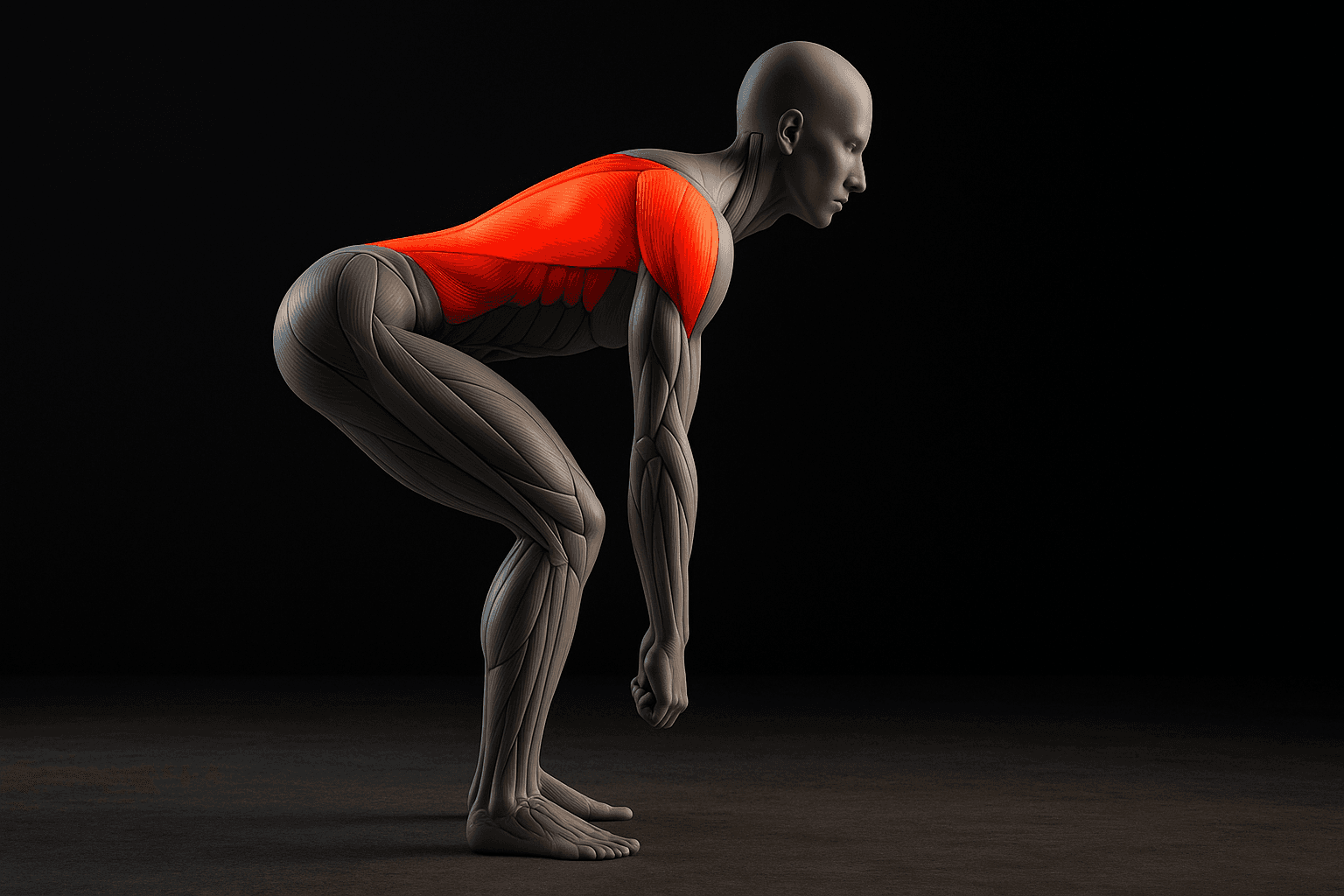
Photo by RepBro.
Band rows, single-arm dumbbell rows, elevated feet inverted rows under a sturdy table, dumbbell bent-over rows, and towel/door-anchor rows each reproduce the horizontal-pull pattern enough for strength and size gains at home. They differ in loading, stability, and progression — choose by equipment, goal, and safety.
What practical inverted row alternatives can I do at home with minimal equipment?
- Horizontal band row (seated or standing anchor). Equipment: medium–heavy loop or long band and a secure anchor.
- Single-arm dumbbell row (supported or unsupported). Equipment: one dumbbell (6–30+ kg / 15–65+ lb depending on strength).
- Bent-over dumbbell row (bilateral). Equipment: two dumbbells or one heavy dumbbell using both hands.
- Table or under-bed body row (Australian row). Equipment: sturdy table or low, immovable bar at hip height.
- Towel/door-anchor row (towel loop through a closed door or around a pole). Equipment: strong towel and a solid door or pole—use caution.
Each option can be done with only bodyweight, a band, or a single dumbbell, making them realistic for minimal-equipment home training.
What does each alternative preserve and what does it lose compared with a classic inverted row?
| Exercise | Preserves (what matters most) | Loses / Limitation vs inverted row | Good for which users? |
|---|---|---|---|
| Band horizontal row | Horizontal pulling pattern; scapular retraction; adjustable resistance | Variable tension curve can feel easier at start/end ROM; limited absolute loading | Beginner–intermediate; limited equipment households |
| Single-arm dumbbell row | High mechanical tension on lats; unilateral control; ability to overload | Less horizontal bodyline; more trunk anti-rotation demand; different angle of pull | Intermediate–advanced wanting load progression |
| Bilateral bent-over dumbbell row | High load potential; symmetrical loading; progressive overload | More vertical trunk angle (different stimulus); greater lower-back demand | Intermediate–advanced with safe hinge pattern |
| Table / under-bed body row | Closest bodyline and movement pattern to inverted row; scapular control | Requires a very sturdy fixture; harder to increase load without changing angle | Beginners and those wanting the original pattern at home |
| Towel/door-anchor row | Easy, flexible anchor; horizontal pull preserved | Safety and door strength concerns; ROM and load progression limited | Improvised home setups when secure anchors exist |
How should I program and progress these alternatives for strength and size?
- Frequency: target horizontal pulling 2–3 times per week. This matches general sports-science guidance for muscle stimulus and recovery.
- Weekly volume: aim for roughly 8–20 total work sets per week for the pulling muscles (lats, rhomboids, rear delts), distributed across sessions. Start at the lower end if new or fatigued.
- Rep ranges: 6–12 reps per set is a useful zone for hypertrophy when you can control load; use higher reps (12–20) with lighter bands or bodyweight to build work capacity; for strength-focused work use heavier loads and lower reps when possible.
- Progression methods at home:
- Increase difficulty by changing angle (feet-elevated body rows), shortening rest, or adding pauses and slower eccentrics.
- Add external load: put weight in a backpack, use heavier bands, or use a heavier dumbbell.
- Increase sets or sessions before increasing intensity if recovery allows.
Keep track of reps, sets, and difficulty; incremental progress is the core requirement for long-term gains. A simple tracking app such as RepBro can centralize sets and progressive overload tracking if you want a digital log.
When is a home alternative adequate and when should I go to the gym?
Adequate at home:
- Your goal is general back development, posture, or progressing bodyweight strength.
- You can progressively overload with bands, heavier dumbbells, or by changing angles.
- You’re avoiding high spinal loading or heavy bilateral barbell rows.
Consider a gym if:
- You need high, reliably incremental loading (weighted inverted rows, barbell rows, seated cable rows) for advanced strength phases.
- Coaching or equipment (proper rig, Smith bar, heavy plates, safe pull-up bar set-up) is necessary to handle heavier loads safely.
- You require consistent, heavy bilateral loading for sport-specific transfer or maximal strength goals.
What are the key safety points I should follow?
- Stop on any sharp or sudden pain. Mild muscle soreness is normal; sharp joint pain is not.
- Ensure anchors (doors, tables, bands) are rated and secure; test with gradual tension before full sets.
- Maintain a neutral spine during rows; avoid excessive lumbar rounding under load—use a supported single-arm row if your lower back fatigues.
- If you have recent injuries, follow guidance from a qualified clinician before lifting.
This article does not diagnose injuries or promise prevention; consult a professional for persistent pain or rehabilitation needs.
What can't apps and AI coaching do for these substitutions? (Limitations)
- No app or AI can reliably see or correct every aspect of your real-time form; video review with a coach or in-person assessment is superior for subtle technical faults.
- Apps cannot prescribe medical or individualized rehabilitation — a qualified clinician is required for injury diagnosis and rehab plans.
- A program only works if you follow it consistently; adherence and recovery habits determine results more than app selection.
Limitations summary: use apps as tracking and guidance tools, not final arbiters of form or clinical decision-making.
Practical example mini-program (home, twice weekly)
Session A
- Table/body rows or band rows: 4 sets of 6–12 reps
- Single-arm dumbbell row: 3 sets of 8–12 reps each side
Session B
- Feet-elevated table/body rows or heavier band rows: 4 sets of 6–10 reps
- Bent-over dumbbell rows: 3 sets of 6–10 reps
Adjust sets and loads to reach near-failure in target rep ranges by the last set; reduce volume if recovery is poor.
Safety note: this guide is informational. Stop immediately on sharp pain and consult a qualified professional for persistent or severe issues.
Frequently asked questions
- Can I replace inverted rows with band rows at home?
- Yes. Band rows replicate the horizontal pulling pattern and let you adjust resistance, so they’re a good substitute for strength and hypertrophy. They provide variable tension and easier progressive overload than many pure bodyweight options, though top-end maximal loading is limited.
- How often should I do these inverted row alternatives?
- Train horizontal pulling 2–3 times per week and aim for roughly 8–20 total sets per week for back pulling muscles, spread across exercises. Adjust volume based on recovery and goals; reduce load or volume during planned lighter weeks.
- When should I go to a gym instead of using home substitutes?
- Consider a gym if you need heavy, incremental loading (weighted inverted rows or barbell rows), precise equipment for spinal loading choices, or professional coaching to resolve technique or pain issues that home variations can’t address safely.