The Most Common Hollow Body Hold Mistakes (and How to Fix Them)
Clear, practical fixes for the 6 most common hollow body hold mistakes. Learn why each error happens, what you lose, and one concrete cue or drill to correct it safely.
Photo by RepBro.
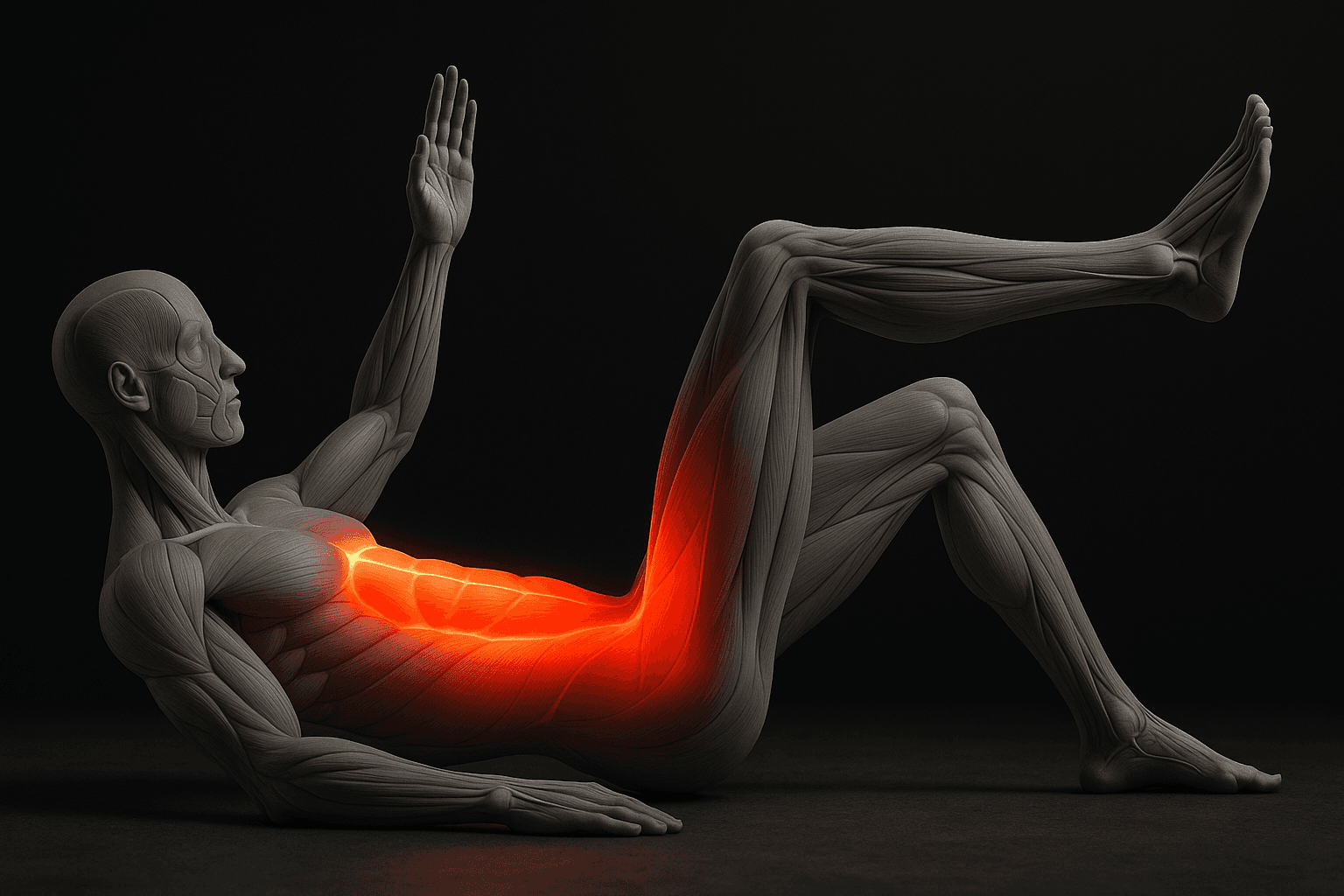
The hollow body hold often fails because people mismanage pelvic tilt, spine position, and tension distribution. Fixing these mistakes restores true anterior core tension, reduces lumbar strain risk, and makes progress toward dynamic skills (toes-to-bar, lever variations) more reliable.
Why does my lower back lift off the floor in the hollow hold?
What happens: The lumbar spine extends instead of maintaining a posterior pelvic tilt. This either comes from weak deep abdominal control or trying to lower the legs/arms too far for your current strength.
What it costs: A sagging lumbar spine decreases abdominal muscle tension, reduces carryover to gymnastic levers, and increases repetitive stress on the low back. Over time it limits progress and can cause discomfort.
One concrete fix: Drill the posterior pelvic tilt (PPT). Lie on your back with knees bent, feet flat. Flatten your lower back to the floor by tucking the pelvis and feel the abs engage. Progress to a tucked hollow (knees bent, arms overhead) and only extend legs as you can maintain a flat lower back.
Why do my shoulders creep up toward my ears or my head lift off the ground?
What happens: People either shrug into the traps or lift the head because they’re trying to increase leverage by raising the torso, or they haven’t learned to depress and protract the scapula while bracing.
What it costs: Excess neck and upper-trap tension creates discomfort and prevents efficient transfer of force from the core. It also reduces the ability to maintain a long, stable line needed for progressions.
One concrete fix: Cue “scapula down and forward.” From the hollow position, actively press the shoulders towards the floor and reach the hands slightly away from the ears without shrugging. Keep the chin tucked; imagine holding a small apple under your chin.
Why are my arms and legs held too high (or too straight) and I still feel nothing?
What happens: Raising limbs reduces the demand on the anterior chain. Conversely, keeping limbs too rigid without a tucked pelvis shifts load away from the deep abs to hip flexors.
What it costs: You end up training hip flexors (iliopsoas) and quads more than the true hollow position’s flattened lumbar and transverse abdominis activation. That reduces transfer to levers and midline stability.
One concrete fix: Find the smallest limb angle that still allows a flat lower back. If you can’t maintain it, bend the knees and bring arms closer (tuck hollow). Only lower limbs gradually while holding pelvic tilt and breathing.
Why am I holding my breath or bracing like a plank with shoulders locked?
What happens: Holding breath or bracing only superficially gives tension but prevents the deep, endurance-oriented abdominal activation needed for hollow holds.
What it costs: Breath-holding raises intra-thoracic pressure and can create unnecessary spinal compression and fatigue. It limits duration and quality of holds.
One concrete fix: Practice diaphragmatic bracing: inhale to expand the belly slightly, then exhale to engage the core while maintaining a steady gentle breathing rhythm. Keep tension but avoid breath-hold patterns.
Why do my legs jerk, kick, or I rely on momentum to get into the position?
What happens: Relying on momentum to swing into position or kicking to hold balance indicates weak static control and poor eccentric strength in the core and hip flexors.
What it costs: Momentum masks deficiency; it prevents strength development and increases risk for strained muscles from uncontrolled motion.
One concrete fix: Use slow, controlled entries and exits. From supine, perform a controlled roll posteriorly to find the hollow: posterior pelvic tilt, lift shoulders and legs slowly, then hold. If you need assistance, place hands under hips briefly for support while you build control.
Why do I feel more hip flexor burn than abdominal work?
What happens: The hips take over when the deep abdominals can’t sustain the posterior tilt. Tight hip flexors or over-reliance on straight-leg leverage magnify this.
What it costs: Overworking the hip flexors increases anterior pelvic pull and reduces core training specificity. It may create muscle imbalances around the pelvis.
One concrete fix: Regress to easier variations that reduce hip flexor demand: tuck hollow, single-leg hollow, or hollow rock with bent knees. Combine with hip flexor mobility work and cue active pelvic tuck during the hold.
Quick comparison: common error vs simple sign vs go-to correction
| Error | Immediate sign | Go-to correction |
|---|---|---|
| Lumbar arching | Gap under low back | PPT drill and tuck hollow |
| Shoulder/neck tension | Shrugged traps or chin up | Scapula down + chin tuck |
| Limbs too high/low | No fatigue in abs | Bend knees/bring arms in |
| Breath-hold bracing | Stiff chest, red face | Rhythmical diaphragmatic breathing |
| Momentum entry | Legs swing into place | Slow controlled entry |
| Hip-flexor dominance | Front thigh burn | Regress to tucked variations |
How should I progress safely with hollow holds?
Practice short, high-quality reps rather than chasing time with poor form. Build static control with regressions (tuck hollow, single-leg, toes-to-floor) and only advance when you can hold the position with a flat low back and relaxed neck. Skill practice 2–3 times weekly integrates well with most strength plans.
Safety note: Stop if you feel sharp or radiating pain. This guide does not diagnose conditions. If pain persists or you’re rehabbing an injury, consult a qualified clinician or strength coach.
What can coaching apps or videos not do for you?
No app or AI can watch your movement and feel your exact symptoms in real time; recorded video helps but is not the same as an experienced coach palpating a tight muscle or ruling out clinical issues. Rehabilitation and medical advice require in-person professionals. Also: a program only works with consistent effort.
Limitations
- This article focuses on common technical faults and simple regressions; it does not replace individualized programming or medical advice. - Remote cues and written descriptions have limits—hands-on correction, mobility screens, and palpation are tools only a trained professional can provide. - Consistent practice and gradual, measurable progression are needed to see results; no single article can guarantee outcomes.
If you want to track hollow-hold practice and tiny progressions alongside your other lifts, consider logging sets and notes in a training app built for lifters like RepBro.
References and further reading: look for resources on posterior pelvic tilt drills, diaphragmatic breathing for bracing, and gymnastic strength progressions from reputable coaching sites and textbooks on core function and athletic training.
Frequently asked questions
- How long should I hold a hollow body hold as a beginner?
- Start with short, controlled holds: aim for multiple sets of 10–20 seconds focusing on quality, not duration. Gradually increase hold time as you maintain a flat lower back and steady breathing. Practice 2–3 times per week within your core or skill sessions.
- Is it normal for my lower back to hurt during hollow holds?
- Lower-back pain usually means you're letting the lumbar spine extend (arching) rather than maintaining a tucked pelvis. Stop if the pain is sharp. Regress to easier positions (tuck hollow or single-leg hollow) and practice posterior pelvic tilt before progressing.
- Should I tense my neck during the hollow body hold?
- No. The neck should be neutral with the chin slightly tucked; excessive neck tension often compensates for poor shoulder or core positioning. Use a hand behind the head lightly to find neutral, but avoid pulling the head forward. Breathe and relax the jaw.