The Most Common Hip Thrust Mistakes (and How to Fix Them)
Learn the 6 most common hip thrust mistakes, why they happen, what you lose or risk, and exactly how to fix each one with practical cues and numbers.
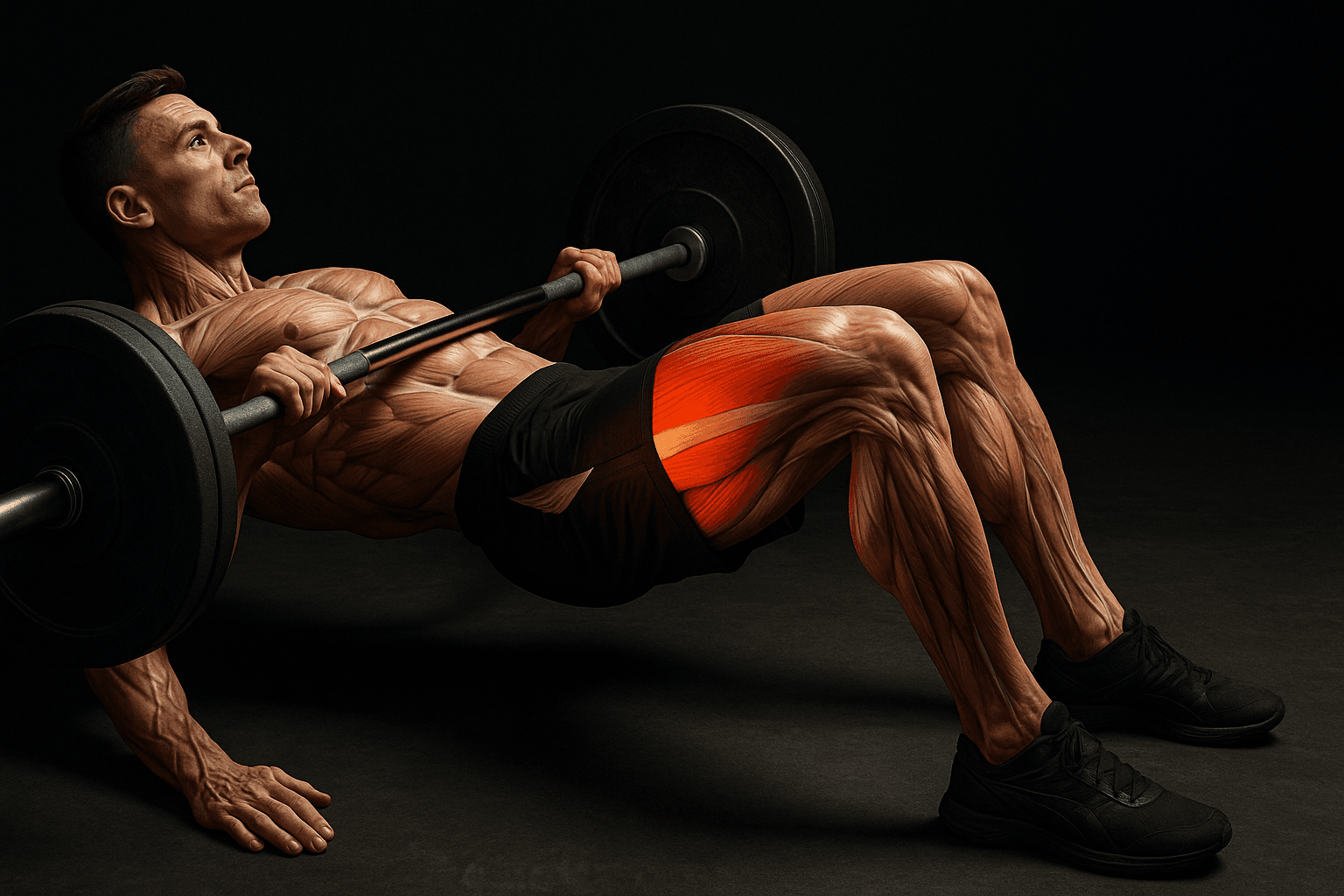
Photo by RepBro.
The most common hip thrust mistakes are: lower-back overextension, feet too far/too close, heels lifting or weight on toes, using momentum or bouncing, not reaching full hip extension (half reps), and knees collapsing or asymmetric drive. Each reduces glute loading or raises injury risk; below are why they happen, what they cost, and a single concrete fix for each.
Why is my lower back arching at the top?
Lower-back hyperextension happens when lifters drive with the lumbar spine instead of tilting the pelvis and squeezing the glutes. It often comes from trying to lift too much weight or misunderstanding the end position.
What it costs: Increased shear stress on the lumbar spine, and less targeted glute activation — you may lose 10–30% of potential glute work if the back takes over.
One concrete fix: Reduce load by 20–30% and cue 'tuck ribs, posteriorly tilt pelvis, then squeeze glutes' at the top; hold for 2 seconds. Think of creating a straight line from shoulders through hips to knees rather than an arched lower back.
Why are my feet in the wrong place?
Feet too far forward or too close commonly happens because of guesswork or copying someone without matching limb lengths. If feet are wrong, the hamstrings or quads dominate instead of the glutes.
What it costs: Suboptimal leverage reduces glute force by up to ~20% and can increase knee strain.
One concrete fix: Adjust until your shins are approximately vertical at the top and your knee angle is about 90°. If you feel the work in your hamstrings, move feet slightly forward; if you feel it in your quads, move feet slightly back. Test with submaximal sets and record the position.
Why do my heels lift or my weight shifts onto my toes?
Heels lifting is usually an ankle mobility or cueing issue, or it's a compensation when load is too heavy and you try to get more drive through your toes.
What it costs: Loss of stable force transmission and less glute activation; increased risk of slipping when using heavy loads.
One concrete fix: Keep weight through the heel and midfoot. Practice single-leg stance with weight slightly shifted to the heel for 30–60 seconds as a warm-up cue. If ankle mobility truly limits you, place a 1–2 cm plate under each heel to restore contact temporarily while you improve mobility.
Why am I bouncing or using momentum?
Bouncing happens when the load exceeds your ability to control the movement, or when you focus on reps rather than muscle tension.
What it costs: Less time under tension for the glutes, poorer motor learning, and bigger chance of spine or hip strain.
One concrete fix: Slow the tempo to a 2-second concentric and 2-second eccentric with a 1–2 second pause at the top. Drop load 10–25% if you can’t keep this tempo for all reps.
Why don’t I feel a full lockout at the top?
Half reps or avoiding full hip extension happens from fear of lower-back extension, lack of cueing, or poor proprioception. People stop short and let hamstrings or quads do the work.
What it costs: Reduced glute hypertrophy stimulus because glutes need full extension to maximally contract — you may miss about 15–25% of activation.
One concrete fix: Add a 1–3 second peak contraction at the top with a posterior pelvic tilt cue. Think 'squeeze the cheeks together' rather than 'lift the hips up'. Record short video from the side to check that hips reach neutral alignment (shoulders-hips-knees roughly on one line) without spine arching.
Why are my knees caving or one hip dropping?
Knees caving (valgus) and asymmetric thrusting usually show up because the lateral hip muscles (glute medius) are weak or you lack stability cues, particularly under heavy loads.
What it costs: Uneven loading increases risk of joint irritation and reduces the targeted stimulus to the glutes on the weaker side.
One concrete fix: Place a mini-band around the knees and perform sets focusing on pushing the knees out against the band. Use a lighter load until you can keep knees tracking over the second toe for every rep. Also do single-leg glute bridges for 2–3 sets of 8–12 reps per side twice weekly to balance strength.
Safety note Stop the exercise if you feel a sharp or unusual pain and consult a qualified professional; these tips are for technique improvement, not medical advice.
How to practice these fixes in a single session?
Pick 2 faults that matter most (record a set to check). Warm up with bodyweight hip thrusts for 2 sets of 10 using the corrected foot placement and tempo. Then do 3 working sets at 70–80% of your usual load but reduce weight 10–25% if you were previously bouncing or arching. Use 2/0/2 tempo and a 1–2 second top squeeze. If knees drift, add the band. Track position (foot placement, pad/bar location, cue) in your training log or in an app like RepBro so you can replicate consistent setup next session. If you want to compare tracking tools, see how apps stack up at https://www.repbro.app/vs.
Final honest takeaway: Fixing one or two of these faults and practicing slow, full-range reps will give you far more glute stimulus than endlessly chasing heavier loads.
Frequently asked questions
- How do I know if my glutes are doing the work?
- You should feel a strong contraction in the glute muscles at the top of the thrust and minimal grinding in the lower back. If you're unsure, reduce load by 20–30% and focus on 2–3 second holds at the top while thinking 'squeeze glutes' — if the sensation shifts to the glutes, that's a good sign.
- What kneeto-shin angle should I aim for?
- Aim for about a 90° knee angle at the top (shins near vertical). This places the glutes in a mechanically favorable position for force production while reducing hamstring dominance.
- When should I stop a set due to form breakdown?
- Stop the set once you can no longer achieve a neutral spine and full hip squeeze for two consecutive reps, or when you start using excessive momentum. Quality over extra reps or weight.