The Most Common Hanging Leg Raise Mistakes (and How to Fix Them)
Learn the 6 most common hanging leg raise mistakes, why each happens, what it costs, and one concrete fix so you get stronger, safer reps every set.
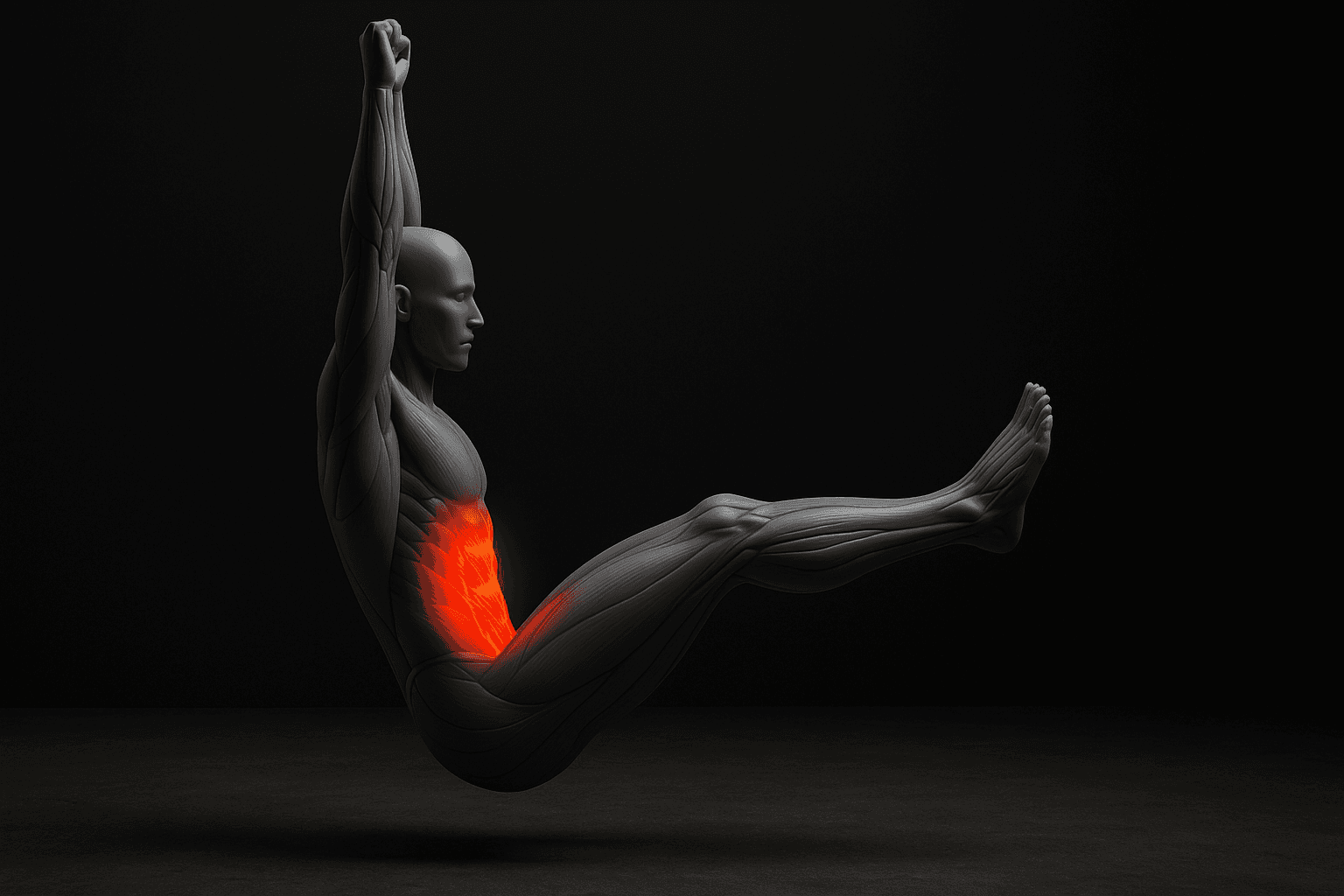
Photo by RepBro.
The most common hanging leg raise mistakes are: swinging/kipping, leading with the hips (hip-flexor dominance), shoulder shrugging/instability, stopping short of full range, excessive lumbar arch, and over-bending the knees. Each one reduces effectiveness or raises injury risk — below you’ll find why each happens, what it costs, and one concrete fix you can use immediately.
Why am I swinging my legs when I do hanging leg raises?
Why it happens: Fatigue, impatience, or trying to reach a target rep count with weak core control lets you use momentum (kipping) to cheat the movement. What it costs: You lose targeted abdominal loading, build poor movement patterns, and risk shoulder stress from uncontrolled oscillation. Fix: Use tempo and touchpoints. Reduce swing by performing sets with a 3-second lowering (eccentric) and a 0.5–1 second pause at the bottom with minimal movement. If you still swing, do 2–3 sets of 6–8 controlled reps or switch to knees-up raises until control improves.
Why do my hips seem to do the work instead of my abs?
Why it happens: People often initiate the lift by flexing the hip (iliopsoas) rather than tilting the pelvis; this is common when the rectus abdominis is weak or not cued properly. What it costs: Less abdominal development, more strain on the hip flexors and lumbar spine, and limited carryover to athletic core stability. Fix: Learn and cue a posterior pelvic tilt. Before each rep, pull your bellybutton toward your spine and tuck the pelvis slightly; then lift. Practice lying posterior pelvic tilt drills for 2–3 minutes before sets and aim to feel the lower abs tense at the start of each rep.
Why are my shoulders shrugging and burning during hanging leg raises?
Why it happens: The scapulae aren't set; you’re hanging from passive shoulders instead of engaging the lats and scapular stabilizers. Fatigue or weak grips can also cause you to overuse shrugging to stay hanging. What it costs: Increased shoulder irritation, shorter sets due to fatigue, and a less stable base to load the abs. Fix: Retract and depress the scapulae before each set — think "pull your shoulder blades down and back." Hold that scapular position throughout the set. If you can’t maintain it for 6–8 reps, do scapular-hang holds (3 sets of 10–20 seconds) to build endurance.
Why do I stop my leg raises early and never reach a full range?
Why it happens: Limited hip or core strength, fear of discomfort, or trying to rush reps makes people stop partway (half reps or just knee lifts). What it costs: Reduced stimulus to the rectus abdominis and obliques, and slower progress; the habit of incomplete reps carries over to other lifts. Fix: Set a visible target and scale appropriately. Aim for your knees or toes to reach at least hip height or the bar level (for straight-leg raises). If you can't, do 3–4 sets of knees-up to 45° of hip flexion with strict control, or use a captain’s chair to stabilize the upper body while you build ROM.
Why does my lower back arch during the exercise?
Why it happens: Letting the pelvis anteriorly tilt (stick your butt out) or relaxing the abs at the bottom creates excessive lumbar extension. What it costs: Increased shear and compression in the lower back, poor abdominal tension, and inefficient transfer of force. Fix: Cue a neutral-to-posterior pelvic tilt and maintain core tension throughout the rep. A simple drill: hang and place a light band around your thighs; when you lift, press the band out slightly with your knees while tucking the pelvis to keep the low back flat. Stop any set that produces dull or sharp low-back pain.
Why am I bending my knees so much it just feels like a hip flexion swing?
Why it happens: Bending the knees shortens the lever and makes the exercise easier, so people over-bend to get reps when they lack strength for straight-leg raises. What it costs: You train a different movement pattern (a knee raise) and limit overload potential for the rectus abdominis. Fix: Progress deliberately. Use knees-up as a programmed step: 3 sets of 8–12 strict knees raises, then progress by increasing straightening (add 10–20° of knee extension every 1–2 weeks) or adding 1–2 seconds of pause at the top. When you can do 3 sets of 8–10 strict straight-leg reps, maintain that before increasing difficulty.
Should I change anything else right away?
Why it happens: Overload without progression or poor programming leads to repeated mistakes. Tracking is the fix: fatigue and form breakdown often come from trying too many reps or too short rests. What it costs: Slower strength gains and higher injury risk. Fix: Track sets, reps, and technique quality. Use a quality-over-quantity rule: if technique fails on a rep, stop the set. Consider logging sessions in a training app to monitor progression — RepBro is useful for tracking exercise form and progression across sessions, and if you want to compare programming or tools, see RepBro vs other apps here: https://www.repbro.app/vs.
Safety note?
Stop any rep that causes sharp pain. If discomfort persists across multiple sessions, consult a qualified coach or healthcare professional; don’t rely on generalized exercise advice to diagnose injuries.
Final practical checklist (one read-through before you train):
- Set scapulae: down and back.
- Posterior pelvic tilt on set-up.
- Use 3-second lowers and brief holds at the top.
- Progress from knees-up to straight-leg with small increments (10–20° knee extension or 1–2 seconds added hold).
- Track form; stop when technique breaks.
One-sentence takeaway: Fixing momentum, pelvic tilt, scapular position, range of motion, and progression gives you safer, more effective hanging leg raises without gimmicks or guesswork.
Frequently asked questions
- Are hanging leg raises bad for my lower back?
- Hanging leg raises aren't inherently bad, but common faults (arching the low back or using hip flexor-dominant movement) can create discomfort; prioritize posterior pelvic tilt, controlled range of motion, and stop if you feel sharp pain—consult a professional for persistent issues.
- Should I do knees-only or straight-leg hanging raises?
- Use knees-up variations if you can't control straight-leg raises: knees-up reduces lever length and load. Progress to straight legs once you can perform 3 sets of 8–12 slow, controlled reps with no swing.
- How many reps and tempo are best for technique work?
- For form-focused practice, aim for 3–4 sets of 6–12 reps with a 3-second descent (eccentric) and 0.5–1 second hold at the top; rest 90–120 seconds between sets to avoid fatigue-driven form breakdown.