The Most Common Glute Bridge Mistakes (and How to Fix Them)
Spot and fix the 6 most common glute bridge mistakes—foot placement, lumbar arching, knee collapse, toe-driving, short range, and weak activation—with clear, evidence-aware cues.
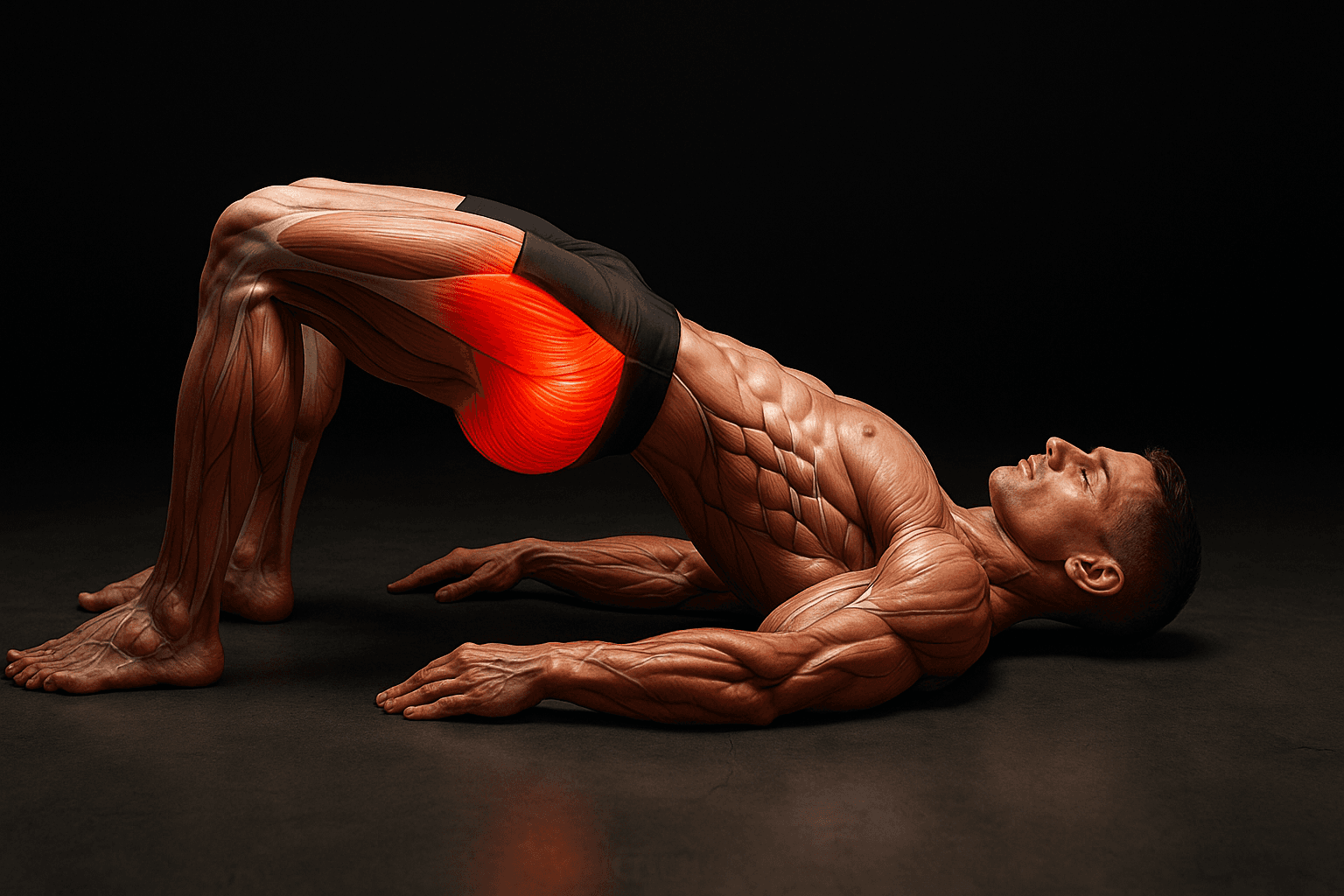
Photo by RepBro.
The most common glute bridge mistakes are: not activating the glutes (hamstring- or back-dominant), overextending the lower back, poor foot placement (too far/too close), knees caving or flaring, pushing through the toes, and using a tiny range of motion. Fix each with simple, measurable cues below.
Why aren't my glutes firing—am I using my hamstrings or lower back instead?
Why it happens: Feet placed too far from the hips or poor cues let the hamstrings and lumbar extensors take the load. Also common if you haven’t learned to posteriorly tilt and squeeze the glutes.
What it costs: Lost glute strength and size; increased hamstring fatigue and low-back strain. You’ll get less transfer to squats and deadlifts.
Concrete fix: Move feet ~30 cm (12 in) from hips so knees start near 90°. Press through the heels with a hard glute squeeze at the top for 1–2 seconds. Do 3 sets of 6–12 slow reps focusing on the squeeze before adding load.
Am I arching my lower back instead of hinging at the hips?
Why it happens: People often think "higher is better" and hyperextend the lumbar spine to get extra height. Weak core or not learning pelvic position makes this worse.
What it costs: Repeated lumbar extension under load increases low-back pain risk and reduces hip-extension work from the glutes.
Concrete fix: Learn a light posterior pelvic tilt: before lifting, tuck the tailbone slightly and brace the core (think "zip up"). Stop at a straight line from shoulders to knees—don’t lift higher. Cue: stop when you can no longer keep ribs down.
Why are my knees collapsing inward or flaring outward?
Why it happens: Weak gluteus medius or poor hip control lets the knees drift. Many people place feet too narrow and don’t control knee tracking.
What it costs: Knee stress, reduced glute activation, and poorer carryover to single-leg movements.
Concrete fix: Place a light resistance band just above the knees and push the knees outward against the band throughout the rep. Focus on a 2–3 second squeeze at the top. If knees still cave, widen your stance 2–4 cm (1 in) and try single-leg bridges to build unilateral control.
Are my feet too far forward or too close—what’s the right position?
Why it happens: Foot placement changes the muscle emphasis. Too far = hamstring-dominant; too close = quad-dominant or uncomfortable at the knees.
What it costs: With the wrong placement you significantly reduce glute recruitment and may increase knee or hamstring strain.
Concrete fix: Aim for feet ~30 cm (12 in) from hips so knees are ~90° at the start. If you feel hamstrings more than glutes, bring feet 2–4 cm (1 in) closer; if your quads burn, move them slightly back.
Why am I pushing through my toes instead of my heels?
Why it happens: Habit, or because your heels are lifted off the floor. Driving through toes shifts force to quadriceps and increases knee load.
What it costs: Less glute activation, more knee stress, and worse transfer to posterior-chain exercises.
Concrete fix: Keep weight through the heels; you should be able to wiggle your toes at the top. Cue: "push the floor away with your heels." If needed, place a 2–3 cm (0.75–1 in) plate under the heels during practice to bias the posterior chain.
Why are my bridges tiny—am I getting full hip extension?
Why it happens: Rushing reps, fear of the top position, or limited thoracic/hip mobility. Some people think a small lift is enough.
What it costs: Small range = less stimulus for strength and hypertrophy. You also miss the functional benefit of full hip extension.
Concrete fix: Pause at the top and hold for 1–2 seconds with a maximal glute squeeze. Measure progress by maintaining a straight line from shoulders to knees. Add 1–2 kg every 1–2 weeks when form is perfect.
Should I be careful with weighted bridges or bar placement?
Why it happens: Placing a load incorrectly on the hips or using a thin pad concentrates pressure and causes discomfort, which changes your movement pattern.
What it costs: Compensation (arching, holding breath, or shifting load to one side) reduces effectiveness and can irritate soft tissue.
Concrete fix: Use a wide, soft pad or bar pad and position weight across the pelvic crease, not directly on the hip bones. Start with a light load and 5 controlled reps to test comfort and stability.
Safety note: Stop immediately if you feel sharp pain (especially in the front of the hip or spine). This article doesn’t diagnose—if pain persists, see a qualified clinician. Use lighter loads and perfect form before progressing.
Want guided sets and simple cues? Track technique and progress with RepBro or compare app options at https://www.repbro.app/vs.
One-sentence takeaway: Master foot placement, posterior pelvic tilt, heel drive, knee tracking, and a 1–2 second glute squeeze—then add load slowly to build stronger glutes without hurting your back.
Frequently asked questions
- How high should my hips go during a glute bridge?
- Raise your hips until your body forms a straight line from shoulders to knees—shoulders on the floor, hips fully extended—hold 1–2 seconds. Avoid hyperextending the lower back.
- How far should my feet be from my hips?
- Start with feet about 30 cm (12 in) from your hips so your knees are around 90° at the start; small adjustments forward/back change glute vs hamstring emphasis.
- Should I feel this in my hamstrings or glutes?
- You should primarily feel it in your glutes. If your hamstrings or lower back dominate, adjust foot position (closer for glutes), push through heels, and brace your core.