Face Pull: Muscles Worked and Best Alternatives
Which muscles do face pulls work and what are the best alternatives? Clear breakdown of primary/secondary muscles, programming tips, and 4 practical substitutes.
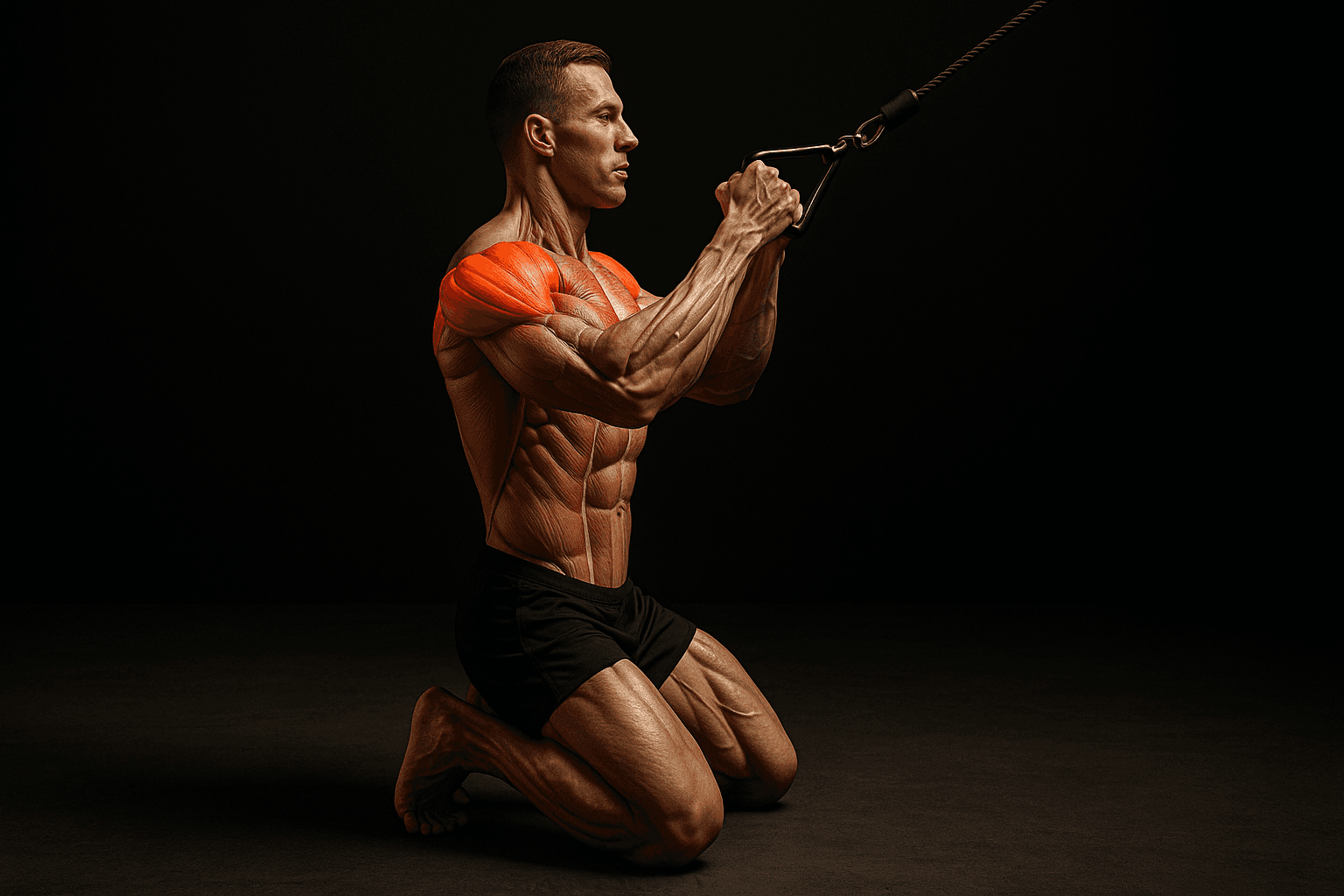
Photo by RepBro.
What does a face pull train? The face pull primarily trains the posterior (rear) deltoid and the shoulder external rotators (infraspinatus, teres minor), and also strongly recruits the middle trapezius and rhomboids for scapular retraction; smaller rotator‑cuff fibres and the long head of the triceps contribute secondarily.
What muscles does the face pull train?
- Primary: posterior deltoid, external rotators (infraspinatus, teres minor).
- Secondary: middle trapezius, rhomboids, posterior fibres of the deltoid complex, some upper trapezius and long head of the triceps.
Those muscle actions make the face pull a horizontal external rotation + scapular retraction movement — it targets the muscles that open the chest side and pull the shoulder blades together.
How should I program face pulls? Where do they fit in a program?
- Frequency: 2–4 sessions per week. Twice a week is a solid minimum; 3–4x is useful if you prioritize shoulder health or rear-delt development.
- Volume: 2–4 sets per session. Use 8–12 reps if you want more load for hypertrophy; use 12–20 reps for higher-rep rotator‑cuff and scapular endurance work.
- Placement: place face pulls near the end of upper‑body sessions after heavier compound work (bench, rows, overhead press) or in a conditioning/“prehab” block at the end of workouts.
- Progression: increase resistance slowly, do more reps per set, add a slow 2–3s eccentric, or add a paused squeeze at peak contraction for 1–2s.
If you track sessions, tools like RepBro make consistent progression and volume easy to manage.
How to perform a face pull (brief form cues + safety)
- Setup: attach a rope to a cable at roughly forehead height or above; stand with feet hip‑width apart. If using a band, anchor it at head height.
- Movement: pull the rope toward your face, flaring the elbows high and externally rotating so your thumbs point behind you at the end. Squeeze the shoulder blades together.
- Tempo: control the eccentric (back) for 1–3s and aim for a full, controlled contraction.
- Common errors: letting elbows drop, using too heavy a load that turns it into a row, pulling with momentum, or shrugging into the traps.
Safety note: stop on sharp or shooting pain and consult a qualified professional. Face pulls are low‑risk when done with controlled loads and pain‑free ranges, but do not use excessive weight that compromises form.
What are the best alternatives to the face pull — and when to pick each?
Below are four practical alternatives with clear reasons to choose them.
- Resistance-band face pull
- What it is: Same movement pattern using a loop or long band anchored at head height.
- When to pick it: No cable machine available (home gym), early‑stage rehab, or travel. Bands allow for flexible angles and less compressive load on the shoulder.
- Pros: Very accessible, easy to control tension, good for high‑rep endurance work.
- Cons: Variable resistance curve; can be harder to get consistent loading for heavy progression.
- Seated cable face pull with rope (standard gym option)
- What it is: Face pull performed seated or standing on a cable machine with a rope and two‑handed pull.
- When to pick it: You want consistent, incremental loading and a clean resistance curve for progressive overload; you can isolate the posterior deltoid more easily.
- Pros: Simple progression with small weight jumps, reproducible setup.
- Cons: Requires cable machine and good setup; heavy loads can shift pattern to a horizontal row if form breaks.
- Bent‑over dumbbell rear‑delt fly (rear delt focus)
- What it is: Hinge at the hips and perform a horizontal abduction movement with light‑moderate dumbbells, thumbs pointing slightly down or neutral.
- When to pick it: No cable/band available but you have dumbbells; you want a stronger isolate for posterior deltoid hypertrophy.
- Pros: Easy equipment requirement, unilateral option to fix imbalances.
- Cons: Can turn into a back‑row if range and external rotation are lost; avoid heavy loads that compromise form.
- Prone Y/T raises (bench or floor) — scapular control emphasis
- What it is: Lying prone on a bench or the floor, lift arms into Y and T positions with light weights or no weight.
- When to pick it: You need to train scapular control and mid‑trap activation, or when recovering from impingement where long‑lever loads are undesirable.
- Pros: Low compressive load, excellent for scapular rhythm and posture work.
- Cons: Low load ceiling; not ideal if your main goal is heavy posterior‑deltoid hypertrophy.
If you want side‑by‑side comparisons between exercises, see the RepBro comparisons tool at https://www.repbro.app/vs.
How to pick an alternative if you have an injury or a plateau
- Equipment limits: if you lack a cable, choose the band version or dumbbell rear‑delt fly.
- Shoulder pain/impingement: choose low‑load, pain‑free options (prone Y/T, band face pulls with short range) and prioritize high reps (15–25) and neuromuscular control; avoid heavy, loaded horizontal pulling until pain‑free.
- Plateau: change the stimulus — switch from cable to band to alter the resistance curve, increase time under tension (3s eccentric), add unilateral sets, or simply add 1–2 sets/week to total volume.
Quick programming examples
- General shoulder health: 3x/week, 3 sets × 15 reps with band or light cable, 2s eccentric, 1s pause at peak squeeze.
- Rear‑delt hypertrophy: 2x/week, 3–4 sets × 8–12 reps with a heavier cable or dumbbell rear‑delt fly.
- Rehab/scapular control: daily to every other day, 2–3 sets × 15–25 reps of prone Y/Ts or band face pulls, low resistance, pain‑free.
One‑sentence takeaway: The face pull targets the posterior deltoid, external rotators, and upper‑back retractors; use the rope/cable for loadable progression, bands for accessibility and rehab, dumbbells for isolation, and prone Y/Ts for scapular control to match equipment, injury status, and training goals.
For program integration and tracking options, consider importing or comparing workouts in RepBro and the comparisons page at https://www.repbro.app/vs.
Frequently asked questions
- What are the primary muscles targeted by the face pull?
- The face pull primarily targets the posterior deltoid, the external rotators of the shoulder (infraspinatus and teres minor), and the upper back (middle trapezius and rhomboids), with secondary involvement from the rotator cuff and scapular retractors.
- How often should I do face pulls?
- Do face pulls 2–4 times per week; typical prescription is 2–4 sets of 8–20 reps depending on whether you prioritize strength (8–12 reps) or rotator-cuff/scapular endurance and health (12–20+ reps).
- Can face pulls help shoulder pain?
- Face pulls strengthen muscles that support external rotation and scapular control, which often helps shoulder function as part of a balanced program, but stop on sharp pain and consult a qualified professional for specific pain or diagnosis.