The Most Common Dumbbell Bench Press Mistakes (and How to Fix Them)
Learn the 6 most common dumbbell bench press mistakes, why they happen, what they cost (strength or risk), and one concrete fix for each—no fluff, practical cues.
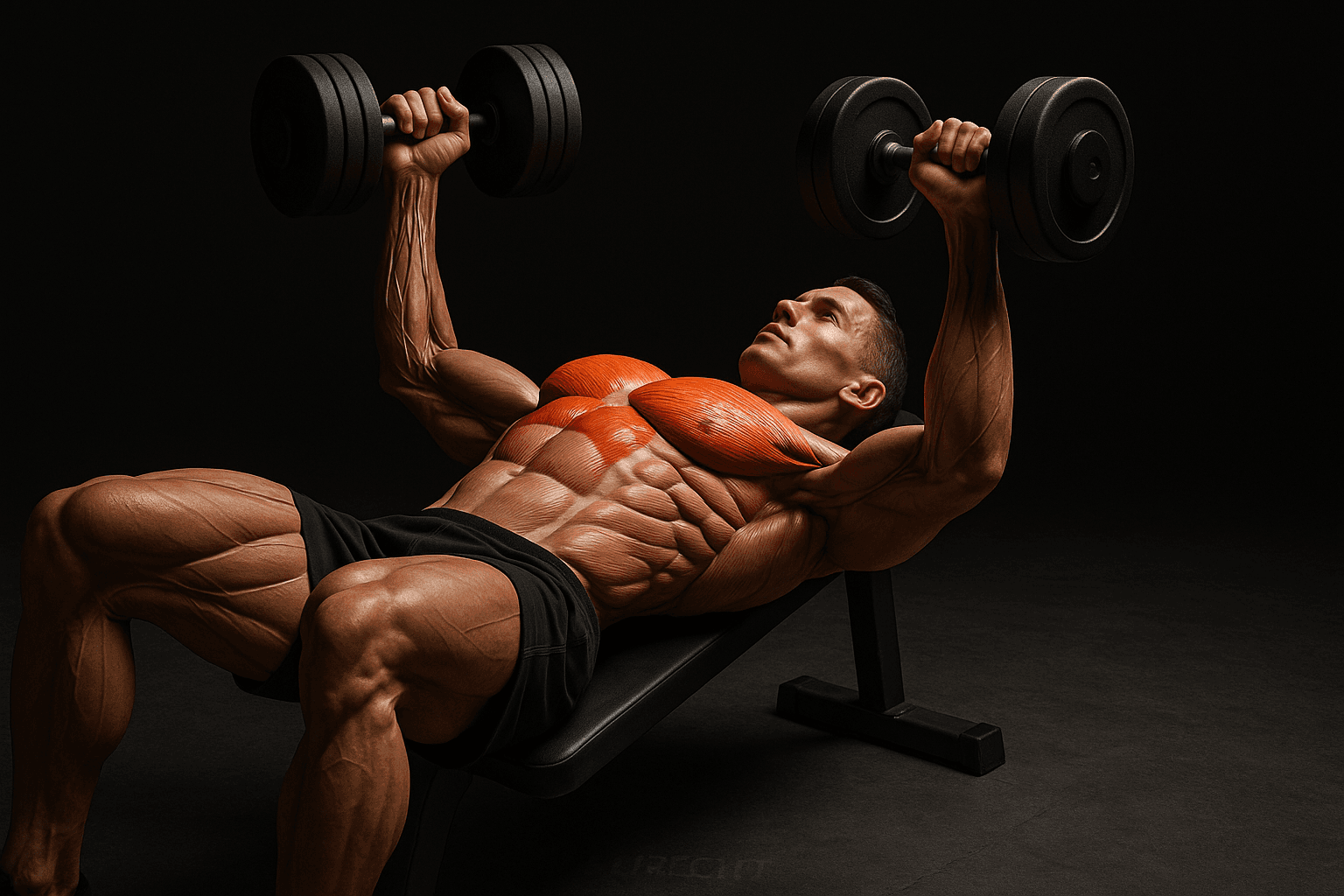
Photo by RepBro.
The most common dumbbell bench press mistakes are: flared elbows, not retracting the shoulders, incorrect wrist position, bouncing the weights, using too heavy a load/short range of motion, and poor foot/leg bracing. Fix each with a simple cue or adjustment so you keep gaining strength and reduce injury risk.
Why are my elbows flaring out during dumbbell bench presses?
Why it happens: People flare elbows because it feels stronger or more natural, or because they lack scapular control. Many lifters also mimic a barbell groove (which is different) or try to press straight up.
What it costs: Elbow flare increases anterior shoulder stress and reduces chest/mechanical advantage, raising risk of shoulder irritation and stalling chest progress.
One concrete fix: Tuck your elbows to about 30–45° from your torso. Cue: "thumbs up slightly and drive the elbows toward your feet, not straight out." Reduce weight 10–20% while you practice for clean reps.
Why don’t I set my shoulder blades before pressing?
Why it happens: It’s quicker to lie down and start, and many lifters don’t know how much tension to create. Fatigue also causes the scapulae to lose position.
What it costs: Poor scapular retraction means unstable shoulders, shorter pressing range, and more stress on the rotator cuff—slower strength gains and higher injury risk.
One concrete fix: Before every set, pinch your shoulder blades together and down for 1–2 seconds and keep that tension throughout the set. Think "create a small shelf for the ribs." If you struggle, decrease load and perform 2 sets of 8–10 scapular-retraction-only holds between sets.
Why do my wrists bend backward or forward during the press?
Why it happens: Weak grip, poor wrist mobility, or trying to get the dumbbells higher at the top by changing wrist angle.
What it costs: Bent wrists transfer force poorly, increase wrist strain, and make shoulder tracking worse—lost pressing efficiency and potential wrist pain.
One concrete fix: Keep wrists neutral so knuckles point at the ceiling at the top of the press. Squeeze the dumbbells and imagine pushing through your heel of the palm. If needed, drop the weight 10–15% and practice 3 sets of 6–8 strict reps focusing only on wrist alignment.
Why am I bouncing the weights off my chest or arching excessively to get reps?
Why it happens: The load is too heavy for strict pressing or the lifter wants momentum to complete reps. Overarching (excessive bridge) is used to shorten the range.
What it costs: Bouncing removes time under tension and increases stress on the sternum and shoulder joints. Extreme arching shifts mechanics away from the chest and can cause lower back strain.
One concrete fix: Use a controlled 2-second eccentric (lower), 0–1 second pause at the chest, and a controlled concentric. Reduce load 10–30% until you can keep that tempo for your planned reps. Cue: "Lower slow, brief timeout, then press with control."
Why do one side lag or twist during the press?
Why it happens: Strength asymmetry, poor core/hip drive, or uneven grip/arm path. Fatigue often magnifies it.
What it costs: Asymmetry limits overall progression, risks joint imbalances, and can lead to compensatory injuries.
One concrete fix: Use a light unilateral set focused on the weaker side first—e.g., 3–4 sets of 6–8 unilateral reps with a tempo focus. After the weaker side is done, match reps on the stronger side. Alternatively, incorporate 2 extra reps on the weaker side each session until they even out.
Why are my feet not planted or my legs doing nothing on the bench press?
Why it happens: Some lifters place feet too far back or lift heels to focus on upper body, or they simply don’t use leg drive cues.
What it costs: Poor foot contact reduces whole-body tension, decreases pressing stability and power, and makes heavy reps more dangerous.
One concrete fix: Plant feet flat on the floor with knees bent at about 90°–110°. Push your feet into the floor slightly on the concentric phase to create a stable base—cue "drive through the heels"—and keep the torso tight. If your bench or flexibility prevents flat feet, place plates under your feet temporarily until mobility improves.
Short safety note
Stop if you feel a sharp or unusual pain and consult a qualified professional; this article is not medical advice. Use a spotter when testing heavy loads and prioritize controlled technique over ego loading.
How should I practise these fixes in a workout?
Pick 1–2 mistakes to correct per week rather than trying to change everything at once. For example: Week 1—scapular setup and elbow tuck; Week 2—tempo control and wrist position. Track your sets, weights, and form notes—apps like RepBro help keep the details consistent. If you’re comparing tracking tools or programs, see comparisons at https://www.repbro.app/vs.
One-sentence takeaway: Clean dumbbell benching is about stable shoulders, neutral wrists, controlled tempo, and a solid base—fix one cue at a time and drop the load until your form is consistent.
Frequently asked questions
- How much elbow tuck should I use on the dumbbell bench press?
- Aim for a 30–45° tuck from your torso; that balances pectoral load and shoulder safety while keeping the bar path efficient.
- Should I touch the dumbbells at the top?
- You can lightly touch or keep a 1–2 cm gap. Don’t smash them together—maintain tension and avoid uncontrolled clashing.
- How do I know if weight is too heavy?
- If you can’t maintain form for the planned reps or your tempo collapses (e.g., fast lowering or bouncing), drop the load by 10–20% and fix technique.