Dumbbell Bench Press Alternatives at Home (Minimal Equipment)
Practical at-home substitutes for the dumbbell bench press using dumbbells, bands, or bodyweight. What each keeps, what it loses, and when to return to a gym.
Photo by RepBro.
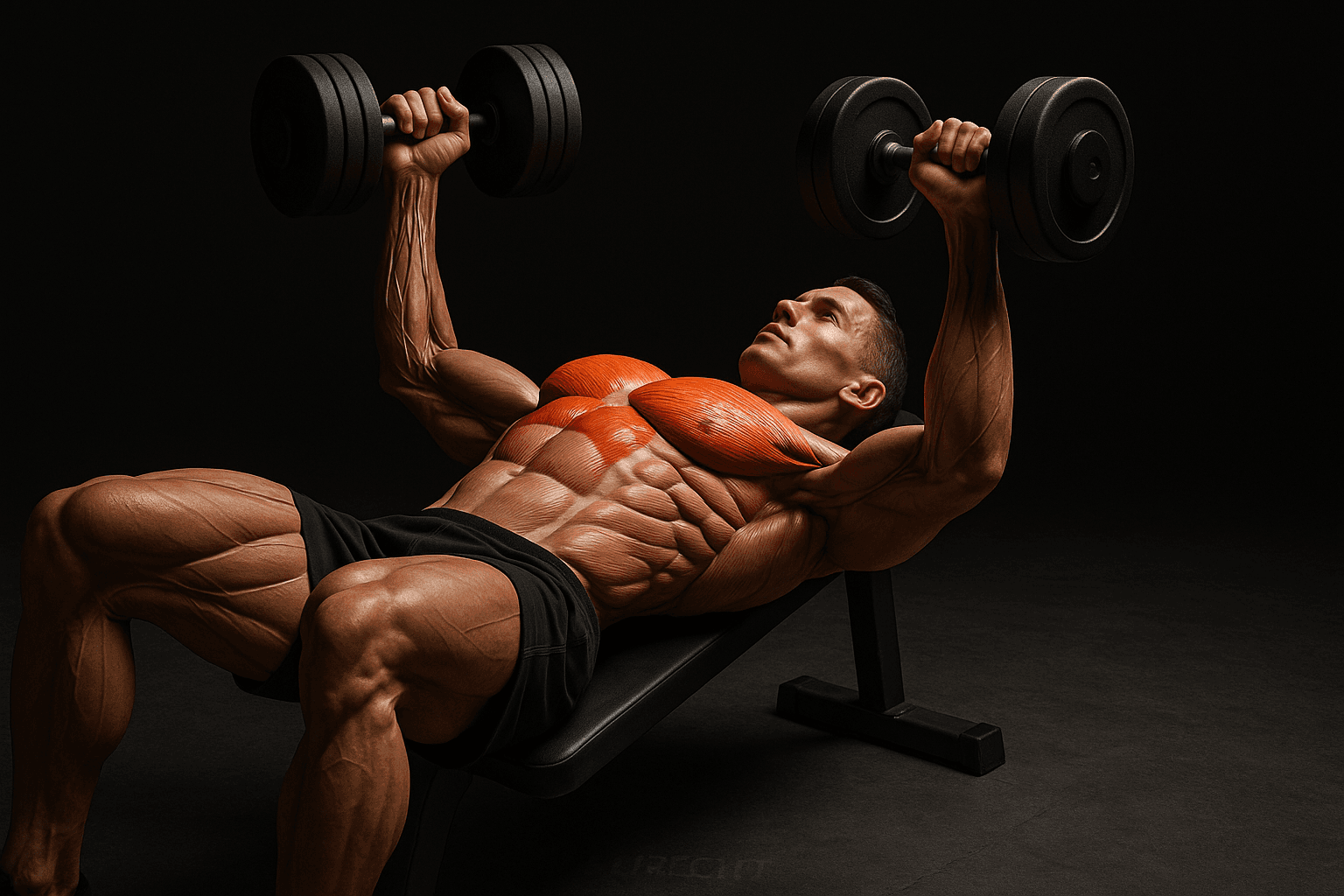
If you don’t have a bench, use the dumbbell floor press, single‑arm DB press, push‑up variations (incl. weighted or banded), resistance‑band chest press, or a stability ball/edge‑chair incline. Each preserves some pressing stimulus but differs in range of motion, loading ceiling, and stability — use the right swap for your goal.
What practical exercises can replace the dumbbell bench press at home?
- Dumbbell floor press (bilateral)
- Single‑arm dumbbell press (floor or couch)
- Push‑up variations: standard, elevated-feet (decline), banded, or weighted
- Resistance band chest press (anchored or standing)
- Dumbbell press on a stability ball or firm chair (limited incline)
Below I review what each keeps and loses compared with a dumbbell bench press and when the swap is adequate.
What does the dumbbell floor press preserve and lose compared with a bench press?
Preserves:
- Horizontal pressing pattern and triceps involvement
- Ability to load with heavier dumbbells than many bodyweight options
- Safer floor stop for beginners (less shoulder extension)
Loses:
- Reduced range of motion (elbow stops on the floor) — less pec stretch
- Slightly different shoulder angle and shorter eccentric path
When adequate: for strength maintenance, heavier top‑end sets without a bench, and when shoulder pain limits full ROM.
When go to gym: when you need full ROM to target chest stretch, maximal loading beyond available dumbbells, or specific bench technique work.
What does the single‑arm dumbbell press preserve and lose?
Preserves:
- Unilateral strength work and core anti‑rotation demand
- Ability to overload per side and correct imbalances
Loses:
- Possible lower absolute load per side (if you lack heavy single dumbbells)
- Different stabilization pattern versus bilateral pressing
When adequate: when addressing imbalances, building stability, or limited equipment means you can’t load both arms heavy simultaneously.
When go to gym: if you need very heavy bilateral loading or strict strength testing.
Can push‑ups replace the bench press for muscle and strength?
Preserves:
- Similar movement pattern and muscle activation for chest, anterior delts, and triceps
- Easy to progress via variations and added resistance
Loses:
- Different loading curve (bodyweight limited unless weighted/banded)
- Less ability to fine‑tune load increments compared with incremental dumbbells or plates
When adequate: for most beginner-to-intermediate lifters aiming for hypertrophy; push‑ups with progressive overload can drive growth.
When go to gym: if you need to lift near maximal loads for strength adaptations (heavy singles/doubles) that exceed what bodyweight/household loading can provide.
How do resistance band chest presses compare to dumbbell bench press?
Preserves:
- Horizontal press pattern and capacity for high rep/hypertrophy work
- Variable resistance can emphasize lockout or mid‑range depending on anchor
Loses:
- Different resistance curve (bands increase resistance through range)
- Harder to measure exact load increments
When adequate: when you want low‑cost progressive overload, portability, and joint‑friendly tension.
When go to gym: when you need absolute load precision or greater eccentric overload using heavy free weights.
What about pressing on a stability ball or chair?
Preserves:
- Allows greater shoulder extension and ROM than floor press
- Adds core/stability demand
Loses:
- Safer heavy loading is limited; balance becomes a limiting factor
- Not ideal for maximal strength work
When adequate: for hypertrophy and stability-focused work; when you need some incline effect at home.
How should I structure sets, reps, and frequency for these home substitutes?
- Frequency: press 2–3 times per week for best muscle growth signal and manageability.
- Weekly volume: aim for multiple sets per week per chest/muscle group (practical hypertrophy programming often targets moderate total sets across workouts).
- Rep ranges: 6–20 reps work for hypertrophy depending on load; lower reps with heavier weights for strength adaptations.
- Progression: increase reps, reduce rest, add load (weighted vest/backpack/dumbbells), slow eccentrics, or increase band tension.
These recommendations follow general strength and hypertrophy consensus: consistent progressive overload, adequate weekly volume, and sufficient recovery are the key variables.
What progression tricks work best when equipment is limited?
- Add slow tempo (3–5 s eccentric) to increase time under tension.
- Use unilateral work to raise relative intensity per side.
- Add external load: plate, backpack, or weight vest for push‑ups.
- Change leverage: decline push‑ups (feet elevated) increase chest loading.
- Chain multiple modalities: band + dumbbell for novel overload curves.
Comparison table: useful quick glance
| Exercise | Equipment | What it preserves | Main limitation | When adequate | When go to gym |
|---|---|---|---|---|---|
| Dumbbell floor press | Dumbbells | Horizontal press, heavier load | Reduced ROM | Strength maintenance, limited shoulder pain | Need full ROM or heavier loads |
| Single‑arm DB press | Dumbbell | Unilateral strength, core demand | Lower absolute bilateral load | Fix imbalances, core integration | Max bilateral strength testing |
| Push‑ups (weighted/banded) | Bodyweight + optional load/bands | Movement pattern, scalable | Loading ceiling, load increments | Hypertrophy for many lifters | Very heavy strength goals |
| Band chest press | Bands | Constant tension, portable | Resistance curve, load precision | Portable progressive overload | Precise heavy eccentric training |
| Stability ball/edge press | Dumbbells + ball/chair | Greater ROM, core | Balance limits heavy loading | Hypertrophy + stability | Heavy strength or exact bench angles |
What safety reminders should I follow?
Stop if you feel sharp or unusual joint pain. Use controlled tempo and full warm‑up sets. If you have a history of shoulder issues, consult a qualified professional before progressing heavy pressing. No article diagnoses injuries or guarantees prevention.
What can’t an app or online plan do for me?
- No app can reliably see and correct your movement faults in real time; in-person coaching or video analysis from a professional is needed for precise technique fixes.
- Apps can’t replace clinical judgement for injuries or rehab — see a qualified clinician for persistent pain.
- A program only works if you consistently follow it; adherence and lifestyle factors drive results more than the specific platform. If you want simple tracking of reps/sets and progressive templates, tools like RepBro can help log progress.
Limitations: be honest about trade‑offs
Home substitutions can produce meaningful hypertrophy and maintain strength for many lifters, but they have limitations: limited absolute loads, different ROM and stability demands, and less precise load progression. If your goal is to maximize heavy single‑rep strength or you need controlled eccentric overloading, gym equipment is the practical solution.
If you stick with consistent progressive overload, 2–3 weekly pressing sessions, sensible volume, and regular deloads, these at‑home alternatives will serve most training goals.
Frequently asked questions
- Can push-ups replace dumbbell bench presses for muscle growth?
- Yes — with progressive overload, push-ups can produce similar hypertrophy for many lifters. Use harder variations, added load, slower eccentrics, or bands. For maximal strength at high loads, bench/dumbbell press in a gym is still superior.
- How often should I train pressing at home to maintain or build muscle?
- Train pressing movements 2–3 times per week and aim for total weekly chest volume in the typical hypertrophy range (commonly reported as multiple sets per muscle per week). Vary load/intensity across sessions and include planned lighter weeks or deloads periodically.
- When is it time to go back to a gym for chest training?
- If you need heavier absolute loads for strength (near-max singles/doubles), fine-grain progressive overload above your home equipment limits, or varied bench angles and heavy eccentric training, a gym is the practical option.