Diamond Push-up Alternatives at Home (Minimal Equipment)
Practical at-home substitutes for the diamond push-up: 5 bodyweight, band, and dumbbell options, clear trade-offs, programming tips, safety guidance, and when to use a gym.
Photo by RepBro.
Short answer: If you need at-home diamond push-up substitutes, use close-grip incline push-ups, kneeling diamond push-ups, band-assisted diamond push-ups, neutral-grip dumbbell presses, and single-arm push-up progressions. Each keeps triceps emphasis but trades intensity, stability demand, or range of motion. Choose by load, shoulder ability, and available equipment.
What does a diamond push-up emphasize and why does that matter?
The diamond push-up shifts hand position so elbows track closer to the body, increasing triceps contribution and reducing chest involvement relative to a standard push-up. It also increases elbow flexion and requires shoulder stability. That matters because any substitute should preserve triceps loading if your goal is arm strength or size.
Which at-home substitutes work with minimal equipment, and what do they preserve or lose?
Below are five practical substitutes. For each I list what it preserves (what is similar to the diamond push-up) and what it loses or changes.
- Close-grip incline push-up (hands in diamond, hands elevated on a bench/step)
- What you preserve: Triceps emphasis and similar hand position; easier to load for higher volume.
- What you lose: Absolute load and full-range vertical force; less shoulder stability demand than floor diamond push-ups.
- When pick it: If your wrists, shoulders, or chest limit floor work, or you're building volume without heavy equipment.
- Kneeling diamond push-up
- What you preserve: Hand position and triceps bias while reducing bodyweight to a manageable percentage.
- What you lose: Full-body tension and core demand; mechanical loading is reduced.
- When pick it: If a full diamond is too hard yet you want the same movement pattern to practice form and build strength.
- Band-assisted diamond push-up (band looped around back and under hands)
- What you preserve: Movement pattern, eccentric/concentric timing, and hands-together emphasis.
- What you lose: Exact loading curve differs (bands assist more at the bottom or top depending on setup); you need a sturdy anchor.
- When pick it: If you need graduated assistance to work full ROM and keep practice under near-specific mechanics.
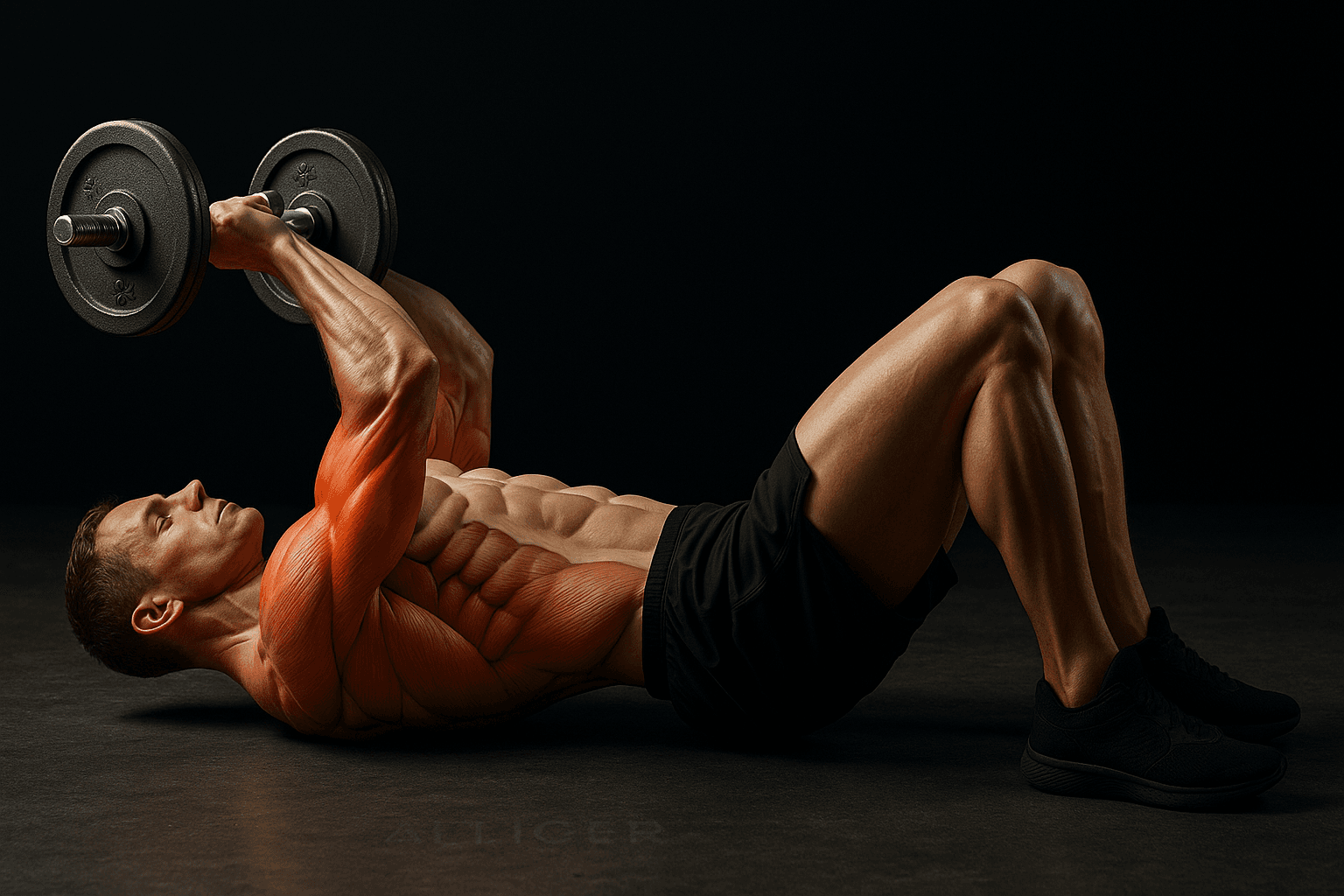
- Neutral-grip dumbbell floor press or one-arm dumbbell press (palms facing each other)
- What you preserve: High triceps recruitment and capability to add load progressively.
- What you lose: Closed-chain stability challenge and full scapular movement—presses are open-chain.
- When pick it: If you can access dumbbells and want precise progressive overload for strength or hypertrophy.
- Elevated single-arm or asymmetric push-up progressions
- What you preserve: High triceps demand and progressive overload via removing limb support.
- What you lose: Exact diamond hand position; balance and core demands increase.
- When pick it: If you want to advance toward single-arm strength and have already mastered close-grip work.
How do these options compare side-by-side?
| Exercise | Equipment | Preserves triceps bias? | Loadability (progressions) | Stability/core demand |
|---|---|---|---|---|
| Diamond push-up (baseline) | Bodyweight | High | Limited (bodyweight variations) | Moderate–High |
| Close-grip incline push-up | Box/bench/step | High | Good (lower incline → more load) | Low–Moderate |
| Kneeling diamond push-up | None | High | Limited (add reps/tempo) | Low |
| Band-assisted diamond | Resistance band | High | Good (different band tensions) | Moderate |
| Neutral-grip dumbbell press | Dumbbells | Moderate–High | Excellent (add weight) | Low |
| Single-arm/Asymmetric push-up | None | High | Good (foot position, elevation) | High |
How should I program these alternatives to maintain progress?
Follow standard resistance training principles: work the pushing muscle group 2–3 times per week, vary intensity across sessions, and apply progressive overload. If your goal is hypertrophy, train in moderate rep ranges (for example, sets that reach near-failure in roughly 6–15 reps depending on exercise and load). For strength, use fewer reps with heavier loading when possible (added weight or more challenging body positions).
Progression examples:
- Increase load: reduce incline, switch from band-assist to bodyweight, add dumbbells.
- Increase difficulty: slow the eccentric (3–4 seconds), add pauses at the bottom, or elevate feet.
- Increase volume: add an extra set or add a second pushing day in the week.
Rest and recovery: allow at least 48 hours between intense pushing sessions. Deload by reducing volume or intensity for 1 week after several weeks of progressive overload.
When is a gym necessary to replicate the diamond push-up effect?
A gym becomes useful when:
- You need heavier, consistent external load (barbells, heavier dumbbells) to continue progressing strength.
- Bodyweight and band progressions no longer deliver measurable overload or your training stalls despite consistent programming.
- You require supervised coaching, specific rehabilitation equipment, or exercises that safely load the shoulder complex under heavy resistance.
If your goals are general strength, hypertrophy, or improved triceps endurance, at-home options often suffice for months or longer with good programming.
What are the safety considerations?
Stop any exercise immediately if you experience sharp or worsening joint pain. Shoulder and elbow discomfort during close-grip work is often technique- or mobility-related — consult a qualified professional (physiotherapist or experienced coach) for persistent issues. Never attempt maximal one-arm push-ups or heavy unilateral loading without building a base and ensuring good scapular control.
What can't an app or AI coaching do for this work?
- See or correct your live form; video feedback from a trained professional is superior for technical fixes.
- Diagnose injuries or prescribe medical treatment; only a licensed clinician can do that.
- Replace consistent effort: no program works unless you follow it.
Limitations: Apps and written guidance provide structure and progressions but not hands-on assessment, individualized rehab plans, or in-person cueing. For persistent pain, recent injury, or complex movement issues, consult a qualified professional. A plan is only effective with consistent execution.
Safety note: This article does not diagnose injuries or guarantee prevention. If you have a current injury, recent surgery, or chronic joint pain, seek assessment before progressing. Stop on sharp pain and consult a qualified professional.
If you want programming templates or a short at-home routine using the above options, say which equipment you have and your current rep ability and I can outline a 4–8 week plan tailored to that setup.
Frequently asked questions
- Can I build triceps strength without diamond push-ups?
- Yes. Close-grip variants, band-assisted diamond pushes, and neutral-grip dumbbell presses all load the triceps sufficiently for strength and size when you progressively increase difficulty or volume and train the muscle 2–3 times per week, following standard resistance-training principles.
- How often should I do these diamond push-up alternatives?
- Aim to train pushing movements 2–3 times per week, allowing 48–72 hours between hard sessions for the same muscle group. Rotate intensity (heavy, moderate, light) across the week to reduce fatigue and allow recovery.
- When is it time to go to a gym for diamond push-up progress?
- Switch to a gym when bodyweight or band progressions no longer provide measurable overload, your technique breaks under added difficulty, or you need heavier, more consistent loading options such as barbells or heavier dumbbells to reach strength goals.