Decline Bench Press: Muscles Worked and Smart Alternatives
Clear, evidence-aware guide to what muscles the decline bench press trains, where to use it in a program, and 3–4 practical alternatives with selection cues for equipment, injury, and plateaus.

Photo by RepBro.
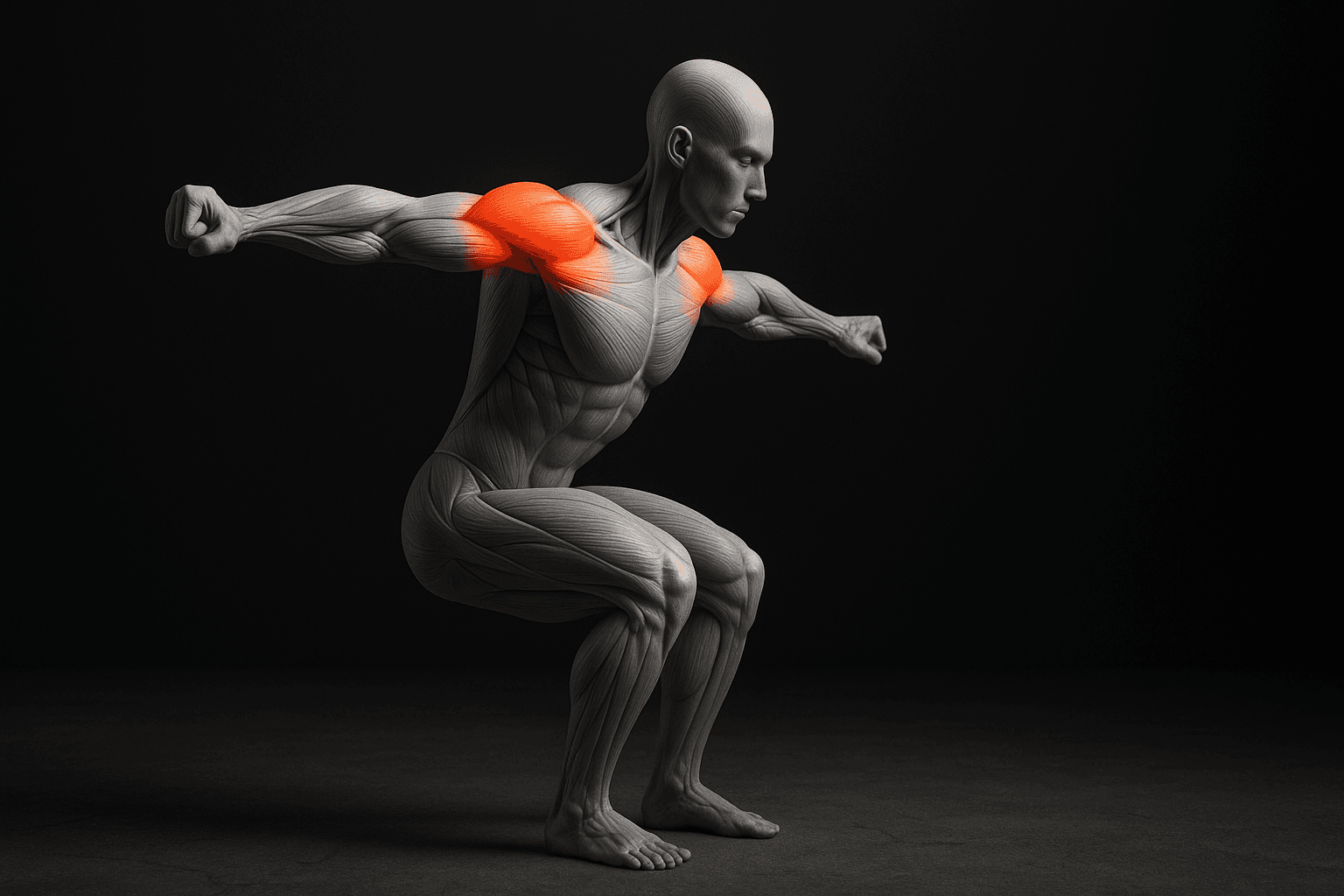
The decline bench press primarily targets the pectoralis major with a greater emphasis on the lower (sternal) fibers, while secondary loading falls on the anterior deltoid and triceps. It’s a variation to bias lower-chest development and allow heavy horizontal pressing with a reduced shoulder-flexion angle.
What muscles does the decline bench press work?
Primary: the pectoralis major (particularly the sternal or lower fibers) — decline angles shift the line-of-pull to load those fibers more.
Secondary: anterior deltoid and triceps brachii assist the movement. Scapular stabilizers (serratus anterior, middle/lower trapezius) work isometrically to control the bar. EMG and biomechanical analyses suggest differences across bench angles are generally modest; decline biases lower pec but does not exclusively isolate it.
How should decline press fit into my program and training variables?
Frequency: follow current resistance-training consensus: train each muscle group 2–3 times per week. For most lifters, perform decline press 1–2 times per week.
Sets & reps: choose sets based on goal. Hypertrophy commonly uses moderate reps with multiple sets; strength uses heavier loads and fewer reps. A practical range is 2–6 sets per session depending on overall program volume and recovery.
Progression: apply progressive overload by increasing load, reps, or improving tempo and form. Schedule a deload when overall weekly volume or intensity remains high for multiple weeks and performance drops.
Placement in a session: decline press can be used as a primary pressing movement (if your main focus is horizontal strength or lower-pec emphasis) or as an accessory after a technical lift like flat bench or overhead press. Use it earlier on days when you intend to lift heavy.
How do I perform the decline bench press safely?
Setup: secure your feet, set a modest decline (commonly 15–30 degrees), ensure a comfortable natural bar path so the bar tracks roughly over the lower chest. Use an experienced spotter or safety pins when using heavy free-weight loads.
Technique cues: keep the chest up, maintain scapular retraction, avoid excessive lumbar hyperextension, and descend under control to the lower chest before pressing explosively.
Safety note: stop on sharp or unusual pain; consult a qualified health professional for persistent pain. No online resource can diagnose injuries—seek in-person assessment for rehab guidance.
How does decline bench compare to common alternatives?
| Exercise | Main emphasis | Equipment | Pros | Cons |
|---|---|---|---|---|
| Decline barbell bench | Lower-pec bias, triceps/ant-deltoid assistance | Decline bench + barbell | Allows heavy loading, stable bar path | Requires bench and spotter; can feel uncomfortable for some shoulders |
| Decline dumbbell press | Similar lower-pec bias, more ROM and unilateral control | Dumbbells + decline bench | Increased ROM and balance demand, joint-friendly axis | Harder to rack/unrack; requires control |
| Weighted/assisted dips | Lower chest and triceps emphasis | Dip bars + weight belt or machine | Very effective lower-pec bias, minimal equipment | Shoulder stress risk; requires good scapular control |
| Flat bench press with feet-elevated or chest cueing | General chest, can bias lower pec with technique | Flat bench or floor | Useful if no decline bench; easier setup | Less direct lower-pec bias than decline/dips |
Which alternative should I pick and when?
- Equipment-limited (no decline bench): do weighted dips or flat bench with chest-focused technique. Dips require only parallel bars; they’re a compact, loadable option.
- Shoulder pain or mobility limitations: prefer decline dumbbell presses with lighter load and controlled ROM, or cable/machine presses that allow customizable line-of-pull and less compressive shoulder torque.
- Plateauing on decline bench: change stimulus — switch to dips, increase time under tension, use slow eccentrics, or rotate in incline/flat variations to address weak points.
- Strength-specific block: prioritize a heavy barbell bench (flat or decline) with low reps and multiple sets; include dips as accessory work for triceps and lower-pec carryover.
How do I choose angles and load if my goal is chest hypertrophy?
Angle selection: vary angles across weeks to hit different fibers — include flat, incline, and decline variants. Most hypertrophy programs spread total weekly volume across angles rather than relying on a single movement.
Load and volume: follow general hypertrophy practices: multiple sets per muscle per week spread across sessions with progressive overload. Adjust load so you can perform target reps with good form; reduce load if form collapses.
What are the practical limitations of apps and remote coaching for exercises like decline bench?
No app or AI can see or correct your live movement with the fidelity of an in-person coach. Remote tools can help track sets, reps, and load but cannot diagnose joint pain, compensate for anatomical differences, or perform hands-on adjustments. For injury-prone shoulders or post-injury rehab, consult a physiotherapist or strength coach for an individualized plan.
Limitations
- Tracking tools can’t fully replace in-person movement assessment or medical evaluation. - Programs only work if you maintain consistent training, nutrition, and recovery. - Apps cannot feel pain signals or provide hands-on correction; persistent pain warrants qualified professional input.
A short, practical safety reminder Stop immediately if you feel sharp pain. Use a spotter or safety pins on heavy sets. This article does not provide a medical diagnosis; consult a qualified professional for injury assessment and rehabilitation advice.
If you log training data, simple tracking apps such as RepBro can help record angles, loads, and progressive steps to make small, measurable improvements; however, keep the limitations above in mind.
References and reading Look to current resistance training position stands from major organizations (ACSM, NSCA) and peer-reviewed EMG reviews for more detail on angle-related muscle activation and set/rep recommendations.
Frequently asked questions
- Does the decline bench target the lower chest more than a flat bench?
- Yes. The decline bench shifts the line of pull so the sternal (lower) fibers of the pectoralis major are emphasized more than a flat press. EMG differences are modest; decline is a useful way to bias lower-pec fibers but it doesn’t isolate them completely.
- How often should I train decline press for size or strength?
- Train decline press 1–2 times per week as part of a 2–3 sessions/week per muscle-group structure. Use 2–6 sets depending on whether your goal is hypertrophy (moderate reps) or strength (lower reps). Progress by adding load, reps, or improving form.
- Are dips a good substitute for decline bench?
- Yes. Parallel-bar or weighted dips are a practical substitute because they load the chest and triceps in a lower-pec-biased position. They’re especially useful when a decline bench isn’t available, but shoulder comfort and ability to maintain chest-forward posture determine suitability.