Chin-up: Proper Form, Step by Step
Clear, practical guide to chin-up proper form: setup, grip, breathing, tempo, common mistakes and fixes, plus safety cues for controlled, pain-aware practice.

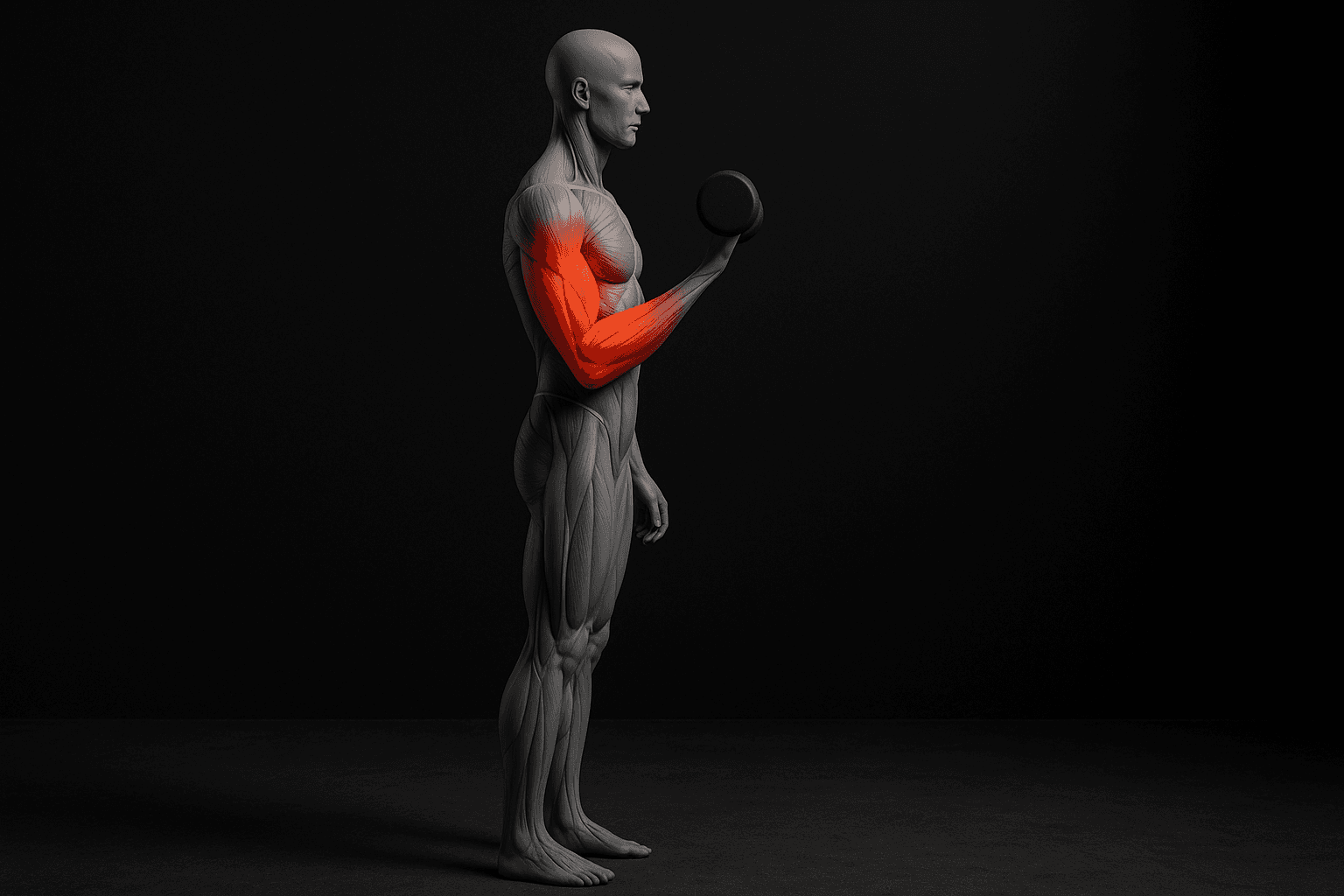
Photo by RepBro.
A proper chin-up is a vertical pulling exercise performed with an underhand (supinated) grip: start from a dead hang, engage the scapula, pull your elbows down and back until your chin clears the bar, then lower under control. The priority is a controlled path, elbow-driven pulling, and full range of motion—no jerking, no excessive swinging.
How should I set up for a chin-up?
- Bar height: Use a bar you can hang from with feet off the floor. If needed, use a box or step to get on/off safely.
- Grip: Underhand (palms facing you), shoulder-width or slightly narrower. For most people that’s about 45–55 cm (18–22 in) between hands.
- Hands: Wrap thumbs around the bar (full grip) unless you have a specific reason to use a false grip.
- Start position: Jump or step up to a full dead hang—arms straight, shoulders relaxed but not shrugged, legs either straight down or bent at the knees behind you to avoid touching the floor.
What are the step-by-step cues for the pull?
- Scapular set (0–1s): From the dead hang, pull your shoulder blades down and slightly together—this is a small, controlled contraction. Think ‘activate the lats’ rather than ‘pull with the arms’.
- First pull (0.5–1s): Initiate by driving the elbows down toward your ribs. Keep the chest up and lead with the sternum. The hands stay fixed; the elbows do the work.
- Finish position (0.2–1s): Continue pulling until your chin clears the bar or the bar touches your upper chest (some people allow the bar to touch the collarbone area). Avoid hyperextending the neck—keep the head neutral.
- Eccentric/Lowering (2–4s): Lower under control back to the dead hang. Extend the arms fully and reset the scapula at the bottom for the next rep.
Tempo example: 1:0:3 (1s concentric, no pause, 3s eccentric). For beginners you can use a slower eccentric like 4s to build strength.
How should I breathe during a chin-up?
- Inhale on the descent (eccentric). Exhale during the concentric pull as you pass the midpoint, or exhale steadily throughout the concentric phase. Avoid holding your breath for multiple reps—use a consistent breathing pattern that maintains tension but doesn’t cause dizziness.
What tempo and reps should I use?
- Strength focus: 3–6 reps, 3–5 sets, 2–3 minutes rest, tempo 1:0:3.
- Hypertrophy / skill: 6–12 reps, 3–4 sets, 60–90s rest, tempo 1:0:2–3.
- If you can’t do 3 strict reps yet, use band assistance or negatives (3–6 slow eccentrics) and practice 2–3 times per week.
How do I make chin-ups harder or easier?
- Easier: Band-assisted chin-ups, machine-assisted chin-ups, inverted rows, or negative-only reps with eccentric tempos of 3–6s.
- Harder: Add 2.5–10 kg (5–22 lb) via weight belt or vest, use a slower eccentric, or add isometric holds at the top (1–3s).
What common mistakes should I watch for and how do I fix them?
- Mistake: Shrugging at the start. Fix: Perform a scapular pull to set the shoulders (scapular depression) before bending the elbows.
- Mistake: Pulling with the arms only (elbows flare out). Fix: Cue ‘elbows to ribs’ and keep the chest up; imagine pulling your elbows into your back pockets.
- Mistake: Kipping or using momentum. Fix: Pause 1–2 seconds at the bottom of each rep and lower slowly (2–4s). Reduce rep speed and focus on strict pulls.
- Mistake: Incomplete range (not fully extending or not clearing chin). Fix: Reach full dead hang between reps; aim to get the chin over the bar or the bar to the chest. Use partial to full ROM progressions.
- Mistake: Holding breath or breath-holding patterns. Fix: Use a simple inhale on the descent, exhale on the pull—practice this across sets.
How should I progress week-to-week?
- Add 1–2 reps per set every 1–2 weeks or reduce assistance in small steps (lighter band, less machine assistance). For weighted chin-ups, add 1–2.5 kg (2–5 lb) per 1–2 weeks depending on recovery.
- Track load, reps, and tempo. Tools like RepBro can help log sets and tempo for consistent progress: https://apps.apple.com/us/app/gym-workout-coach-repbro/id6763749305.
What safety checks should I do?
- Warm-up your shoulders and thoracic spine for 5–10 minutes (dynamic arm circles, band pull-aparts, scapular retractions).
- Use controlled tempo and full ROM. Stop immediately if you feel sharp or unusual pain—don’t push through it.
- If you have persistent pain or a medical condition, consult a qualified professional before continuing; this guide is not medical advice.
Safety note: If you experience sharp pain, sudden joint noise, or new numbness/tingling during chin-ups, stop and consult a healthcare or fitness professional—do not continue or self-diagnose.
How does a chin-up fit into a balanced program?
- Include vertical pulls like chin-ups twice per week for general pulling strength. Pair with horizontal pulls (rows), pushing movements (bench/press), and lower-body work for balanced development. Alternate grips and angles to reduce overuse.
Short FAQ
- Q: Are chin-ups bad for the shoulders? A: Not inherently. Proper scapular control and progressive loading reduce risk. If you have pain, stop and seek professional advice.
- Q: Should my legs be straight or bent? A: Either is fine—bend knees if needed to avoid touching the floor. Keep the body tight to avoid swinging.
- Q: How long will it take to get a chin-up? A: Varies widely. With consistent practice 2–3x weekly and progressive overload, many beginners see measurable progress in 4–12 weeks.
One-sentence takeaway: Focus on a controlled dead hang, scapular set, elbow-driven pull to chin height, and a slow, resettable descent—stop on sharp pain and consult a professional if needed.
Frequently asked questions
- Is a chin-up better than a pull-up?
- Chin-ups (underhand grip) emphasize the biceps and allow a slightly stronger flexion for many people; pull-ups (overhand grip) bias the lats and upper back. Neither is universally 'better'—use both to develop balanced pulling strength. See a quick comparison at https://www.repbro.app/vs.
- How many chin-ups should I be able to do?
- There’s no single correct number; aim for steady progress. Many recreational trainees target 5–12 strict reps per set as an intermediate benchmark. Track sets and tempo with RepBro: https://apps.apple.com/us/app/gym-workout-coach-repbro/id6763749305.
- What if I can’t do a single chin-up yet?
- Start with assisted options: band-assisted chin-ups, inverted rows, and eccentric (slow-negative) reps. Gradually reduce assistance and add volume 2–3 times per week while keeping form strict.