Back Extension: Muscles Worked and Useful Alternatives
Clear, evidence-aware guide to which muscles back extensions train, where they fit in programming, and 3–4 practical alternatives with when to use each.

Photo by RepBro.
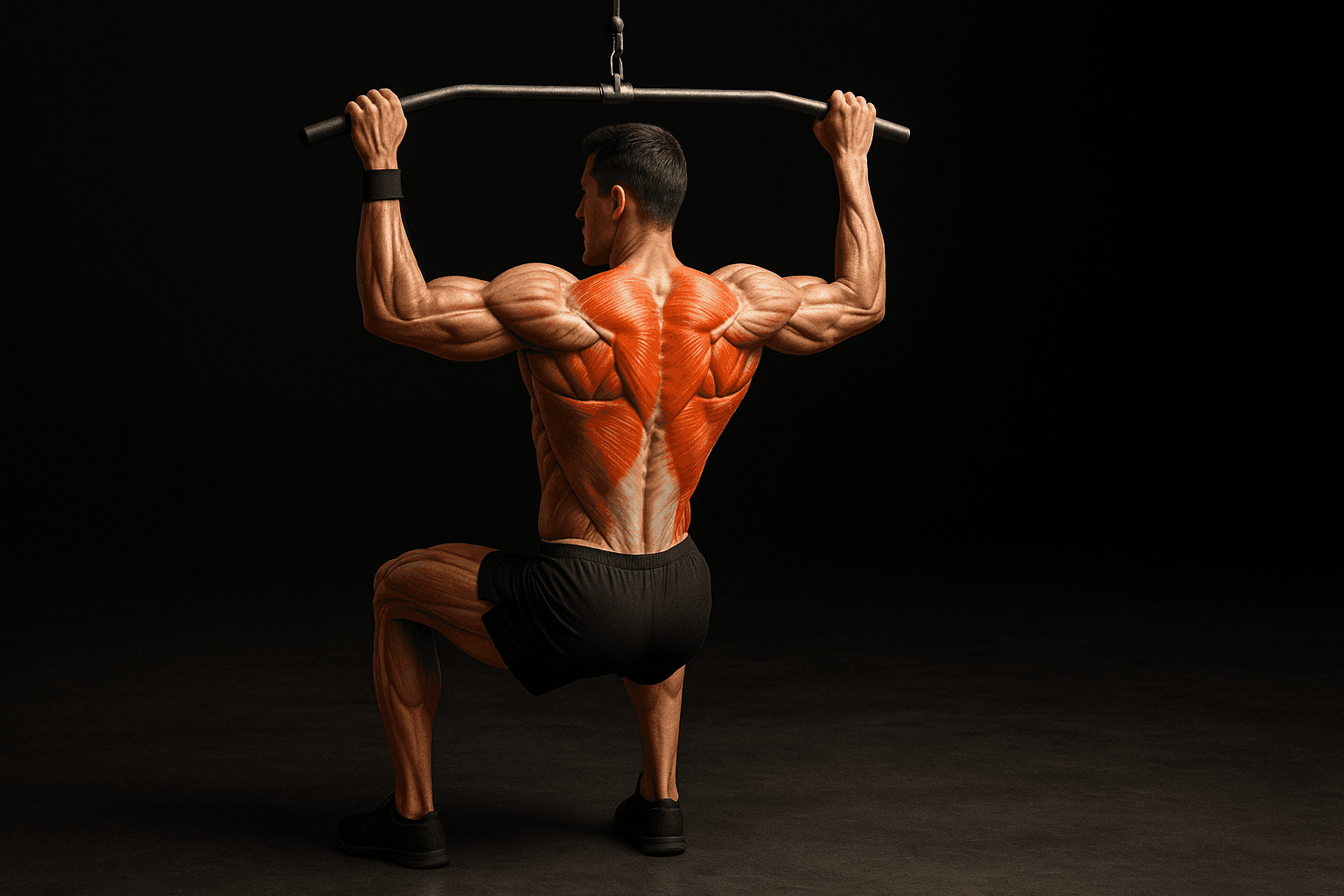
Back extensions primarily train the spinal erectors (erector spinae) with strong assistance from the glutes and hamstrings; they also challenge lumbar stabilizers and the posterior chain’s connective tissues. Use them as a targeted trunk-extension accessory rather than a heavy primary hip-extension movement.
What muscles does the back extension actually work?
Back extensions are a trunk-extension movement. Primary movers: the erector spinae (spinal extensors) along the lumbar and thoracic spine. Secondary contributors: gluteus maximus and hamstrings (especially when you allow hip extension), plus local stabilizers such as the multifidus and the thoracolumbar fascia.
Because range-of-motion and hip position vary between setups (Roman chair, glute-ham developer, 45° hyperextension), the relative emphasis shifts. A stiff-hip back extension keeps tension on spinal extensors; letting the hips extend increases glute/hamstring work.
Where does the back extension fit in a training program?
Back extensions are an accessory posterior-chain exercise useful for hypertrophy, endurance, or targeted spinal-extensor strengthening. They’re typically programmed:
- After primary lifts (deadlifts, squats, hip hinges) when used as accessory work.
- To increase back-extension endurance or muscle hypertrophy when heavy deadlifts are not suitable every session.
- As technical/rehab-friendly practice of spinal control when performed with low load and high quality.
Follow established resistance-training recommendations and integrate them with other posterior-chain work. For balanced development, pair back extensions with loaded hip-extension exercises (deadlifts, Romanian deadlifts, good mornings) and horizontal/vertical pulls for overall posterior and scapular balance.
How should I load, progress, and program back extensions?
Use progressive overload principles: improve either load, reps, or time under tension over weeks. For strength-oriented lifters, heavier, lower-rep sets can be used cautiously; for hypertrophy, moderate loads with controlled tempo and slightly higher reps work well. For spinal health or endurance, lighter loads and higher reps focused on perfect control are appropriate.
Frequency: follow mainstream guidelines for resistance training—train major muscle groups multiple times per week and adjust based on recovery and overall volume. If you are also deadlifting heavy, reduce direct back-extension volume that week. Deload by lowering volume/intensity for a planned week when overall fatigue accumulates.
Safety note: stop and get checked if you feel sharp or radiating pain. Consult a qualified professional for persistent issues; this article does not diagnose.
What practical alternatives are there and when should I pick each?
Below are 3–4 alternatives with clear reasons to choose them.
- Romanian Deadlift (RDL)
- Why pick it: If you want a heavy compound hip-extension exercise that trains glutes and hamstrings while loading the posterior chain more globally.
- When to use: You have access to a barbell and want to prioritize hip extension strength or transfer to deadlift performance.
- Limits: Requires good hip-hinge mechanics; not ideal during acute lumbar irritation unless performed light with careful form.
- Glute-Ham Raise (GHR)
- Why pick it: Strong eccentric and concentric demand on hamstrings and glutes with spinal erectors assisting; great for posterior-chain hypertrophy and hamstring strength.
- When to use: You have a GHD and want more hamstring emphasis than a standard back extension provides; useful for athletes needing strong knee flexion/hip extension capacity.
- Limits: Equipment-specific and technically demanding; can be intense on the lower back if form breaks down.
- Reverse Hyperextension (Reverse Hyper)
- Why pick it: Deload-friendly way to train spinal endurance and hip extension with decompressive effects on lumbar spine when performed on a machine.
- When to use: You want low-compression posterior-chain work (often used in rehab settings) or to spare axial-load sessions like heavy deadlifts.
- Limits: Requires specific machine or setup; contraindicated if a qualified professional advises against movement.
- Single-Leg Romanian Deadlift (SL RDL) or Suitcase Deadlift (bodyweight/dumbbell)
- Why pick it: Useful when equipment is limited (dumbbells or kettlebells) and when you want to address unilateral control and hamstring/glute development.
- When to use: You’re training at home, dealing with loading constraints, or addressing asymmetries.
- Limits: Balance demands can obscure pure posterior-chain loading; reduce load to maintain form.
| Exercise | Equipment | Emphasis | Good when you have lower-back sensitivity? |
|---|---|---|---|
| Back extension (Roman chair) | Bench/Roman chair | Spinal erectors > glutes if hips fixed | Yes, at low load and good technique |
| Romanian deadlift | Barbell | Glutes & hamstrings, hip hinge | Use lighter loads; depends on pain |
| Glute-ham raise | GHD | Hamstrings & glutes, strong posterior chain | Challenging; not ideal if pain present |
| Reverse hyper | Reverse hyper machine | Hip extension with spinal decompression | Often recommended in rehab settings |
How do I pick among these alternatives? Practical rules
- If equipment is limited: choose single-leg RDLs, dumbbell RDLs, or bodyweight back extensions.
- If pain or rehab: consult a clinician; consider reverse hypers or reduced-range back extensions under guidance.
- If addressing a deadlift plateau: prioritize RDLs and heavy variations that load hip extensors.
- If building posterior-chain size or endurance without heavy spinal compression: use higher-rep back extensions, GHRs, or reverse hypers.
What are the key cues and safety considerations?
- Cue: drive from the hips, keep a neutral spine, avoid sudden end-range lumbar extension under load.
- Breathe and brace appropriately; don’t hold breath on repeated submaximal reps.
- Stop on sharp, radiating, or new unusual pain and seek professional assessment. Never push through acute spine pain.
What can’t apps or AI coaching do for you?
- Apps and AI can help track sets, reps, and load progression, but they can’t reliably see or correct your real-time form, spot pain signals, or perform a hands-on clinical assessment. For suspected injuries, consult a qualified clinician.
Limitations: exercise selection and progressions here are general guidance. Individual needs, prior injuries, anatomical differences, and rehabilitation status change what’s appropriate. Consistency and proper coaching matter more than any single exercise. If you use an app to log training, remember it can quantify work but cannot replace a live assessment of movement quality. (If you track sessions, consider using a tracking tool such as RepBro — it will not substitute for hands-on coaching.)
Final practical takeaway: back extensions are a targeted tool for spinal extensors and posterior-chain accessory work. Choose an alternative when your goals, equipment, or injury status calls for more hip emphasis, less axial load, or better hamstring recruitment. Train progressively, prioritize technique, and consult professionals for pain or rehab.
Frequently asked questions
- Which muscles are primarily targeted by back extensions?
- Back extensions primarily target the spinal erectors (erector spinae) with substantial involvement from the glutes and hamstrings. The movement also recruits the posterior chain’s stabilizers—including the multifidus and hip extensors—so it’s a posterior-chain-dominant trunk extension exercise.
- Can back extensions help with lower back pain?
- Back extensions can improve endurance and control of the spinal extensors for some people, but they aren’t a universal remedy. If you have current or recent low-back pain, get an assessment from a qualified professional before loading the spine with repeated extension work.
- How often should I program back extensions?
- Include back extensions as part of posterior-chain work 2–3 times per week alongside other hip-extension movements. Use progressive overload and vary volume across training phases; follow a qualified professional’s guidance if you’re rehabbing or managing spine issues.