Jump Rope Conditioning: A Simple Weekly Protocol for Lifters
Practical jump rope conditioning plan for lifters: weekly protocols, progressions, session examples, and how to combine rope work with strength training safely.

Photo by RepBro.
Short answer: Use 2–4 weekly jump-rope sessions combining low‑volume steady work and 1–2 interval sessions. Start with 5–10 minutes of total rope work and progress by adding rounds or minutes each week. Keep intense sessions away from heavy lifts or after workouts to minimize interference.
What are realistic weekly goals for jump rope conditioning if I lift weights?
Aim to meet general aerobic guidelines while protecting strength work: accumulate an amount of aerobic work consistent with public health recommendations (for example, 150 minutes of moderate or 75 minutes of vigorous activity weekly), but split that into short jump-rope sessions that don’t overly tax recovery. For most lifters this looks like 2–4 sessions per week totaling 20–60 minutes of rope work, depending on session intensity.
How should I schedule jump rope sessions around lifting?
- Preference: do high-intensity rope work on days separate from heavy lifting.
- If you must do both the same day, place jump rope after strength sessions (to prioritize neural freshness for lifts).
- Keep jump-rope sessions short when done pre-lift (warm-up only: 3–5 minutes low-intensity).
This approach reduces the classic endurance–strength "interference" seen when high-volume aerobic work precedes or coincides with heavy strength training.
What exact beginner/intermediate/advanced weekly protocols can I follow?
Below are concrete, practitioner-friendly protocols. Adjust frequency based on recovery and goals.
- Beginner (0–6 weeks): 2 sessions/week. Session example: 5 rounds of 30 seconds jump / 30 seconds rest = ~5 minutes total work. Or 5–8 minutes continuous easy rope.
- Intermediate (6–16 weeks): 2–3 sessions/week. Session examples: (A) 10–15 minutes moderate steady (continuous or easy intervals). (B) 6–8 rounds of 40s on / 20s rest (HIIT-style).
- Advanced (16+ weeks): 3–4 sessions/week. Mix: 1 low-intensity 20–30 minute steady session, 1 interval session (12–20 minutes total, e.g., 8–12 rounds of 30s on / 30s off), and 1 short technical or agility session.
Can you show these as a comparison table?
| Protocol | Frequency | Typical session | Total weekly rope time |
|---|---|---|---|
| Beginner | 2× | 5 rounds of 30s on/30s off (~5 min work) | ~10–15 min |
| Intermediate | 2–3× | 10–15 min steady or 6–8 intervals (40s/20s) | ~25–45 min |
| Advanced | 3–4× | Mix of 20–30 min steady + interval day | ~40–80 min |
(Adjust based on recovery and overall weekly training volume.)
How should I structure intensity and progressions week to week?
- Start conservative: your first month should prioritize consistency and technical skill (single unders, cadence, footwork).
- Progression options (choose one per week): add 1–2 minutes to a steady session, add 1 interval round, or increase 'on' interval by 5–10 seconds while keeping rest proportional.
- Hold intensity steady until you can complete sessions with good form and manageable muscle soreness.
Avoid sudden large jumps in weekly volume—doable increases preserve recovery and tendon health.
How does jump rope conditioning interact with strength training goals?
Short, moderate jump-rope sessions are unlikely to impair strength or hypertrophy when weekly aerobic volume is modest. The interference risk grows with high-frequency, high-volume endurance work. To protect gains:
- Prioritize heavy lifts first in a session.
- Keep rope HIIT sessions short (10–20 minutes) and limited to 1–2 per week if strength is the primary goal.
- Use rope work for conditioning, warm-up, and active recovery rather than as long steady-state runs when maintaining strength is important.
What are common misconceptions lifters have about jump rope conditioning?
- "Longer is always better": Not necessarily. For cardiovascular adaptations, short high-intensity intervals can be as effective as long steady-state sessions when programmed correctly.
- "Jump rope will ruin my legs": Short, controlled jump-rope sessions are lower-impact than many expect and can improve ankle and calf resilience when progressed sensibly.
- "You must do it daily to see benefits": Consistency matters, but daily high-volume rope work is not required and may interfere with recovery.
What safety cues and form tips should I follow?
- Keep light on the feet, land softly on mid-foot, hips stacked over ankles, slight knee flexion.
- Use small wrist turns rather than big arm swings; keep elbows close to the torso.
- Stop if you feel sharp joint pain, dizziness, or persistent unusual soreness. Rest and seek professional assessment if needed.
Short safety note: stop on sharp pain; if you have a history of joint problems or cardiovascular concerns, consult a qualified professional before starting. This article does not diagnose conditions.
What are the limitations of apps and AI coaching for jump rope conditioning?
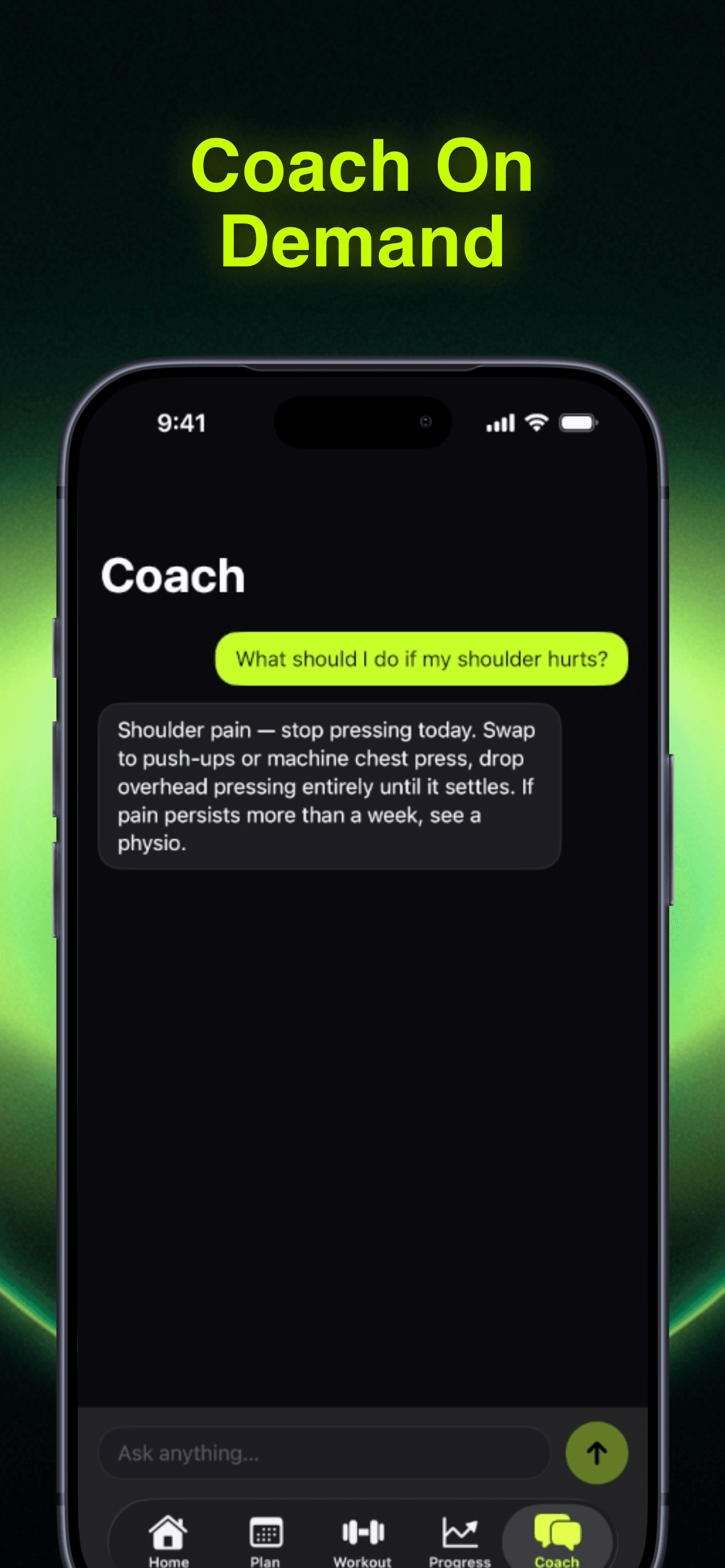
Apps and AI can track sessions, suggest progressions, and remind you to log workouts, but they cannot observe or correct your form in real time, feel your soreness, or account for complex medical histories. Injuries, persistent pain, and rehab need a qualified clinician or coach. Also, a plan only works if you show up—consistency and sensible effort are the real drivers of improvement.
If you track workouts digitally, you can log jump-rope sessions alongside lifting in many general coaching apps (for example, RepBro).
Quick template week to try this week
- Monday: Strength (heavy); optional 3–5 min rope warm-up
- Tuesday: Jump rope intervals — 6 rounds of 30s on / 30s rest (~6 min work)
- Wednesday: Strength (moderate)
- Thursday: Off or 10–20 min easy rope steady
- Friday: Strength (heavy)
- Weekend: Active recovery or mobility
Adjust frequency and total time to how you feel. Keep records, increase volume slowly, and prioritize form and recovery over chasing minutes.
Limitations reminder: no app or article replaces individualized assessment. For persistent pain, recent injuries, or complex medical conditions consult a qualified professional.
Frequently asked questions
- What is the simplest jump rope conditioning protocol for lifters?
- Short answer: Use 2–4 weekly jump-rope sessions combining low‑volume steady work and 1–2 interval sessions. Start with 5–10 minutes of total rope work and progress by adding rounds or minutes each week. Keep intense sessions away from heavy lifts or after workouts to minimize interference.
- How often should I jump rope without harming strength gains?
- Two to three low-to-moderate sessions per week are sufficient for most lifters to gain conditioning without compromising strength or recovery. If you add higher-intensity sessions, limit them to one or two weekly and avoid pairing them before heavy strength days.
- How should I progress my jump rope conditioning?
- Progress by gradually increasing total session time, rounds, or interval duration each week. Start small (5–10 minutes total), add 1–2 minutes or an extra round weekly, or increase intensity only after you can complete current volume with good form and recovery.