A Realistic Beginner Gym Plan for Women That Actually Works
A straightforward beginner gym plan for women focused on strength training. Cuts through bulking myths with a practical 3-day routine that builds muscle and confidence.
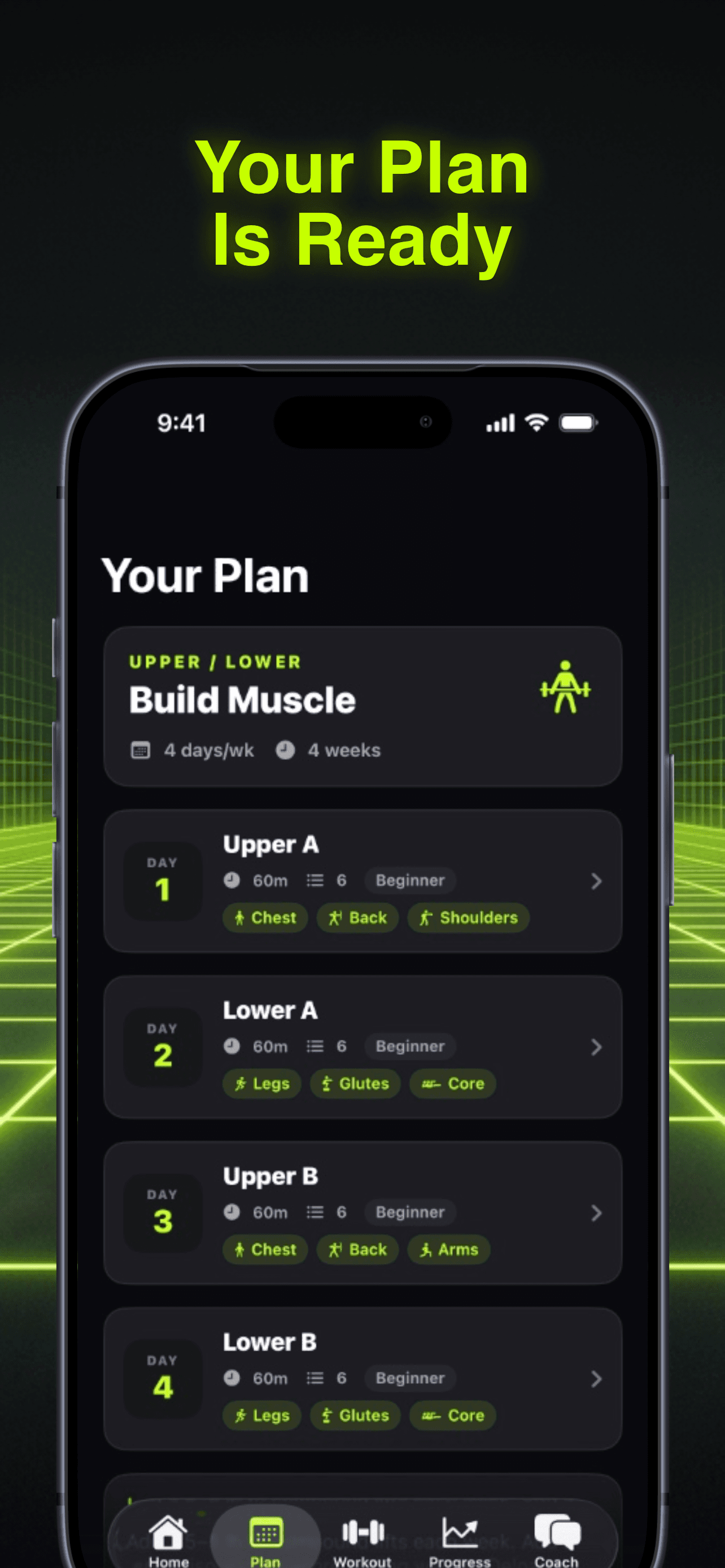
Photo by RepBro.
You don't need to spend months researching the "perfect" beginner gym plan for women. You need a straightforward routine that builds strength, teaches proper form, and gets you comfortable in the weight room without overthinking it.
The simple answer: A 3-day full-body routine focusing on compound movements like squats, deadlifts, and rows will build muscle, increase strength, and boost confidence faster than any complex split or cardio-heavy program.
Most beginner workout plans for women get distracted by myths about "toning" or fear of getting "bulky." Here's what actually matters: progressive overload with basic movements that work multiple muscle groups at once.
Why Most Beginner Gym Plans for Women Miss the Mark
Walk into any commercial gym and you'll see the same pattern. Women cluster around the cardio machines and light dumbbells while men dominate the barbell area. This isn't because women prefer cardio—it's because most workout plans for women beginners avoid the equipment that delivers the best results.
The problem starts with marketing. Fitness magazines sell "toning" workouts with pink dumbbells and endless isolation exercises. These programs keep you busy but don't build the strength foundation that transforms how you look and feel.
Real muscle building requires progressive overload. That means gradually adding weight, reps, or sets over time. You can't progressively overload with the same 10-pound dumbbells for months.
The Truth About Women and Muscle Building
Let's address the elephant in the room: you will not get bulky from lifting heavy weights. Women have 15-20 times less testosterone than men. The female bodybuilders you see in magazines train for decades, eat in massive caloric surpluses, and often use performance-enhancing drugs.
What you will get from strength training:
- Lean muscle that creates shape and definition
- Stronger bones (crucial for long-term health)
- Higher metabolic rate that burns more calories at rest
- Improved posture and reduced back pain
- Confidence that carries into every area of life
I've worked with hundreds of women who started strength training worried about getting "too big." None of them have ever complained about the results they actually got.
Your 3-Day Beginner Gym Routine for Women
This gym routine for women starting out hits every major muscle group twice per week with compound movements that teach proper form and build functional strength.
Day 1: Monday
- Goblet Squat: 3 sets of 8-12 reps
- Dumbbell Row: 3 sets of 8-12 reps per arm
- Dumbbell Bench Press: 3 sets of 8-12 reps
- Plank: 3 sets of 30-60 seconds
- Glute Bridge: 3 sets of 12-15 reps
Day 2: Wednesday
- Romanian Deadlift: 3 sets of 8-12 reps
- Lat Pulldown: 3 sets of 8-12 reps
- Overhead Press: 3 sets of 8-12 reps
- Side Plank: 2 sets of 20-30 seconds per side
- Walking Lunges: 3 sets of 10 reps per leg
Day 3: Friday
- Leg Press: 3 sets of 10-15 reps
- Seated Cable Row: 3 sets of 8-12 reps
- Incline Dumbbell Press: 3 sets of 8-12 reps
- Dead Bug: 3 sets of 8 per side
- Hip Thrust: 3 sets of 12-15 reps
How to Progress Your Strength Training for Women Beginners
Progressive overload is the key to continuous improvement. Here's how to apply it systematically:
Week 1-2: Learn the movements with lighter weights. Focus on form over load. If you can complete all sets with 2-3 reps left in the tank, you're in the right range.
Week 3-4: Add weight when you can complete all sets within the rep range with good form. Increase by 2.5-5 pounds for upper body exercises, 5-10 pounds for lower body.
Week 5-6: Continue adding weight or reps. If you can't add weight, add one rep to each set until you reach the top of the range, then increase weight and drop back to the bottom of the rep range.
Week 7-8: Reassess your program. You might be ready for more advanced variations or additional exercises.
Track everything. Write down weights, reps, and how each set felt. This data drives your progression decisions and keeps you motivated as you see consistent improvement.
Common Mistakes in Women's Workout Plans
Starting too heavy, too fast. Your connective tissues need time to adapt. Muscle soreness is normal; joint pain is not. Build up gradually over weeks, not days.
Avoiding compound movements. Isolation exercises have their place, but compound movements like squats and deadlifts work multiple muscle groups and deliver more bang for your buck.
Inconsistent training. Three days per week beats six days one week and zero the next. Consistency trumps intensity for beginners.
Ignoring nutrition. You can't out-train a poor diet. Eat adequate protein (0.8-1g per pound of body weight) and don't drastically under-eat while trying to build strength.
What to Expect in Your First 12 Weeks
Weeks 1-4: Learning phase. Movements feel awkward but you're getting stronger quickly due to neural adaptations. You might not see visual changes yet, but you'll feel more confident in the gym.
Weeks 5-8: Strength gains continue. You start noticing improved posture and feeling stronger in daily activities. Clothes might fit differently even if the scale hasn't moved much.
Weeks 9-12: Visual changes become apparent. Others start commenting on your improved posture and energy. You're ready to progress to more advanced programming.
Beyond the Basics: When to Level Up
After 12-16 weeks of consistent training, you'll be ready for more advanced programming. Signs you've outgrown beginner status:
- You can squat your bodyweight for reps
- You're adding weight every 2-3 weeks instead of weekly
- You want to train more than 3 days per week
- You understand how your body responds to different rep ranges
At this point, consider upper/lower splits, periodization, or specialized programs based on your goals.
The gym can feel intimidating when you're starting out, but remember that everyone there started as a beginner. Focus on your own progress, be consistent with your routine, and trust the process. The strength and confidence you build in your first few months will serve as the foundation for years of continued progress.
Frequently asked questions
- How many days per week should a beginner woman work out at the gym?
- 3 days per week is optimal for beginner women. This allows adequate recovery between sessions while providing enough stimulus for strength and muscle gains. Full-body workouts on non-consecutive days work best.
- Will lifting weights make women bulky?
- No, women have 15-20 times less testosterone than men, making it extremely difficult to build large amounts of muscle mass. Strength training creates lean, defined muscle and improves body composition without bulk.
- What weight should beginner women start with?
- Start with weights that allow 8-12 reps with 2-3 reps left in reserve. This is typically 15-25 pounds for upper body exercises and 25-45 pounds for lower body movements, but varies by individual strength.
- How long before women see results from strength training?
- Strength gains appear within 2-4 weeks due to neural adaptations. Visible muscle changes typically occur after 6-8 weeks of consistent training with proper nutrition and progressive overload.
- Should beginner women do cardio or weights first?
- Prioritize strength training over cardio for beginners. If doing both in one session, do weights first when energy levels are highest. Cardio can be done on rest days or after weight training.