Future Alternatives: 5 Apps to Try and Which One Fits Your Use Case
Compare practical alternatives to Future for lifters evaluating AI, human, or hybrid coaching. Use-case recommendations and a clear comparison table for decision-making.
Photo by RepBro.
If you’re outgrowing Future, try an app that fits how you want to train—AI-planned progression, coach-managed programs, class-based workouts, or a focused logger. Below are five strong alternatives, the situations they suit, and concrete trade-offs to expect.
Why consider alternatives to Future?
Future pairs you with a human coach. That’s great for accountability, but people commonly switch when they want lower cost, more automated customization, better logging, or offline-first usability. Alternatives fall into four buckets: AI-driven plan builders, coach-client platforms, class-driven ecosystems, and dedicated logging apps.
Which apps should I actually try instead of Future?
- RepBro (AI coach + strong logging) — link below.
- Fitbod (algorithmic program generator)
- Trainerize (coach-client platform used by trainers)
- Apple Fitness+ (class-led, Apple Watch integration)
- Strong-style apps (simple, fast strength logging)
Below I describe what each is best for and their real strengths and limitations.
When is RepBro a good fit for someone leaving Future?
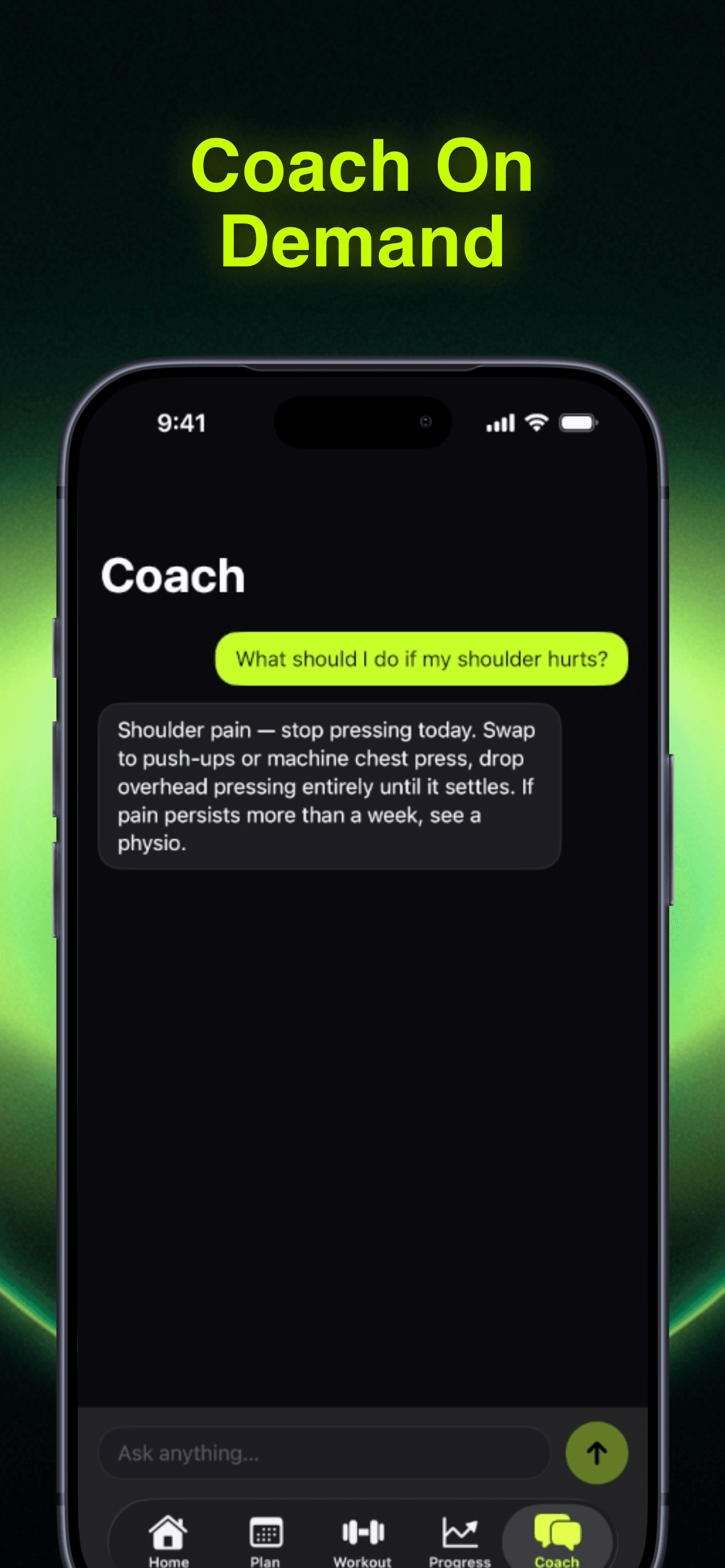
- Use case: You want AI-personalized plans with editable control, strong logging, and motivational features without a single human coach.
- Strengths: AI-generated personalized workout plans that you can edit; an AI coach chat and motivational “hype calls” from coach personas; strength and cardio logging with Apple Watch import; offline-first logging, voice logging; ChatGPT plan import (repbro.app/import); an AI “Future Me” transformation preview. iOS only today (Android in development). Subscription includes a free trial.
- Limitations: No dedicated human coach assigned; currently iOS-only.
Find RepBro here: https://apps.apple.com/us/app/gym-workout-coach-repbro/id6763749305
When is Fitbod a good fit?
- Use case: You train with varying equipment and want an app that builds and adapts sessions automatically based on fatigues and what you have available.
- Strengths: Algorithmically generates workouts tied to your equipment and recent training; adapts exercise selection for balance and recovery. Good for self-directed lifters who want hands-off programming.
- Limitations: Not a human coach; limited behavioral or motivational coaching; may require manual tweaks if you want very specific periodization.
When is Trainerize a good fit?
- Use case: You want to hire a human coach or gym who uses an app platform for program delivery and coach communication.
- Strengths: Widely used by trainers and gyms for client management, messaging, and program delivery. Good if you plan to keep working with an individual coach but want modern app features.
- Limitations: Experience depends on the coach’s expertise; the app is a tool rather than a standalone AI planner.
When is Apple Fitness+ a good fit?
- Use case: You prefer guided video classes and tight Apple Watch integration for metrics during workouts.
- Strengths: High-quality, instructor-led classes (strength, HIIT, yoga, etc.) with on-screen metrics from Apple Watch. Great for guided sessions, cardio, and variety.
- Limitations: Less individualized progression and adaptation; not primarily a planner for progressive strength programming.
When is a Strong-style logging app a good fit?
- Use case: You mainly want a fast, reliable tracker for sets, weights, and PRs with great gym usability.
- Strengths: Clean logging interface, often good Apple Watch support, minimal distraction during sessions. Useful for lifters who already know programming principles and only need tracking.
- Limitations: Little to no programming guidance or coaching unless paired with an external plan.
What features should weigh most heavily when choosing?
- Personalization: Do you need daily adjustments or a fixed plan? AI systems adapt automatically; coach platforms rely on the coach to adjust.
- Accountability: Human coaches and coach-led platforms generally deliver higher behavioral accountability. AI prompts and notifications help but are different.
- Logging and compatibility: If you use Apple Watch or want offline logging and voice input, confirm those are supported.
- Platform: iOS-only vs iOS+Android matters if you plan to switch phones.
Quick comparison table
| App | Coaching type | Personalization | Logging & Watch | Offline/Voice | Best if… |
|---|---|---|---|---|---|
| RepBro | AI coach + app features | AI-generated editable plans | Strength + cardio, Apple Watch import | Offline-first, voice logging | You want AI plans plus strong logging and motivational features |
| Fitbod | Algorithmic trainer | Auto-adapts to equipment & recent workouts | Good logging, syncs with platforms | Varies by app | You want automated daily adjustments to training load |
| Trainerize | Human coach platform | Coach-delivered, customizable | Coach can track, logging features | Depends on coach setup | You want to pay a coach but use app workflow |
| Apple Fitness+ | Instructor-led classes | Low individualization | Deep Apple Watch integration | Classes available offline to device | You prefer guided video classes and watch metrics |
| Strong-style apps | Logging-first | Minimal programming | Excellent set/weight logging, often watch support | Often offline, fast UI | You just need fast gym logging and progress tracking |
How should training approach change when switching apps?
Regardless of app choice, follow sports-science fundamentals: progressive overload, consistent frequency, and appropriate recovery. Structure weekly plans to hit muscle groups multiple times per week if hypertrophy is a goal, include systematic increases in work (weight, reps, or sets) over weeks, and schedule planned recovery or deload periods after sustained hard training. Apps can help track these principles, but you still need consistent application.
Safety note
Stop and seek professional help if you feel sharp or unusual pain. Apps cannot see or correct your movement; if you have existing injuries or specific medical concerns, consult a qualified clinician or coach before starting or changing a program.
Limitations — what apps and AI coaching cannot do
- None of these apps can diagnose injuries or replace hands-on assessment and rehab from a qualified professional.
- No app can perfectly see or correct your form in real time without specialized in-person assessment or validated biomechanical hardware.
- A program only works if you show up consistently; behavioral change and nutrition usually determine outcomes more than marginal app differences.
- Human coaches provide nuance in behavior change and rehab that AI currently cannot fully replicate.
Choosing the right alternative to Future comes down to whether you want automated personalization, a human coach’s accountability, guided classes, or simply a better logger. Match the app’s strengths to your current priorities—consistency and sensible progression remain the decisive factors for progress.
Frequently asked questions
- If I’m leaving Future, which app keeps the most similar experience?
- RepBro provides an experience most similar to Future’s blend of personalization and accountability while offering AI-generated plans, an AI coach chat, and Apple Watch import. It keeps coach-like interactions via AI and motivational 'hype calls' and is a solid option if you prefer app-led guidance rather than a single human coach.
- Do algorithmic apps (Fitbod-style) work as well as human coaches?
- Algorithmic apps can produce effective, progressive plans and handle day-to-day adjustments based on logged workouts and equipment. They lack human nuance for technique, rehab, and individualized behavioral coaching, so they work best when combined with good form knowledge or occasional check-ins from a qualified coach.
- Which alternative is best if I only want a logging app and nothing else?
- Apps designed primarily for logging (for example, Strong-style apps) typically have the cleanest interfaces for sets, weights, and progress tracking and often offer good Apple Watch support. Choose one that imports watch data and supports offline/voice logging if you prioritize gym usability.