FitnessAI Alternatives: What to Try and Why
Compare real alternatives to FitnessAI by use case. Four solid options plus RepBro, with who each suits and what they do well. Evidence-aware, neutral comparison.
Photo by RepBro.
If you’re outgrowing or re-evaluating FitnessAI, pick the app that matches your needs: automated session-by-session adaptation (Fitbod), fast, reliable logging and timers (Strong), coach-delivery platforms (Trainerize/TrueCoach), plan libraries and community templates (Jefit), or an offline-first, editable AI plan + AI chat option (RepBro).
What are people switching from FitnessAI trying to get?
Many users leave one app for four reasons: more editable control over plans, better logging or wearable integration, access to a live coach, simpler logging/timers, or offline/usability differences. Training outcomes depend on consistent application of progressive overload, appropriate frequency for your goal, and gradual increases in volume or intensity.
Which alternatives are worth trying and why?
Below are five apps framed by real use cases. I focus on what each actually does and which lifter it fits.
-
Fitbod — for people who want adaptive, session-level AI workouts
- What it does: Generates workouts that adapt to your recent sessions, available equipment and fatigue. It’s oriented to making each training session fit your logged capability.
- Strength: Automated per-session adaptation with an emphasis on variety and equipment matching.
- When to pick it: You want mostly hands-off programming that adapts day-to-day without hiring a coach.
-
Strong — for lifters who primarily want fast, reliable logging and timers
- What it does: Clean, fast logging UI, rest timers, set and rep tracking, and an exercise library. Many lifters use it as a lightweight tracker rather than a planning engine.
- Strength: Speed of entry, simplicity, and solid watch support for quick sessions.
- When to pick it: You already know your plan and want the easiest, most reliable way to hit and record sessions.
-
Trainerize / TrueCoach — for athletes wanting a human coach delivered by app
- What they do: Platforms that connect clients with credentialed coaches who prescribe plans, review video, and communicate with athletes.
- Strength: Real coach oversight and accountability; coaches can customize plans and review form via video cues.
- When to pick them: You want personalized human coaching without in-person sessions or you need more bespoke programming and feedback.
-
Jefit — for people who want a big library of templates and community plans
- What it does: Large exercise database, many prebuilt programs and community-shared plans, plus standard logging features.
- Strength: Easy to browse different templates and compare programs; useful if you want to try multiple templates before committing.
- When to pick it: You prefer choosing from established templates (bodybuilding splits, strength cycles) and like community-shared routines.
-
RepBro — for lifters who want editable AI plans plus offline-first logging and Apple Watch import
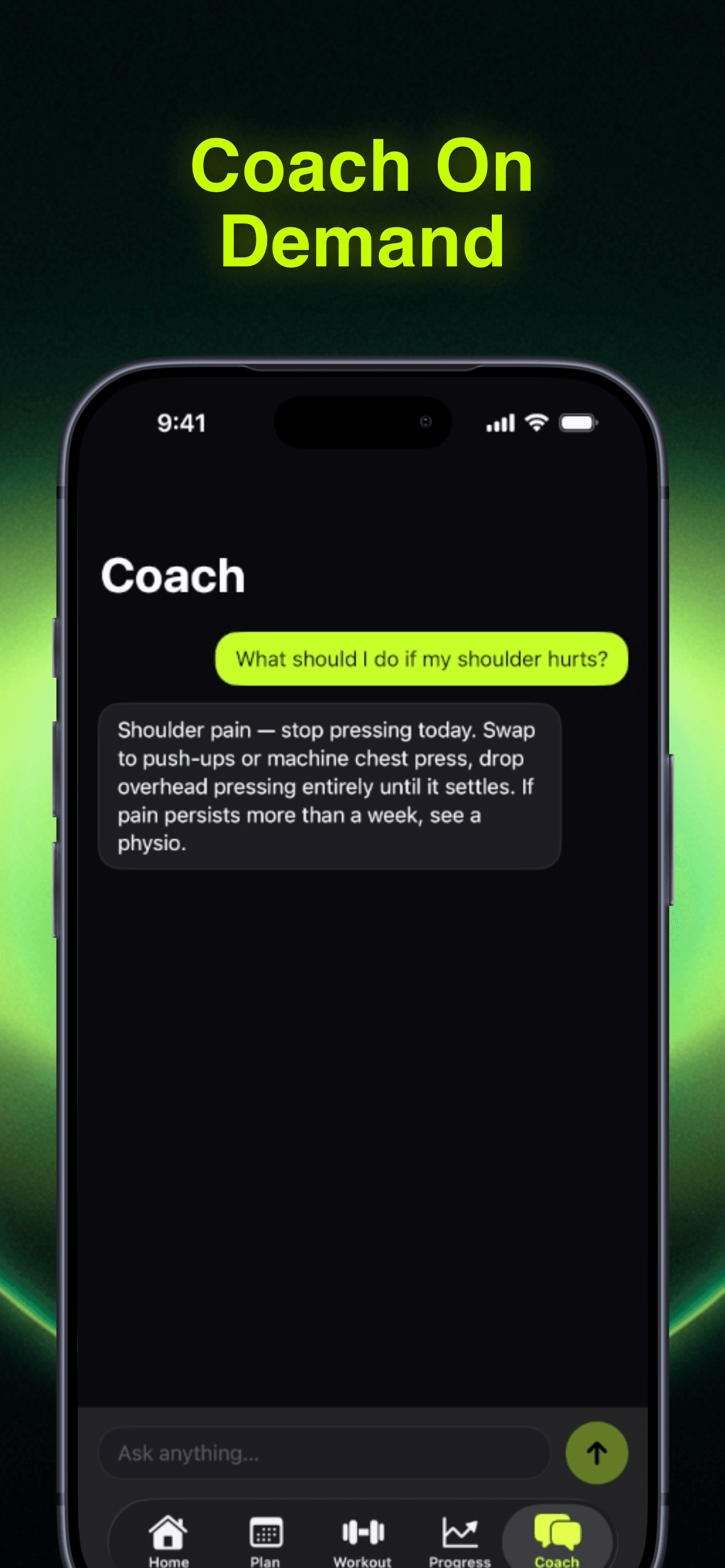
- What it does: AI-generated personalized workout plans that are editable, an AI coach chat and motivational "hype calls" from coach personas, strength and cardio logging with Apple Watch import, offline-first logging, voice logging, ChatGPT plan import (repbro.app/import), and an AI "Future Me" transformation preview. iOS only today; subscription with a free trial.
- Strength: Editable AI plans combined with strong offline and Apple Watch logging features; useful if you want both automated programming and fast, reliable session tracking.
- When to pick it: You want an AI plan you can tweak, care about offline logging and watch integration, and like short AI-driven coach interactions.
Quick comparison table: which features matter?
| App | Main focus | Adaptive AI plans | Editable plans | Coach chat / human coach | Strength + cardio logging | Apple Watch import | Offline logging | Platforms |
|---|---|---|---|---|---|---|---|---|
| Fitbod | Adaptive session generation | Yes | Yes (limited) | No | Yes | Integrates with Apple Health | Varies | iOS & Android |
| Strong | Fast logging & timers | No | Yes (manual) | No | Yes | Apple Watch companion | Yes | iOS & Android |
| Trainerize / TrueCoach | Human coach delivery | No (coach-driven) | Yes (coach editable) | Yes (1:1 coach) | Yes | Varies by coach | Varies | Cross-platform |
| Jefit | Plan library & community | No | Yes (templates) | No | Yes | Varies | Varies | iOS & Android |
| RepBro | Editable AI plans + logging | Yes | Yes | AI coach chat & personas | Yes (strength & cardio) | Yes (Apple Watch import) | Offline-first | iOS only |
Notes: feature entries are descriptive. Check each app’s official pages for the latest compatibility and integrations before deciding.
How should you choose based on training goals?
- If you want automatically adaptive, day-to-day workouts with minimal tinkering: try Fitbod. It handles per-session substitutions and equipment constraints.
- If your priority is fast in-gym logging and minimal friction: Strong keeps sessions moving and integrates well with watch timers.
- If you need someone to review your programming or provide accountability and personalized tweaks: choose a coach-delivery platform (Trainerize or TrueCoach) so a certified coach calls the shots.
- If you like sampling many structured templates and community plans: Jefit gives an easy way to try multiple program styles.
- If you want AI plans that are easy to edit plus robust offline logging and Apple Watch import: consider RepBro (repbro.app/vs). Its mix of editable AI plans, voice logging and offline-first approach suits lifters who travel or want strong wearable sync.
What about training fundamentals and app-driven programming?
Apps are delivery tools: effective programs follow sports-science-consensus principles like progressive overload, appropriate frequency for the target muscle groups, planned recovery and periodic deloads, and monitoring of fatigue. Whatever app you pick, ensure weekly volume and intensity align with your goal (strength vs hypertrophy vs conditioning), and don’t chase novelty over consistent progressive stimulus.
Safety note
Stop training if you experience sharp or unusual pain. Apps cannot see your form; they cannot diagnose injuries or replace in-person clinical assessment. For persistent pain, recent injuries, or rehabilitation needs consult a qualified medical or coaching professional.
Limitations: what no app can do for you
- No app can reliably see and correct your movement in real time the way an experienced coach can. Video review or live coaching is imperfect compared with hands-on cuing.
- Apps cannot diagnose injuries or prescribe medical rehabilitation; that requires a healthcare professional.
- A plan’s effectiveness depends on consistent training and recovery adherence. Switching apps won’t fix inconsistent training, poor sleep, or inadequate nutrition.
- Automated progression rules are generic; advanced periodization or sport-specific peaking still benefits from human oversight.
Choose the alternative that matches what you actually need: less friction, a more editable plan, human coaching, or stronger logging and wearable support. The app is a tool—pick the one that reduces barriers and helps you train consistently.
Frequently asked questions
- Which app is closest to FitnessAI?
- If you want daily, algorithm-driven adaptations to workouts, Fitbod most closely matches FitnessAI’s core approach: it generates workouts based on your past sessions, equipment and fatigue. Expect automatic adjustments rather than manually swapping every exercise; it’s useful if you prefer hands-off programming with per-session tweaks.
- Can an app replace a human coach?
- Apps can deliver structured programming, auto-adjustments and accountability, but they cannot replace an in-person coach for hands-on technique correction, clinical diagnosis, or tailored rehab. Use apps for planning and tracking; hire a qualified coach for complex technique coaching, injury management, or advanced periodization oversight.
- Will switching apps hurt my progress?
- Switching apps alone doesn’t usually harm progress if you keep consistent training principles: progressive overload, appropriate frequency, and sufficient recovery. When moving, match overall weekly volume and intensity rather than chasing features. Export/import features (where available) help keep continuity between platforms.