What Is a Realistic Body Transformation in 6 Months of Lifting?
Realistic 6 month body transformation expectations: beginners gain 8-15 lbs muscle, intermediates 4-8 lbs. Fat loss varies by starting point and consistency with nutrition.
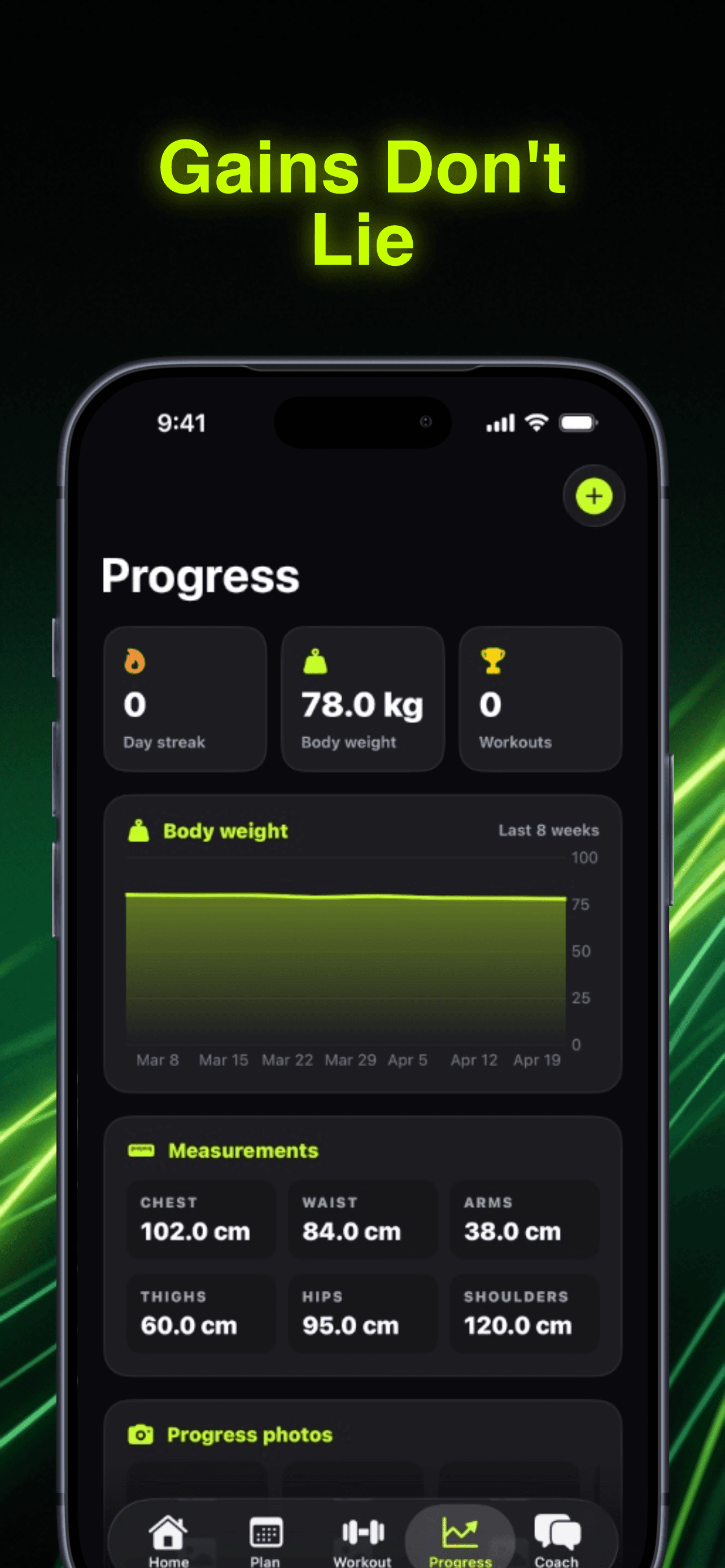
Photo by RepBro.
Your Instagram feed shows dramatic before-and-after photos promising incredible transformations in just six months. The reality? Most of those images span years, not months, or involve extreme measures you can't sustain.
Here's what a realistic 6 month body transformation actually looks like based on your starting point and training experience.
The Real Numbers: What to Expect by Experience Level
Beginners (0-1 years of consistent lifting) can expect the most dramatic changes. You'll gain 8-15 pounds of muscle mass while simultaneously losing fat if you're starting above 15% body fat. This "newbie gains" phenomenon happens because untrained muscles respond aggressively to any stimulus.
Intermediate lifters (1-3 years) will see slower but steady progress. Expect 4-8 pounds of muscle gain over six months, with fat loss depending heavily on your starting leanness and nutrition consistency.
Advanced trainees (3+ years) face the hardest reality check. Muscle gains drop to 2-4 pounds over six months, and visible changes require laser-focused nutrition and programming.
These numbers assume consistent training 3-4 times per week with progressive overload and adequate protein intake. Skip either component and your results plummet.
What Changes You'll Actually See in the Mirror
The scale tells one story, but your reflection tells another. Here's the timeline most lifters experience:
Month 1-2: Strength and Confidence
Your lifts jump dramatically as your nervous system adapts. You'll add 20-50 pounds to your squat, bench, and deadlift. Muscle definition improves slightly, but most changes happen in how you carry yourself.
Month 3-4: Shape Changes Emerge
Your shoulders broaden, arms fill out shirts differently, and your waist tightens (assuming you're managing calories). Friends start asking if you've been working out.
Month 5-6: Clear Transformation
The changes become undeniable. Your face looks leaner, posture improves, and clothes fit completely differently. This is when progress photos reveal the full transformation.
One client started at 185 pounds and 22% body fat. After six months of consistent training and moderate calorie deficit, he weighed 178 pounds at 14% body fat. The scale showed only seven pounds lost, but he looked like a different person.
The Fat Loss vs Muscle Gain Equation
Your starting body composition determines your transformation potential. Here's how different starting points play out:
Starting lean (10-15% body fat): Focus on muscle gain. Expect minimal fat loss but significant strength and size increases. Your transformation will be subtle but powerful.
Starting average (15-25% body fat): The sweet spot for dramatic transformations. You can build muscle while losing fat simultaneously, creating the most visually striking before-and-after photos.
Starting higher body fat (25%+): Prioritize fat loss first. You'll lose 1-2 pounds per week with aggressive but sustainable deficits, revealing muscle you're building underneath.
The math is straightforward: one pound of fat loss per week requires a 500-calorie daily deficit. Muscle gain needs a slight surplus or maintenance calories with high protein. You can't maximize both simultaneously unless you're a beginner or returning from a layoff.
Why Most Transformations Fail (And How to Avoid It)
The biggest mistake? Expecting linear progress. Your first month might show dramatic changes, followed by weeks where nothing seems to happen. This isn't failure—it's biology.
Week 1-4: Rapid strength gains, some muscle growth, initial fat loss Week 5-8: Slower visible changes, continued strength gains, potential plateaus Week 9-16: Steady progress, body recomposition becomes obvious Week 17-24: Fine-tuning, addressing weak points, maintaining momentum
Most people quit during weeks 5-8 when progress slows. The solution? Track multiple metrics beyond the scale: progress photos, body measurements, lift numbers, and how your clothes fit.
Programming for Maximum Transformation
Your workout split matters less than consistency and progressive overload. Whether you choose push/pull/legs, upper/lower, or full-body doesn't dramatically impact your six-month results.
What does matter:
- Training frequency: Each muscle group 2-3 times per week
- Volume: 10-20 sets per muscle per week for most people
- Progressive overload: Adding weight, reps, or sets consistently
- Compound movements: Squats, deadlifts, bench press, rows as your foundation
The biggest transformation accelerator? Tracking everything. Log every workout, every meal, every measurement. Data reveals patterns that feelings miss.
Nutrition: The Make-or-Break Factor
You can't out-train a bad diet, but you can definitely out-eat a good workout program. Your transformation depends more on what happens in the kitchen than the gym.
For muscle gain: Eat in a slight surplus (200-500 calories above maintenance) with 0.8-1g protein per pound of body weight. Prioritize whole foods but don't stress about perfect meal timing.
For fat loss: Create a moderate deficit (300-750 calories below maintenance) while maintaining high protein. Aim for 1-2 pounds lost per week maximum to preserve muscle mass.
For body recomposition: Eat at maintenance calories with high protein (1g+ per pound). This works best for beginners and those returning from breaks.
The hardest part isn't knowing what to eat—it's eating consistently for six months straight. Plan your meals, prep when possible, and build systems that work with your schedule.
Setting Realistic Expectations by Body Type
Your genetics influence your transformation timeline, but they don't determine your ceiling. Here's what different body types can expect:
Ectomorphs (naturally thin): Slower muscle gain but excellent muscle definition. Expect 6-12 pounds of muscle gain with minimal fat accumulation.
Mesomorphs (naturally muscular): The genetic lottery winners. Rapid muscle gain and fat loss, often achieving the most dramatic transformations.
Endomorphs (naturally heavier): Slower fat loss but excellent strength gains. Focus on body recomposition rather than scale weight for best results.
Remember: these are tendencies, not destinies. Consistent training and nutrition matter more than your starting genetics.
The Mental Game: Staying Motivated for Six Months
Physical transformations require mental endurance. You'll face weeks where progress stalls, motivation dips, and life gets in the way.
Build these systems to maintain momentum:
- Weekly progress photos in consistent lighting and poses
- Strength benchmarks to celebrate beyond appearance
- Non-scale victories like better sleep, more energy, improved mood
- Flexible planning that adapts to travel, stress, and schedule changes
The most successful transformations happen when you view fitness as a lifestyle change, not a six-month sprint. Think of these six months as building habits that will serve you for decades.
Your transformation starts with your next workout. Whether you're chasing your first pull-up or your next PR, consistency over perfection wins every time."
Frequently asked questions
- How much muscle can I realistically gain in 6 months?
- Beginners can gain 8-15 pounds of muscle, intermediates 4-8 pounds, and advanced lifters 2-4 pounds in six months with consistent training and proper nutrition.
- Can I lose fat and gain muscle simultaneously in 6 months?
- Yes, especially for beginners and those with higher body fat (15%+). This body recomposition works best with maintenance calories, high protein intake, and consistent strength training.
- What's more important for transformation: diet or exercise?
- Both are essential, but nutrition drives 70-80% of visible changes. You can't out-train a bad diet, but proper nutrition without exercise won't build the muscle that creates dramatic transformations.
- How often should I take progress photos during my transformation?
- Weekly progress photos in consistent lighting, poses, and clothing provide the best tracking. Daily photos show too much variation, while monthly photos miss important milestones.
- What should I do if my transformation stalls after 2-3 months?
- Plateaus are normal. Adjust your program by increasing training volume, changing exercises, or modifying your calorie intake by 100-200 calories up or down based on your goals.